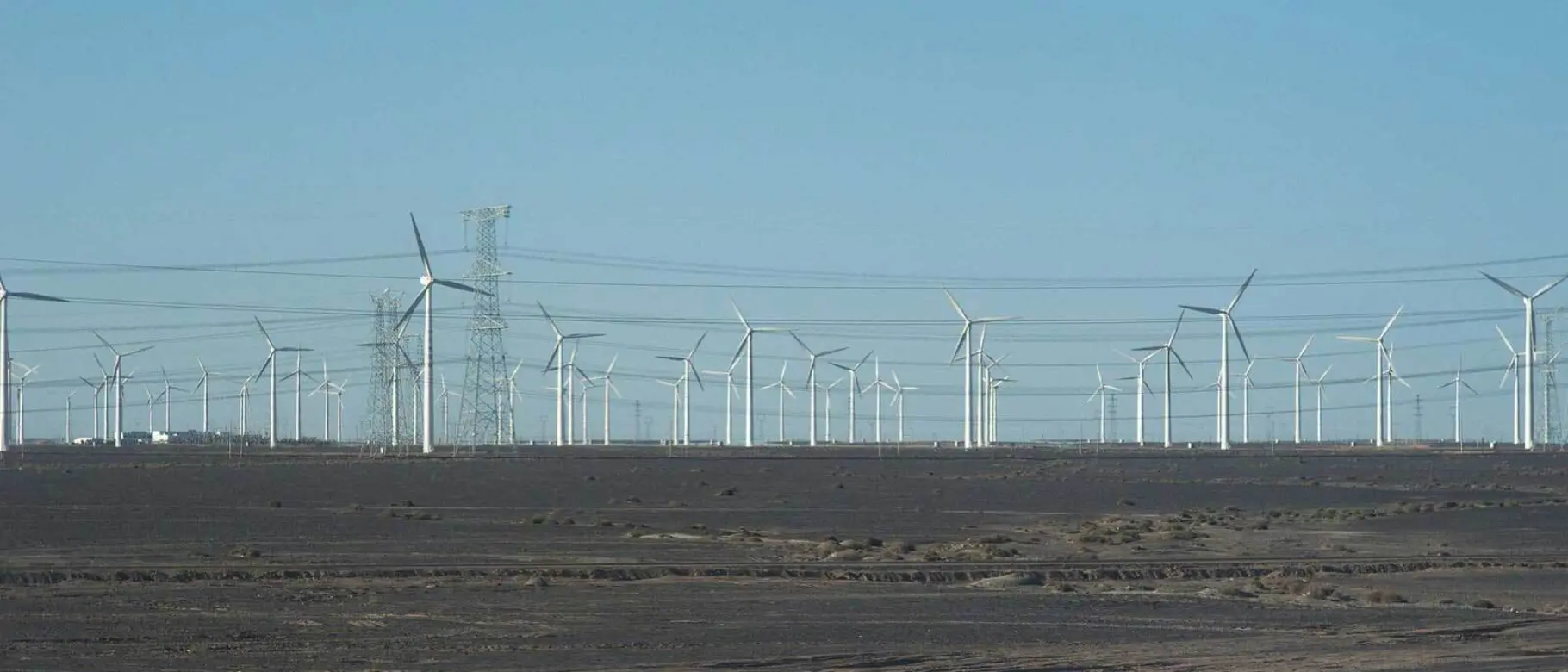
Two wind farms in Jinchang, Gansu, feed clean electricity into the grid. Magang and Huangmaopo have a combined capacity of 99 MW. Around 204 GWh of electricity per year and an average annual reduction of 175,000 tCO2e are expected by displacing fossil fuel generation in the Northwest China Power Grid (NWPG).
Project goals
Clean electricity, local impact
The aim is to install and operate two wind farms with a total capacity of 99 MW to generate grid-connected renewable electricity with zero direct emissions. The project will replace electricity from fossil fuel power plants in the NWPG, reducing greenhouse gas and other air pollutant emissions. It promotes the development of the wind industry in China and creates jobs in construction and operation.
During assembly and construction, local jobs are created, for example for road construction, foundations and installation.
2
Permanent positions
Long-term activities are involved in operation, e.g. monitoring, maintenance and metering.
3
Fewer air pollutants
Compared to the "business-as-usual" electricity mix, pollutant emissions from electricity generation are reduced.
4
Industry development
The project supports the growth and technical development of grid-connected wind energy in China.
5
Local acceptance
Stakeholder consultations showed broad support among the administration and population without negative feedback.
Global climate significance
CO₂ reduction
An average of 175,000 tCO2e per year is avoided by replacing fossil fuel-generated grid electricity.
Fossil replacement
The wind farms are displacing electricity from fossil fuel power plants in the Northwest China Power Grid (NWPG).
Renewable electricity
Around 204.2503 GWh of renewable grid generation per year contribute to the decarbonization of the electricity mix.
Standardized
Calculation and monitoring follow ACM0002 and recognized tools for grid emission factors.
The Sustainable Development Goals achieved
In addition to reducing CO2 emissions, the climate protection projects generate a variety of additional benefits for people and the environment. This enables and strengthens our commitment to the UN Sustainable Development Goals.
The goal is access to affordable, reliable and sustainable energy for all. It aims to increase the share of renewable energies and double energy efficiency, particularly in developing countries. The expansion of renewable energies and the adaptation of infrastructure are key to minimizing environmental pollution and achieving climate targets.
It promotes sustainable economic growth, full and productive employment and decent work for all. It includes increasing resource efficiency and decoupling economic growth from environmental consumption. In addition, the focus is on innovations and green business models that ensure both economic progress and social prosperity.
The aim is to take immediate action against climate change and its effects. It aims to reduce greenhouse gas emissions, promote climate adaptation measures and raise awareness of climate impacts. Particular emphasis is placed on international cooperation to support poorer countries in combating climate change and strengthening climate resilience.
Conclusion
Two locations, one goal: to reliably feed wind power into the grid and avoid emissions. The project is clearly anchored in the local context and has been set up methodically. This creates measurable climate benefits with regional added value in Gansu.
Further opportunities to get involved
Our two core projects, PROJECT TOGO and Deutschland Plus, offer you numerous opportunities to actively contribute to climate protection - far beyond CO2 offsetting.