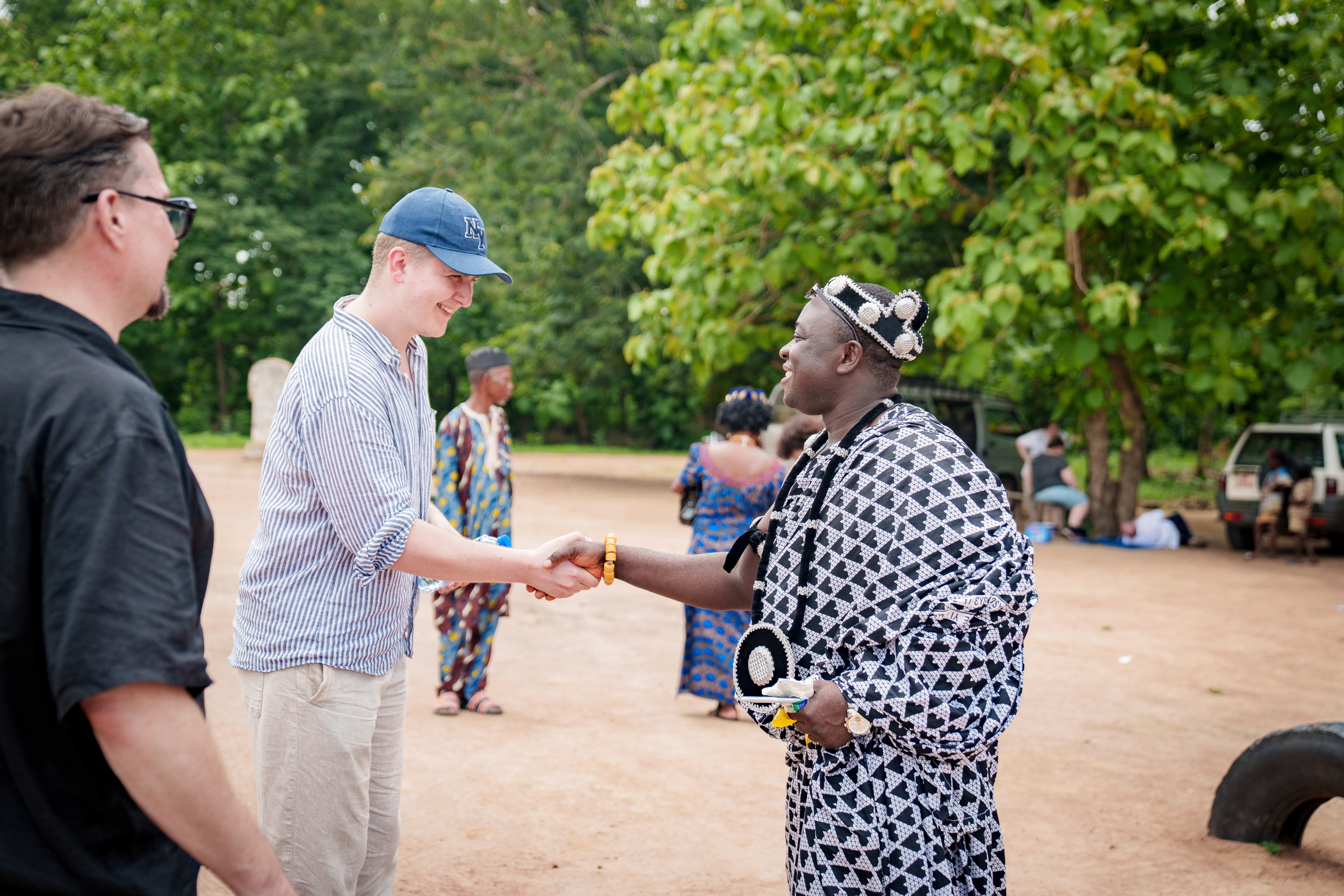
GERMANY & PROJECT TOGO
Responsibility knows no favourite region.
We believe that companies should not have to choose between proximity and scale.
This is why we combine forest ecology in Germany with PROJECT TOGO: taking responsibility for what lies on our doorstep, whilst supporting sustainable development where many challenges must be solved at the same time.
01 · WHY
We do not believe in an either-or.
Why should responsibility end at a national border?
In Germany, we can see first-hand what forests need. In Togo, the distance is greater. But a contribution there can go far beyond a single measure.
A well does not just change the water supply. A forest is not just an area full of trees. Where nature, water, education, and work are interconnected, development must also be thought of together.
Proximity decides what we see. Not what we are responsible for.

A LOOK AT WHAT IS CLOSE TO US
Germany connects.
We support forest ecology in areas where forests are damaged, natural structures are lacking or habitats need to be restored.
Reforestation of damaged areas
Development of more resilient mixed forests
Maintenance of woodland edges and biotopes
Renaturation of peatlands and watercourses
A region that is well-known. Experts who explain what it needs. Development that remains visible.

REGIONAL VERWURZELT
Unsere Wurzeln im regionalen Klimaschutz.
Seit 2012 investieren wir nachhaltig in heimische Ökosysteme. Mit über 542.000 € an Fördersumme schaffen wir echten, sichtbaren Mehrwert vor der eigenen Haustür.
Seit 2012
Kontinuierliches Engagement für deutsche Wälder
542.000 €
Direktinvestition in regionale Ökosysteme
Direkt vor Ort
Ohne Umwege mit lokalen Förstern umgesetzt
OUR PROJECT REGIONS
Our project regions at a glance.
Select a region to view the specific protective measures and background information.
Project region
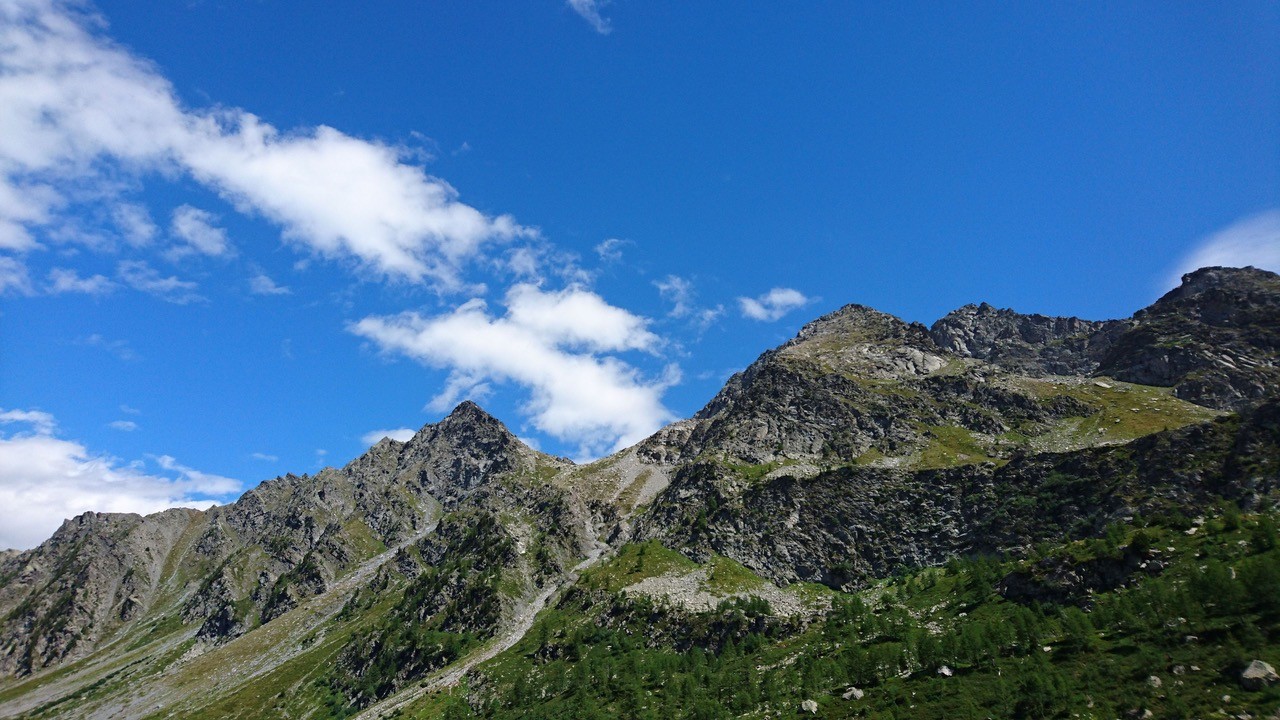
The Alps
BAD TÖLZ, LECHTAL, OBERAMMERGAU, GARMISCH-PARTENKIRCHEN, SCHLIERSEE, ALLGÄU
Focus on protective forest restoration, bark beetle control, and the establishment of mixed mountain forests to prevent erosion and avalanche risks.
CHANGE & PARTNERSHIPS
Acting regionally means staying connected.
PHASE 1 · 2012–C. 2020
Close cooperation with the Bergwaldprojekt e. V.
In the early years, we laid the foundation for regional climate protection in Germany through a structured partnership with the Bergwaldprojekt.
PHASE 2 · PRESENT & FUTURE
Direct collaboration with local foresters
In order to operate with maximum agility, flexibility, and without bureaucratic hurdles, we implement directly today with local forestry offices and partners on site.

A VIEW BEYOND THE FAMILIAR
Togo broadens the perspective.
PROJECT TOGO combines natural forest development with water, education, employment, and local value creation. Not because a single project can solve every challenge, but because sustainable development only works when interconnections are taken into account.
What is the use of a school if children have to travel long distances for water?
What is the use of a forest if no local economic prospects are created?
What is the use of infrastructure if no one can operate it in the long term?
Therefore, forest, water, education, and local responsibility do not work alongside each other. They interlock.
02 · THE CONNECTION
We do not connect two places. We connect two beliefs.
GERMANY
We should protect what is entrusted to us.
This represents concrete forest ecology and responsibility in one's own environment.
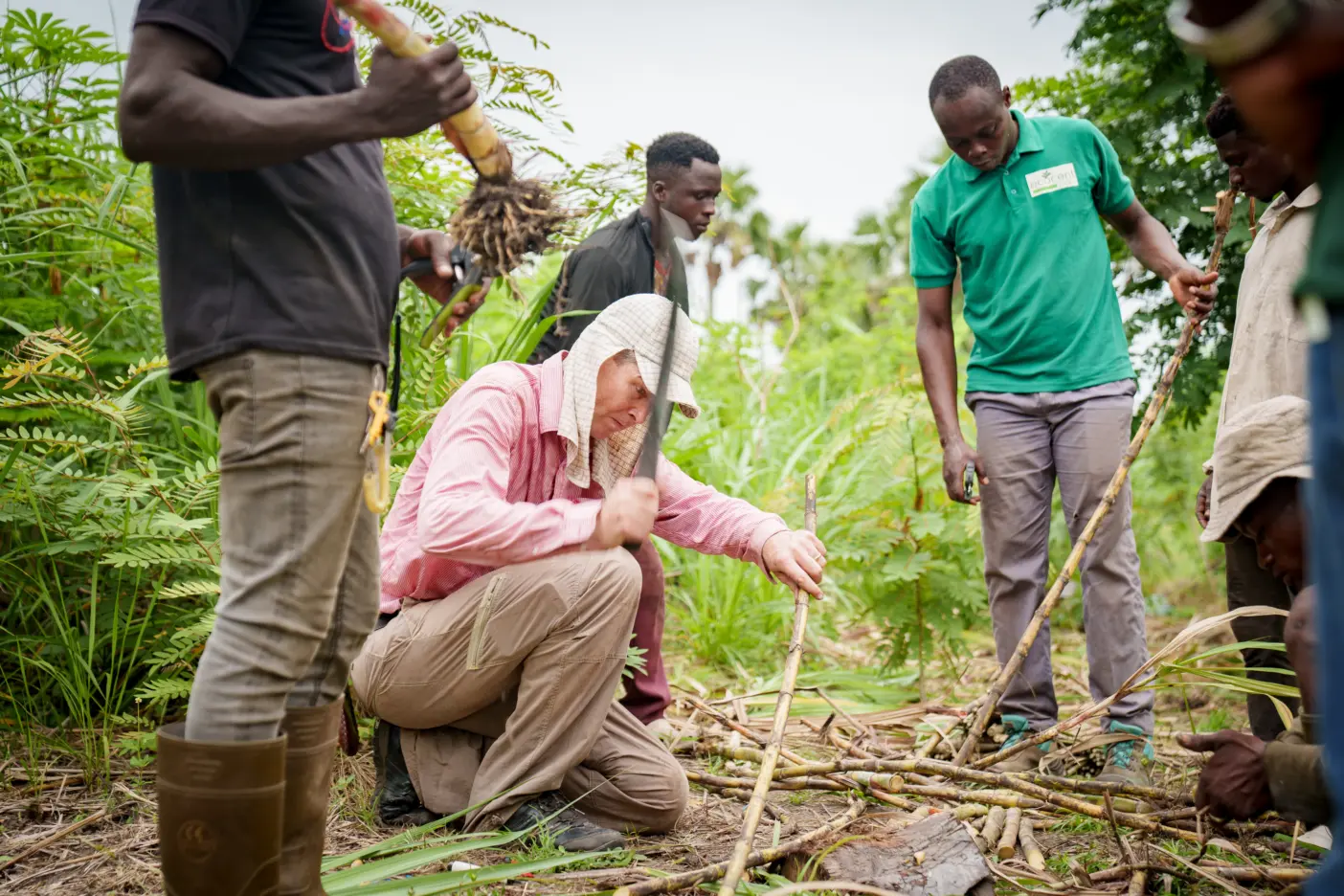
PROJECT TOGO
We should deploy opportunities where they open up additional development.
This is represented by a long-term project that considers ecological and social tasks together.
Start here. Think further. Do both.
03 · WHY TOGO IS PART OF IT
It would be easier to offer exclusively regional projects. They are closer, easier to show, and instantly understandable.
In Togo, ecological and social challenges are closely intertwined. A lack of access to water, limited educational pathways, low local value creation, and pressure on natural resources do not exist in isolation from one another.
This is precisely why PROJECT TOGO is not an optional extra for us.
04 · HOW
One commitment. Two perspectives. Clear assignment.
The differences between Germany and Togo should not disappear. They are the purpose of the connection.
01
Pin post
Together, we determine the extent to which a company wishes to get involved.
02
Map transparently
The funds are traceably allocated to the agreed project areas.
03
Enable work
In both countries, concrete, technically and locally coordinated measures are supported.
05 · WHAT YOUR COMPANY SHOWS BY THIS
Not that it has all the answers. Rather, that it takes responsibility further.
We take care of what is close at hand, without losing sight of what is far away.
We support concrete work instead of abstract promises.
We show transparently where our contribution goes.
06 · PLAINLY SPOKEN
A contribution is not a green predicate.
The support is provided voluntarily and outside of their own value chain.
It is not offset against the emissions of a company, product or service. It does not alter either a CCF or a PCF and does not substantiate any claim of climate neutrality.
The contribution made, its allocation, and the project areas supported during the respective period are documented.
07 · STRATEGIC CHANGE & FUTURE
From a combined project to a pure climate contribution.
Until now, there was a clear distinction in climate policy: genuine climate protection projects with certified emission reductions typically took place in the Global South, while regional commitment in German forests was a valuable but purely complementary measure on our doorstep. To bridge these two worlds, we established the combined project (e.g. Germany Plus): a combination of regional forest commitment backed by a certified Gold Standard project from the renewable energy sector, in order to assume responsibility in a legally secure and measurable way.
THE NEW ERA
With the requirements of the MCO (Green Claims Directive / EU regulations on corporate communication), the framework is changing fundamentally. Since October 2026/2027, large parts of the market have been moving away from classic offsetting promises and the goal of 'climate neutrality' through the purchase of certificates.
natureOffice is consistently following this path: From October 2027, we will focus fully on direct climate contributions.
PREVIOUS MODEL
Regional forest engagement coupled with an underlying Gold Standard project from renewable energies.
Objective: Legally compliant offsetting with the Corporate Carbon Footprint (CCF/PCF).
The support flows directly into our regional projects and conservation measures without any detour through certificates.
Impact: Real, transparent, direct, and free from greenwashing risks.
Since offsetting with the CO₂ footprint no longer takes place, the underlying Gold Standard project is omitted. Instead, the real, transparent impact on site is what counts.
GERMANY & PROJECT TOGO
Responsibility begins with a decision.
The decision not to play local proximity and global responsibility off against each other.