
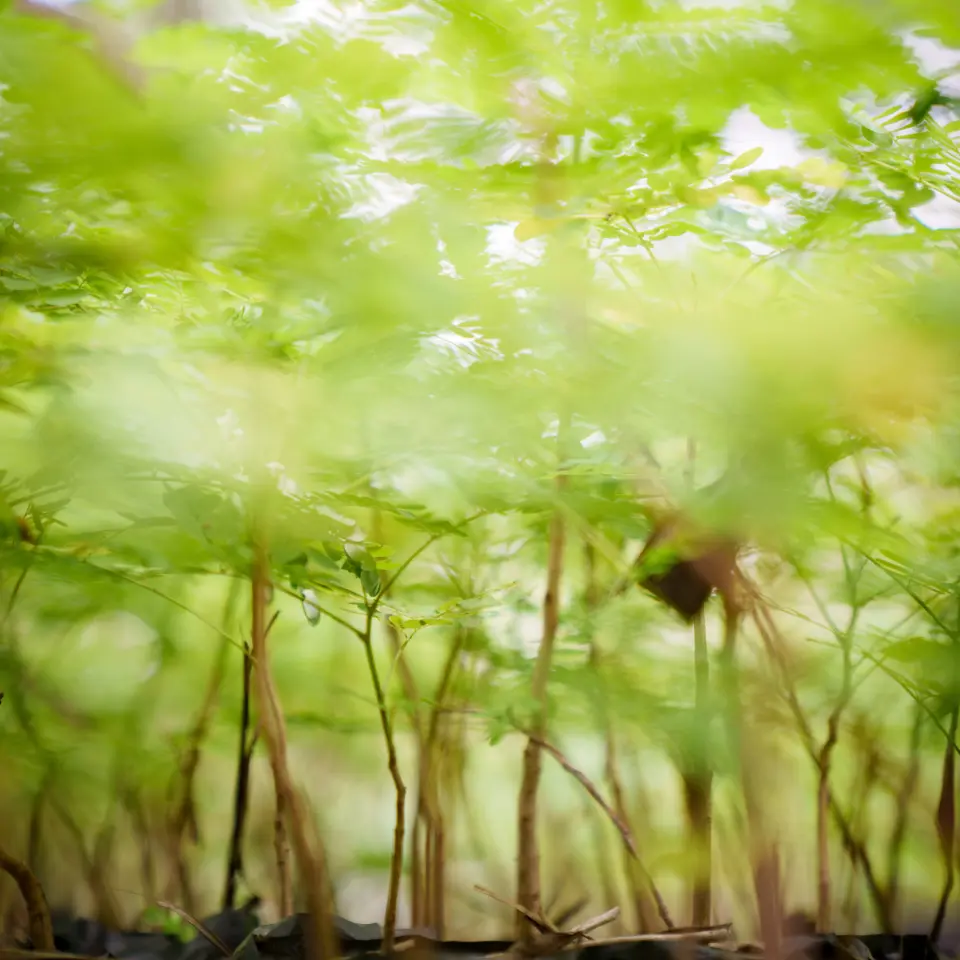
Legally compliant CO₂ offsetting starts with the right project
Verified projects, robust documentation, traceable impact: renewable energy, forest restoration and technology — Gold Standard or Verra/VCS. Clarify what carbon offset projects can actually deliver.
Project profiles at a glance
Briefly explained, clearly put into context: country, technology, standard and impact logic – plus a link to the detail page with all documents and evidence.
The project provides efficient cookstoves to households in Uganda, replacing open fires and inefficient charcoal stoves. This reduces fuel use, costs and smoke exposure – and avoids measurable greenhouse gas emissions because less (non-renewable) biomass is burned.

The climate impact is documented under the Gold Standard through monitoring and independent verification.
Learn moreLumin brings degraded grassland areas in eastern Uruguay (Cerro Largo, Treinta y Tres) back into an active climate function: afforestation creates new forest areas that remove CO₂ from the atmosphere and store it long-term in biomass and soil.

The climate impact is accounted for as additional carbon sequestration compared to the baseline of “extensive grazing”, and is documented under the VCS process through field inventories, monitoring and independent verification.
Ruchi Soya supplies wind power to the public grid at sites in Ratlam (Madhya Pradesh) as well as Jaisalmer and Jodhpur (Rajasthan). With 44.4 MW installed capacity, the electricity fed into the grid replaces part of the existing power mix, which in many regions of India remains strongly fossil-based.
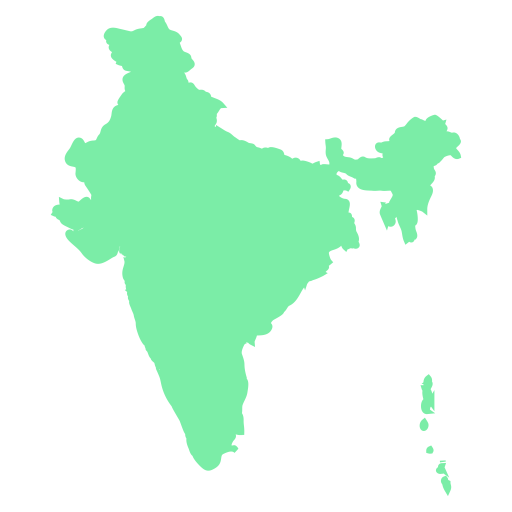
The climate impact is captured via the actual electricity generated and delivered to the grid, and is documented under the Verra/VCS process through monitoring and independent audits.
Learn moreThe project feeds solar electricity from a 50 MW PV plant near Nouakchott (Toujounine region) into Mauritania’s grid and displaces generation from gasoil and heavy-fuel-oil power plants.

This creates measurable emission reductions in the power sector, based on the actual electricity delivered to the grid and documented through monitoring and independent verification under VCS.
PROJECT TOGO+ combines nature-based forest restoration in Togo with an additional safeguarding component through Gold Standard-certified solar energy projects.
While new mixed forests are established to remove and store CO₂ long term in biomass and soil, the formal compensation is secured in parallel through verified emission reductions from renewable energy generation.
The climate impact of both components is documented, independently verified and transparently recorded in the respective registries.
This programme combines efficient cookstoves with household-level water treatment: families cook with less charcoal/biomass and no longer need to boil water. This saves fuel, time and costs, reduces indoor smoke exposure and cuts CO₂ emissions where they occur daily in everyday life.

The climate impact is documented under the Gold Standard (PoA) through usage surveys, monitoring and independent audits.
The project in Maï-Ndombe Province in the Congo Basin aims to protect large areas of tropical rainforest from deforestation and degradation over the long term. This preserves existing carbon stocks so that emissions do not occur in the first place.
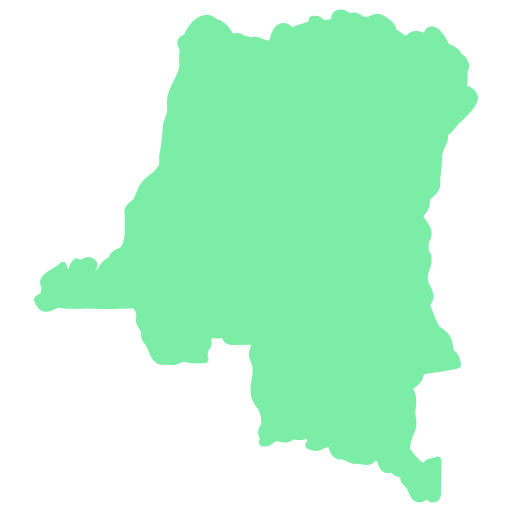
The climate impact is documented through monitoring and independent verification under the VCS framework (also CCB, Triple Gold Level).
On the Teesta River near Kalijhora (Darjeeling District, West Bengal), the project generates run-of-river hydropower and feeds it into India’s grid. The climate impact results from displacing conventional (often fossil-based) electricity generation:
Each kilowatt-hour of hydropower delivered replaces electricity from the existing grid mix – so emissions in the power sector are avoided. Emission reductions are derived from metered electricity generation and documented under the Verra/VCS process.
ACME deploys large-scale solar PV across multiple sites in India and feeds the generated electricity into the public grid. Every kilowatt-hour produced displaces fossil-based generation in the existing grid mix, creating measurable emission reductions in the power sector.
The climate impact is recorded via metered electricity generation/grid feed-in and is documented under the Verra/VCS process through monitoring and independent verification.
Tropical Mix brings degraded land in Panama back into forest: former pasture and agricultural areas are converted into sustainably managed mixed forests that store CO₂ over the long term – in wood, roots and, in part, in the soil.
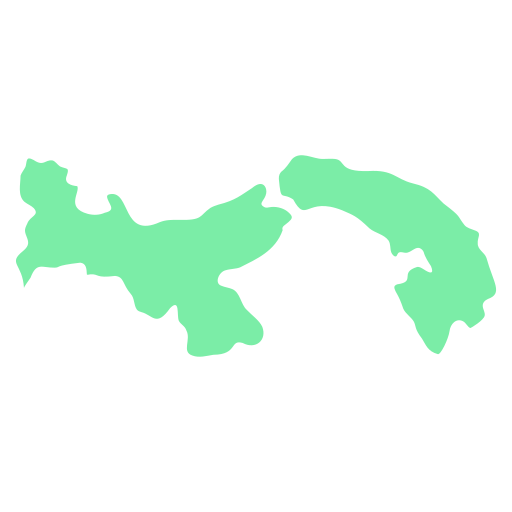
The climate impact is documented under the Gold Standard through monitoring and independent audits.
Learn moreBhadla Solar feeds renewable electricity into India’s grid: in Rajasthan, the solar park generates power without fossil fuels and replaces electricity from the existing grid mix, which in many areas is still heavily fossil-based.
This creates measurable emission reductions in the power sector. The climate impact is tracked via the actual electricity generated and fed into the grid, and is transparently documented through monitoring and independent verification.
Learn moreThe Cumayasa 1 & 2 solar project in La Romana province generates renewable electricity from photovoltaic power and feeds it into the Dominican Republic’s public grid. The climate impact comes from displacement: each kilowatt-hour of solar power delivered to the grid can—on a calculated basis—replace conventional, emissions-intensive generation, avoiding emissions that would otherwise occur in the power sector.

The reported emission reductions are documented under the Gold Standard for the Global Goals (GS4GG) through monitoring and independent verification.
The project captures landfill gas from two major landfills in Istanbul and prevents methane from escaping uncontrolled into the atmosphere. The gas is combusted in a controlled manner (primarily in engines for power generation, with excess gas flared), measurably reducing highly climate-damaging emissions.

In addition, electricity is fed into the grid, partially replacing conventional generation. The climate impact is transparently documented through measured gas and electricity data, monitoring and independent verification.
The project bundles several onshore wind turbines in Karnataka and feeds the generated electricity into the regional grid. This displaces conventional, fossil-based generation and results in measurable emission reductions in the power sector.
The climate impact is tracked via the actual electricity generated and delivered to the grid, and is documented under VCS through monitoring and independent verification.
In Zambia’s Luangwa Valley, the Luangwa Community Forests Project protects community-managed forest areas that would otherwise face increasing deforestation pressure without targeted measures.
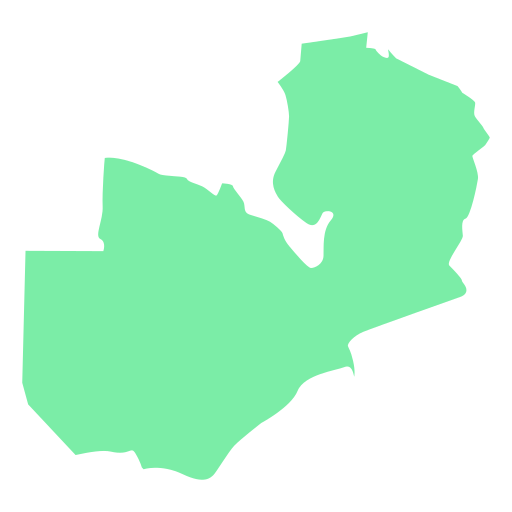
The climate impact comes from avoided deforestation: carbon stored in trees, vegetation and soils remains in the ecosystem and is not released as CO₂. Emission reductions are transparently documented and safeguarded under the Verified Carbon Standard (VCS) through monitoring and independent verification (with CCB linkage).
Ombepo Wind in the Lüderitz area (Karas Region) supplies renewable wind electricity to Namibia’s national grid over the long term. This avoids emissions that would otherwise arise from fossil-heavy electricity imports and thermal generation – the climate impact is driven by displacing conventional power production.

Emission reductions are quantified based on metered grid feed-in (methodology ACM0002) and documented under the VCS/Verra process through monitoring and independent verification.
The Ghani solar project feeds large-scale PV electricity into India’s grid and displaces generation from the existing (often still fossil-based) grid mix.
This results in measurable emission reductions in the power sector, tracked via actual electricity generation and grid feed-in as well as monitoring and independent verification under the VCS process.
CIKEL protects tropical forest areas in Pará state (Paragominas region) from planned deforestation. The climate impact comes from preserving carbon stored in biomass and soils – so CO₂ emissions do not occur that would otherwise be released if the land were converted.

The project is registered under Verra/VCS; emission reductions are documented through monitoring and independent verification.
The Manantiales Behr wind farm in Chubut (Patagonia) feeds renewable electricity into Argentina’s grid. The climate impact arises because every kilowatt-hour of wind power generated can displace conventional electricity generation in the grid—thereby avoiding emissions that would otherwise have occurred in the power sector.

The reported emission reductions are documented under the Verra Verified Carbon Standard (VCS) through monitoring and independent verification.
The K.R. ONE wind farm in Nongwang (Thepharak District, Nakhon Ratchasima Province, Thailand) feeds renewable electricity into Thailand’s grid. The climate impact arises because every kilowatt-hour of wind power generated can displace conventional electricity generation in the grid—thereby avoiding emissions that would otherwise have occurred in the power sector.

The reported emission reductions are documented under the Verra Verified Carbon Standard (VCS) through monitoring and independent verification.
Learn morePacajai protects tropical forest areas in Pará (Portel/Pacajai region) and targets locations where deforestation would be highly likely without countermeasures.
The climate impact comes from avoided CO₂ emissions because carbon stored in biomass and soils remains intact. Monitoring and independent verification ensure the traceability of the issued emission reductions.
Learn moreRajasthan Solar feeds 600 MW of solar electricity into India’s grid – without coal, gas or oil. The plant replaces electricity from the existing grid mix, which in Rajasthan is still strongly fossil-based in many areas.
The climate impact is captured via the actual electricity generated and delivered to the grid, and is documented through monitoring and independent audits.
The Oaxaca III wind project in Oaxaca (Isthmus of Tehuantepec) generates renewable electricity from wind and feeds it into Mexico’s interconnected grid. The climate impact comes from displacement: each kilowatt-hour of wind power delivered to the grid can—on a calculated basis—replace conventional, emissions-intensive generation, avoiding emissions that would otherwise occur in the power sector.

The reported emission reductions are documented under the Verra Verified Carbon Standard (VCS) through monitoring and independent verification.
The hydropower project in Kinnaur District (Himachal Pradesh) feeds renewable run-of-river electricity into India’s grid and displaces generation from the existing, partly fossil-based grid mix. This creates measurable emission reductions in the power sector.
The climate impact is captured via actual electricity generation and grid delivery, and is documented under the VCS process through monitoring and independent verification.
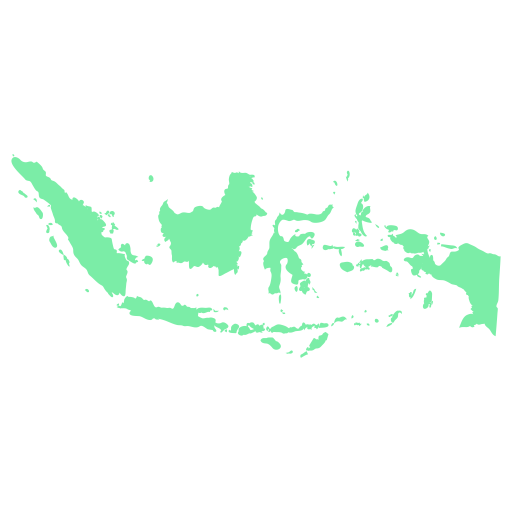
The hydropower project on the Musi River in Bengkulu (Sumatra) feeds renewable electricity into the public grid. The climate impact comes from the fact that each kilowatt-hour generated from hydropower can—on a calculated basis—replace conventional, emissions-intensive grid electricity, avoiding emissions that would otherwise occur in the power sector.
The reported emission reductions are documented under the Verra Verified Carbon Standard (VCS) through monitoring and independent verification.The West Huaybong 3 wind farm in Nakhon Ratchasima province feeds renewable electricity from wind power into Thailand’s power grid. The climate impact comes from displacement:
each megawatt-hour of wind electricity delivered to the grid can—on a calculated basis—replace conventional grid generation and avoid emissions that would otherwise occur in the power sector.
Uri II feeds renewable run-of-river electricity into India’s grid on the Jhelum River near Uri (Jammu & Kashmir), with 240 MW installed capacity.
The climate impact arises because each MWh delivered displaces conventional grid electricity and thus avoids emissions in the power sector. Grid feed-in is metered and converted into emission reductions under ACM0002; monitoring and independent verification under the VCS process ensure transparent documentation.
The project operates in the natural gas distribution network of Bakhrabad Gas Distribution Company Limited (BGDCL) and reduces methane emissions through systematic leak detection and repair (LDAR). The climate impact comes from preventing methane from escaping the network—avoiding emissions that would otherwise occur as diffuse system losses during day-to-day operations.
The reported emission reductions are documented under the Verra Verified Carbon Standard (VCS) through monitoring and independent verification.
The Ras Ghareb Wind Energy Project feeds renewable electricity generated from wind power into Egypt’s national grid.

The climate impact results from displacement: each megawatt-hour of wind electricity supplied to the grid can replace conventional, emission-intensive power generation and thereby avoids greenhouse gas emissions in the power sector.
The 250 MW solar project at Pavagada Solar Park feeds renewable photovoltaic electricity into the regional power grid of Karnataka. Its climate impact arises because every megawatt-hour of solar power injected into the grid displaces conventional grid electricity and thereby avoids emissions in the power sector.
The generated and exported electricity is continuously measured; emission reductions are calculated in accordance with ACM0002 and transparently documented through monitoring and independent verification under the Gold Standard.The Uberlândia Landfill Gas Project captures methane from a municipal landfill and uses it for energy generation instead of allowing it to escape uncontrolled into the atmosphere.
The climate impact occurs directly at the source: methane emissions are avoided by collecting and combusting the gas in a controlled manner and generating electricity, thereby reducing greenhouse gases with a particularly high global warming potential.
The Borey Energo Wind Power Project feeds renewable electricity generated from wind energy into Kazakhstan’s public power grid. Its climate impact is based on displacement: every megawatt-hour of wind power supplied to the grid can replace conventional grid electricity and thereby avoid emissions in the power sector.

The project represents large-scale renewable electricity generation in a continental region and contributes to a gradual shift away from fossil-based power generation in Kazakhstan’s electricity mix.
Learn more
The DelAgua Clean Cooking Grouped Project in Rwanda distributes fuel-efficient, improved cookstoves (ICS) to households, replacing widely used three-stone fires and inefficient wood-burning stoves. The climate impact comes from reduced fuel use: when less firewood is needed per meal, emissions from combustion decrease—measurable through usage and monitoring data and calculated under an approved VCS methodology. The project stands for practical, everyday climate action in the household sector while also reducing pressure on local wood resources.

Special feature of this offer: the credits are available with a Corresponding Adjustment (CA). This means Rwanda has authorized the international use and applies a corresponding adjustment—an additional transparency and claim-safety feature for the authorized volumes and time periods.
The DelAgua Clean Cooking Grouped Project in Rwanda distributes fuel-efficient improved cookstoves (ICS) to households, replacing widely used three-stone fires and inefficient wood-burning stoves. The climate impact comes from fuel reduction: when less firewood is needed per meal, emissions from combustion decrease—measurable via usage and monitoring data and calculated using an approved VCS methodology. The project represents practical, everyday climate action in the household sector and also helps reduce pressure on local wood resources.
Key feature of this offer: The credits are Article 6 authorized (LoA in place), but no Corresponding Adjustment (CA) is specified in this offer. This means there is a host-country authorization for defined uses/vintages—a CA (if applicable) would be tied to the specific transfer/use case and is typically shown and marketed separately.
The project scales high-efficiency Toyola cookstoves in Nigeria, replacing inefficient stoves and traditional cooking practices relying on charcoal and, in many cases, open or outdated cooking setups. Climate impact is driven by lower fuel consumption: using less charcoal per meal reduces combustion-related emissions in a measurable way.

Emission reductions are quantified using the Gold Standard methodology (Technologies and Practices to Displace Decentralized Thermal Energy Consumption, v3.1) and documented through monitoring (e.g., usage/adoption surveys and technical tests) and independent verification.
The project restores existing boreholes with hand pumps in rural communities in Kaliro District and keeps them reliably operational through maintenance and regular checks. This gives households access to safe drinking waterwithout having to boil it over an open fire on a regular basis.
climate impact comes from: less firewood used for water treatment means measurably fewer emissions from combustion.
The climate impact is documented under the Gold Standard through monitoring and independent verification.
The project rehabilitates existing community boreholes with hand pumps in rural areas of Eritrea and keeps them reliably operational through maintenance and repairs. This gives households access to safe drinking water without having to boil it over an open fire on a regular basis.

That is where the climate impact comes from: less firewood used for water treatment means measurably fewer emissions from combustion.
The climate impact is documented under the Gold Standard through monitoring and independent verification.
The project rehabilitates existing boreholes with hand pumps in Zambia’s Eastern Province and keeps them reliably operational through regular maintenance and repairs. This gives households access to safe drinking water without having to boil it over an open fire on a regular basis.
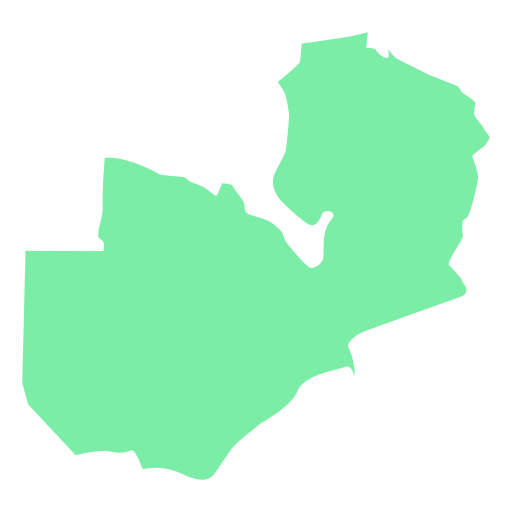
That is where the climate impact comes from: less firewood used for water treatment means measurably fewer emissions from combustion.
The climate impact is documented under the Gold Standard through monitoring and independent verification.
Animala Wind Power brings renewable electricity into the Indian grid: In Andhra Pradesh, 42 wind turbines with a total installed capacity of 84 MW generate electricity without fuels and without combustion processes. The wind power produced is fed into the public grid, where it replaces part of the conventional electricity mix, which in India is still largely based on fossil fuels.
This results in measurable emission reductions directly within the power sector. The climate impact is quantified based on the actual electricity generated and supplied to the grid, and is transparently documented through monitoring and independent verification.
Green Infra Wind Energy brings renewable electricity into the Indian grid: In Gujarat, 120 wind turbines with a total installed capacity of 252 MW generate electricity without fuels and without combustion processes. The wind power produced is fed into the public grid, where it replaces a share of the conventional electricity mix, which in India is still largely based on fossil fuels.
This results in measurable emission reductions directly in the power sector. The climate impact is quantified based on the actual electricity generated and supplied to the grid and is transparently documented through monitoring and independent verification under the Gold Standard.
Why offset CO₂?
Simple: because a residual amount always remains.
Even with the best measures, emissions can never be reduced to zero.
This is exactly where offsetting comes in: it balances what is technically or economically unavoidable today.
We offer traditional carbon offsetting, but we highly recommend exploring our modern 'Contribution' approach if you are seeking maximum legal certainty.
More than just offsetting: The strategic advantages for your business.
Offsetting completes your climate logic: it shows how you handle residual emissions and makes communication with customers, banks and partners much clearer.

Immediate climate impact
Climate action projects reduce CO₂ emissions right away — exactly where the leverage is highest. They create measurable impact in regions where every saved ton truly counts.

Communication you can rely on
You can transparently demonstrate which emissions you have offset and how every ton was documented. This gives you maximum confidence in your communication and prevents misunderstandings or greenwashing risks.

Stronger for new requirements
CO₂ data is increasingly being requested. Offsetting adds credibility and makes companies noticeably better prepared in conversations with partners.
Holistic Climate Action:
Strategic Reduction and High-Integrity Offsetting
Effective climate action follows a clear priority: avoidance before reduction before offsetting. natureOffice helps you develop a sound decarbonization transformation plan that goes beyond mere statements of intent. We identify specific savings potentials within your company and assist you in defining science-based targets (SBTi-aligned) to consistently lower your emissions across Scopes 1, 2, and 3—a core requirement for CSRD reporting and the ESRS E1 standard.
For all currently unavoidable emissions, we provide access to high-integrity climate action projects. We rely exclusively on strictly certified standards such as the Gold Standard or VCS (Verified Carbon Standard), which, in addition to carbon sequestration, deliver measurable contributions to the SDGs (Sustainable Development Goals) and biodiversity. By linking technical reduction with certified offsetting, we create a legally secure foundation for your sustainability communication and effectively protect you from greenwashing risks. This ensures your commitment becomes a resilient part of your corporate future viability on the path to Net-Zero.