
PROJECT TOGO · Natural Forest and Development Project
Our Why
The crucial question is not how many trees are planted.
But whether they will grow into a forest.
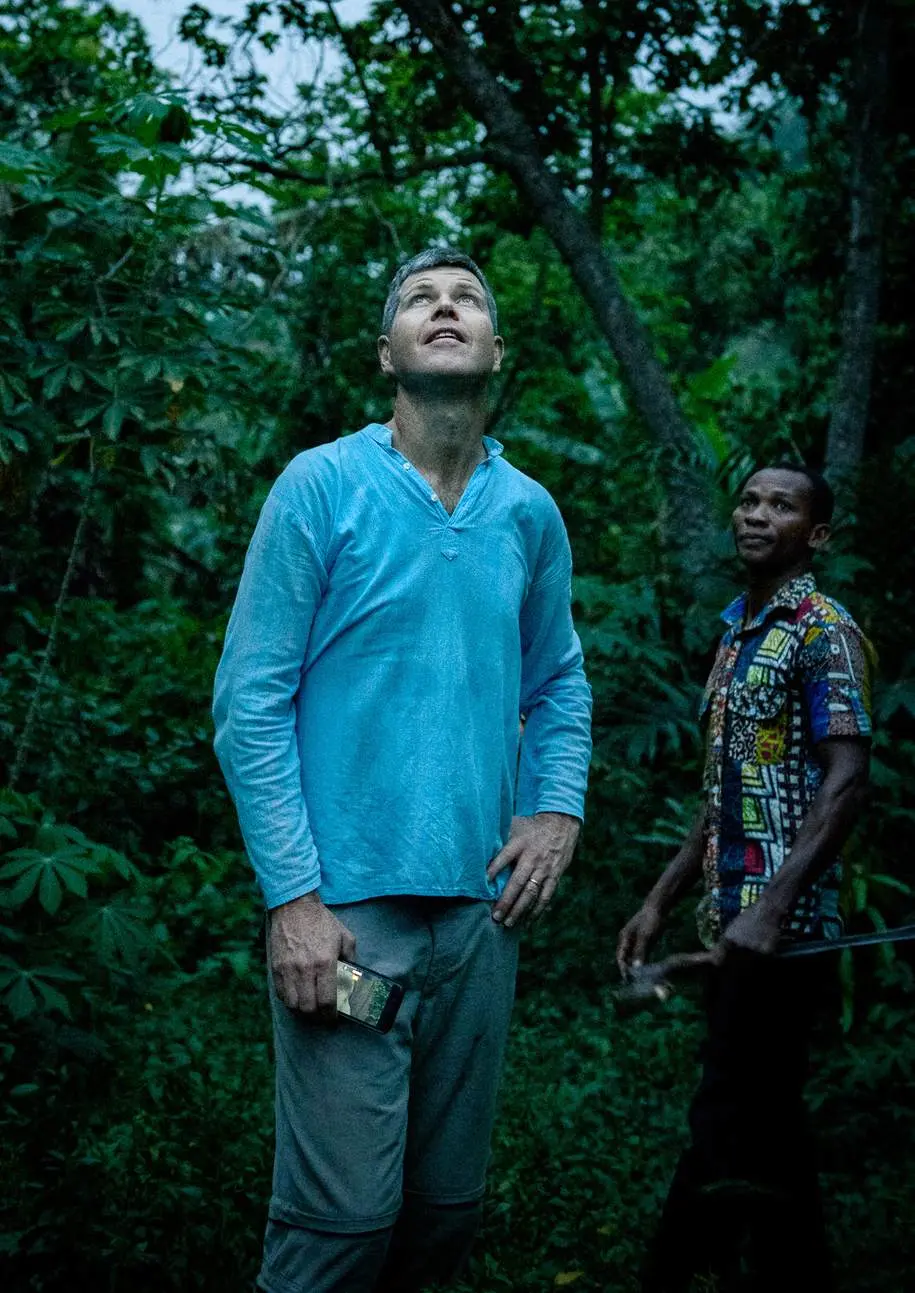
A planting takes a few days. A forest takes decades.
Seedlings must be grown, areas prepared, and young trees cared for. Fires, dry periods, and land-use conflicts must be managed. Above all, however, it requires people who take responsibility for the areas and protect the forest in the long term.
Therefore, natureOffice does not see PROJECT TOGO as a mere planting campaign. It is a long-term task that combines forest development, local structures and social development.
Why Togo?
Because responsibility needs a concrete place.
natureOffice has been active in Togo since 2010. PROJECT TOGO developed from discussions, initial trips, land agreements and the establishment of local structures. Work began in Fokpo in 2012, and the significantly larger project area near Aboudjokopé was added later.
The project was not selected from a catalogue. It arose from relationships, collective work and the decision to remain on site for the long term.
Today, the project work is implemented by ecoCent Togo. Local teams organise reforestation, maintenance, fire protection, tree nurseries, and many of the social project areas.
01
around 83 hectares of project area
02
around 730 hectares of project area
03
long-term forest development
04
contractually agreed protection

A coherent system
Forest protection does not begin at the forest edge.
Where clean water is lacking, school journeys are almost impossible to manage, or reliable income opportunities are missing, long-term forest protection competes with the immediate demands of everyday life.
01
Species-rich forest development instead of short-term planting campaigns.
02
Provision, hygiene and reliable local structures.
03
Schools, mobility, knowledge, and vocational training.
04
Labour, cooperatives and local processing.


Examples of support
We are not showing these examples as an award. They demonstrate what a voluntary contribution can be used for.
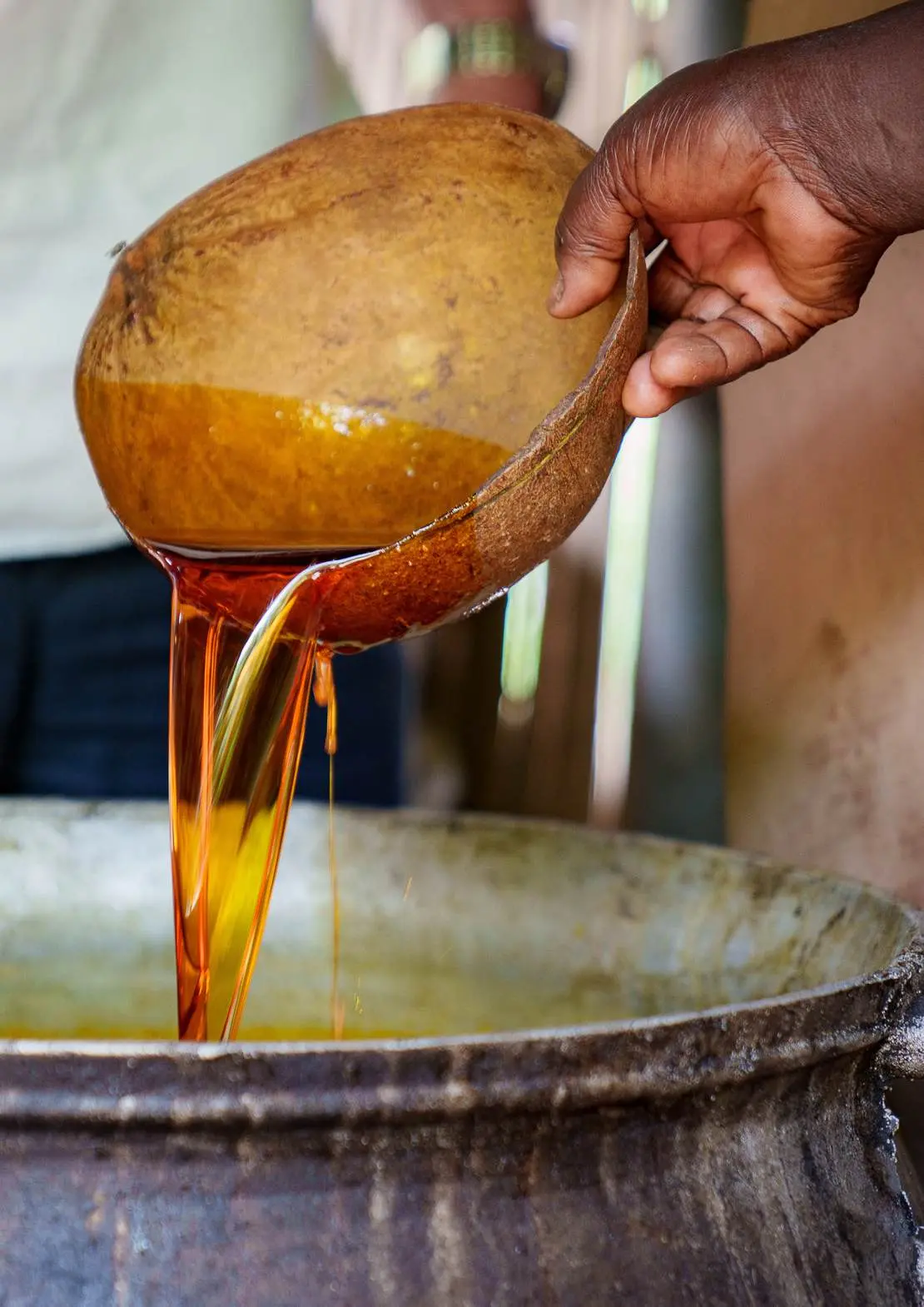
ebalta · Women's Cooperative
The mill facilitates on-site processing and improves the conditions for the cooperative to organise itself independently.

dieUmweltdruckerei · Water
Water treatment in Aboudjokopé
The facility supports the supply of clean water – a foundation for health, hygiene, and the daily life of the village community.
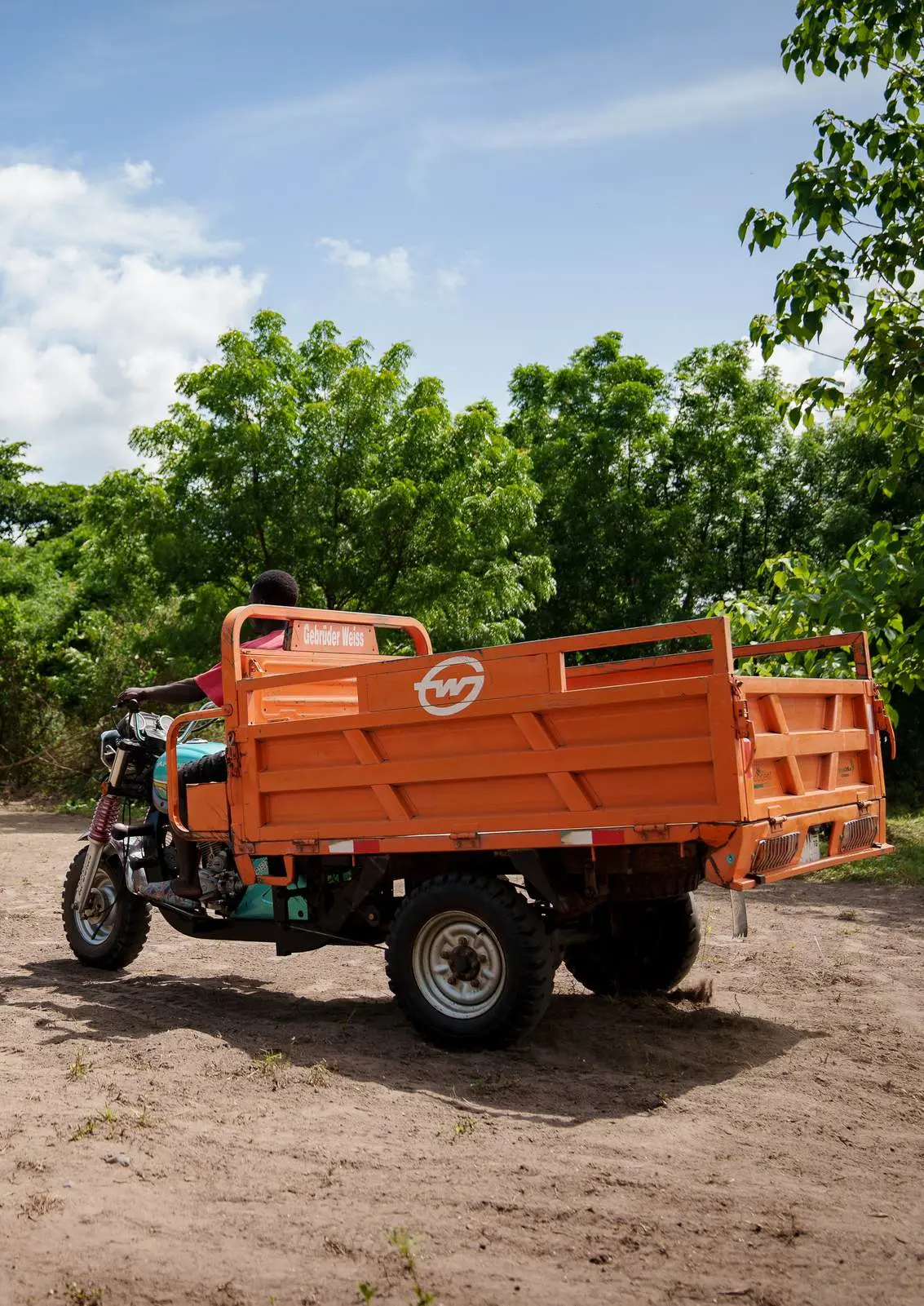
Gebrüder Weiss · Mobility
They facilitate paths and help to transport people, tools, and materials within the project area.
The examples document concrete support. They do not represent a seal of approval and do not confer any climate status on the participating companies.
Further good examples

Test path and own path
Responsibility does not end with a standard.
2012
The work in Fokpo begins. PROJECT TOGO is being established as a reforestation project under CarbonFix.
Afterwards
Following the acquisition of CarbonFix, the project will be transitioned into the Gold Standard pathway.
Since 2018
Following a change to the accreditation model, the formal certification path will not be continued. Project work and documentation will go on.
Today
Forest inventories, species surveys, satellite data, project reports, and scientific papers document the development.
Support voluntarily
01
CCF and PCF show where emissions arise within one's own value chain and where they should be reduced.
02
A voluntary contribution enables additional project work outside of one's own value chain. Both remain clearly separated from each other.
What your contribution makes possible
No promises. Concrete work.
A contribution can flow into long-term project work or, following mutual agreement, support a specific project component.
01
Cultivation, planting and care of young trees
02
Fire protection and protection of the project areas
03
Wells, water treatment and infrastructure
04
Schools, bicycles and educational offers
05
Cooperatives, agroforestry and local processing
06
Monitoring, forest inventories and documentation
What your company receives
Not just a confirmation. A traceable connection to the project.
01
Project, region, period, intended use and type of contribution.
02
An objective documentation of the agreed commitment.
03
Information on support and the available documents.
04
Coordinated texts, selected images and up-to-date project information.
05
Annual reviews, project documents and personal explanations.
06
On request, project discussion, presentation or agreed project trip.
Clear boundary
A post remains a post.
With direct support of PROJECT TOGO, no CO₂e amount is allocated.
The documentation shows
It does not mean
which project was supported
that emissions have been offset
Region, period and purpose
that the CCF or PCF is reduced
which evidence is available
that a product is climate-friendly
what a company contributes to
that a climate status or label exists
The support is provided outside of the company's own value chain. It does not replace reduction measures and is not offset against the CCF or PCF.
Documents and evidence
What we show should be easy to understand.
More than a decade of project work has produced extensive documentation: project information, past audit reports, forest inventories, species surveys, area maps, satellite analyses, scientific papers, and reports from the work on the ground.
To the documents and evidence

FAQs
Good to know.
Is PROJECT TOGO still certified?
PROJECT TOGO was initially managed under CarbonFix and later under the Gold Standard. natureOffice did not continue the formal certification pathway following a change in the accounting model. Project work, monitoring and documentation were continued independently.
Does a contribution offset our emissions?
No. Direct support is not offset against your CCF or PCF and does not change your accounted emissions.
Is a CO₂e quantity assigned to our contribution?
Not in the case of direct project support. The contribution or the supported measure, region, period, and available evidence are documented.
Can we select a project area?
This is possible if there is a suitable current need. Alternatively, the contribution can be used freely for ongoing project work.
May we communicate about the support?
Yes. We support you with factual information and suitable wording. The support should be presented as a voluntary contribution, not as an offset, proof of neutrality or product feature.
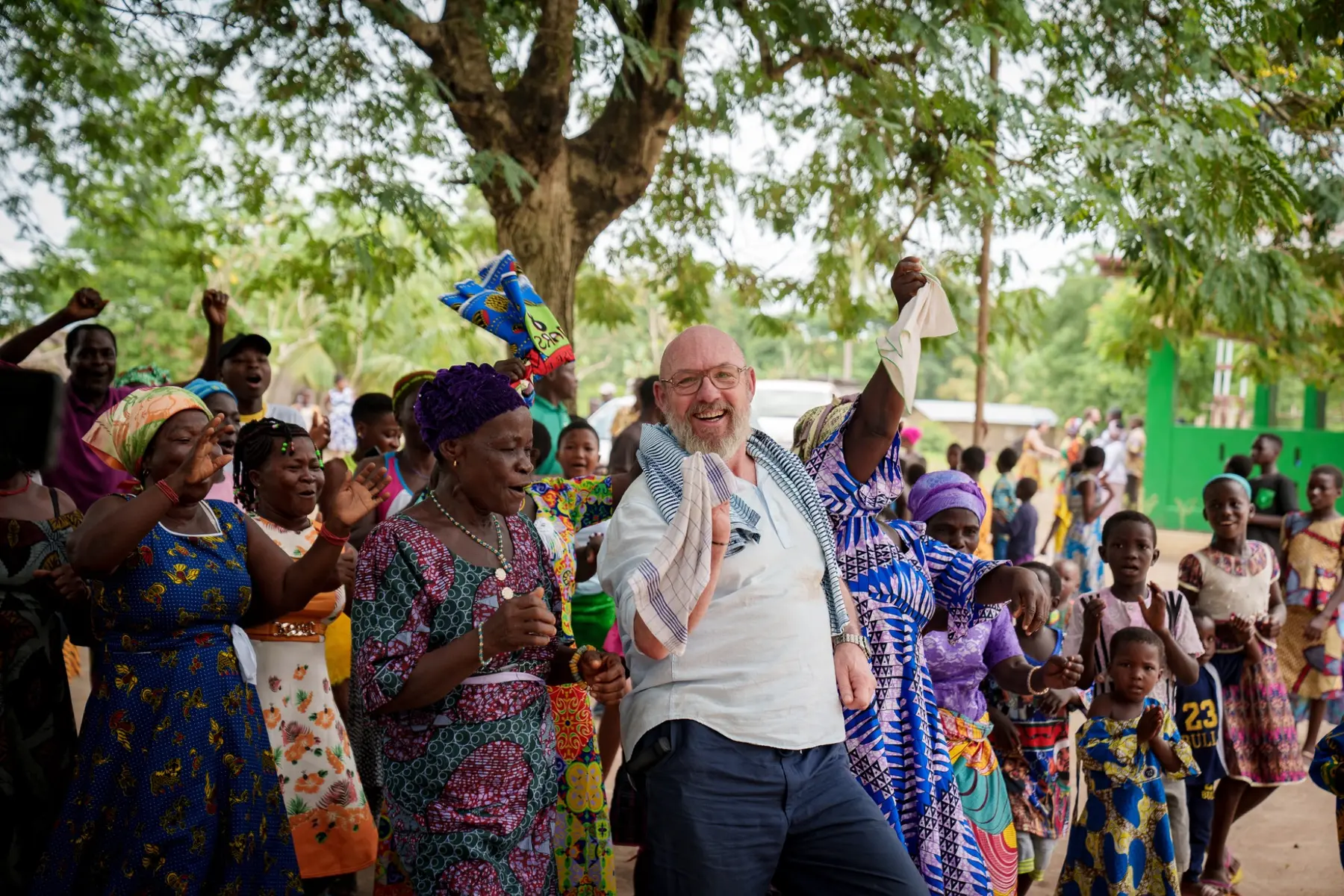
Contribute
Responsibility doesn't need a big promise.
Only people who are willing to support something in the long term.
We will show you which project areas currently require support, which form of contribution suits your company, and how the involvement can be transparently documented.
What grows with PROJECT TOGO
A forest only remains if the people living near it also see a future.
The social measures are not a supporting programme. They are part of the project logic.
01
Water and Health
Water that gives back time.
Water that gives back time.
Wells, water treatment, storage and hygiene training improve the supply. Shorter distances create greater reliability for drinking, cooking, hygiene, gardens and community tasks.
02
Education that becomes achievable.
Education that becomes achievable.
Schools, school furniture, bicycles, literacy and vocational training improve access to knowledge.
03
Knowledge that enables income.
Knowledge that enables income.
Cooperatives, machinery and training support local processing and a more independent organisation.
04
Value that is created locally.
Value that is created locally.
Palm oil, soap, gari and other products combine local raw materials with knowledge, processing and their own marketing opportunities.
05
Work that protects the forest.
Work that protects the forest.
Tree nurseries, maintenance, forest inventories and fire protection make forest protection an ongoing local task.
Getting to know the social project areas