The Corporate Contribution Network
The Corporate Contribution Network connects voluntary climate contribution with practical corporate responsibility.
Responsibility today is bigger than a climate contribution.
Because a meaningful contribution has an external impact – and asks the right questions internally.
Many companies want to do more.
For the climate.
For their business.
For the people who work there.
At the same time, it has become harder to talk about this properly.
What are we allowed to say?
What is legally sound?
Where do we stand internally?
Which topics are we overlooking?
And how do we get started without turning it into a major project?
The Corporate Contribution Network offers a simple answer:
Make a contribution. Review responsibility. Derive the next step.
How the Corporate Contribution Network works: How the Corporate Contribution Network works: 1 climate contribution. 3 checks. 1 next step.
This turns a voluntary contribution into an entrepreneurial framework with impact externally and internally.
1 climate contribution
You support selected climate protection projects – in addition to your own reduction measures.
Important:
The contribution is not offset against your CO₂ footprint and is not a neutrality claim.3 checks per year
You review key areas of your business with simple checks – practical, easy to understand and without a major consulting setup.
For example:
Finance, employees, processes, digitalisation, communication, CO₂ accounting, climate and responsibility within the company.
1 next step
The checks lead to one concrete next step – not a major transformation, but a feasible clarification, improvement or decision.
For example: clarifying an open question, improving a rule, sharpening a statement, defining a responsibility or consciously continuing to work on a topic.
One contribution externally. One look internally.
The climate contribution is the visible part of the Network. But good corporate responsibility does not end there.
That is why the Corporate Contribution Network also includes a look inside the company.
Participating companies regularly review key areas of their operations: not through a major audit, but through simple checks that quickly show where things are well regulated – and where more clarity would help.
Where are we well positioned?
Where are things only running out of habit?
Where is there no clear rule, responsibility or decision?
For example:
- 1
Finance
How well does the company understand its financial room for manoeuvre? The checks in this area help make costs, risks and financial dependencies visible – without turning it into a full controlling project.
- 2
Employees
How stable is the company when knowledge, responsibility or workload are distributed unevenly? The checks in this area help assess collaboration, cover arrangements, retention and fair structures more clearly.
- 3
Processes
Which processes are really defined – and which only work because certain people have them in their heads? The checks in this area help sort out responsibilities, routines and recurring tasks more clearly.
- 4
Digitalisation
Which digital tools genuinely help the company – and where do new risks, dependencies or uncertainties arise? The checks in this area help assess digital topics more pragmatically and safely.
- 5
Communication
What does the company communicate externally – and is it understandable, evidence-based and appropriately worded? The checks in this area help sharpen statements, avoid misunderstandings and identify communication risks at an early stage.
- 6
Customers
How well does the company understand expectations, risks and dependencies around its customer relationships? The checks in this area help assess customer structure, service quality, complaints, communication and fairness in dealing with customers more clearly.
- 7
Responsibility
How reliable is the company when dependencies, contracts or fair collaboration become important? The checks in this area help assess topics such as supplier failure, fair terms and conditions, clear agreements and responsible conduct more clearly.
Responsibility is more than a sustainability topic
It shows up in day-to-day business – in decisions, agreements, processes, relationships...
... prices, suppliers, customers, employees, processes, contracts and decisions.
This is exactly where the checks help.
They bring structure to topics that often run in the background day to day – without an audit, without a consulting project and without internal drama.
In concrete terms, this means:
→ keeping key business areas in view
→ reviewing topics before they become problems
→ recognising more clearly where things are well regulated
→ making dependencies, risks and open points visible
→ understanding responsibility more broadly than sustainability in the narrow sense

Not everything that works is also well regulated.
Many topics seem unproblematic for a long time. Until they are not.
The most important supplier has always delivered. A responsibility is somehow clear. The process works because one person knows how it works.
Good questions reveal where things get stuck
The checks ask questions exactly where day-to-day business often moves on too quickly.
In concrete terms, this means:
→ recognising dependencies earlier
→ making responsibilities clearer
→ reviewing statements and documents
→ questioning routines
→ addressing topics before they become expensive

What works – and what really matters
In day-to-day business, many things work. Precisely for that reason, people rarely ask what they actually depend on. The checks make visible which topics are well regulated – and which only work because people improvise, compensate or think ahead.
What works today should not depend on chance tomorrow.
Stable is not always what looks stable.
The checks make visible which topics are well regulated – and which only work because people improvise, compensate or think ahead.
In concrete terms, this means:
→ better understanding areas that function well
→ making open points visible
→ recognising dependencies
→ setting clearer priorities
→ deciding what should be deliberately regulated

Show what you contribute
Those who take responsibility should be able to talk about it. Clearly. Understandably. Without big promises.
Your contribution at a glance
The profile page shows what your company stands for within the Contribution Network.
This allows customers, employees and partners to see: this is not just a claim. Here, contribution is being made and responsibility is being worked on.
The profile page turns this into a public reference that you can share – on your website, in proposals, in conversations with customers or internally with your team. It does not replace sustainability reporting and does not claim any special status. It creates a simple, verifiable place where your contribution and your work on responsibility become transparent.

Contribution means: contributing without offsetting.
In the Corporate Contribution Network, we do not understand contribution as a new word for compensation.
Contribution describes a voluntary contribution outside the company’s own value chain. It supports measures that are not part of the company’s own CO₂ footprint – and are not offset against it.
In the Corporate Contribution Network, we connect this contribution with a look inside the company: through checks that review key areas of responsibility and through one next step that results from them.
This makes contribution more than project funding.
One contribution externally. One look internally. And impact where projects bring about concrete change.
What this contribution helps make possible
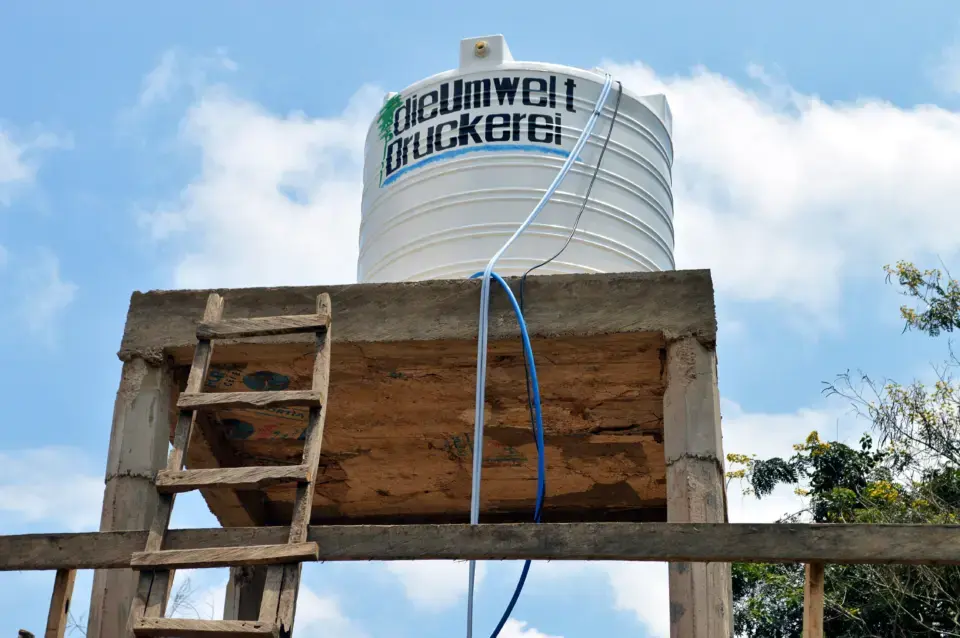
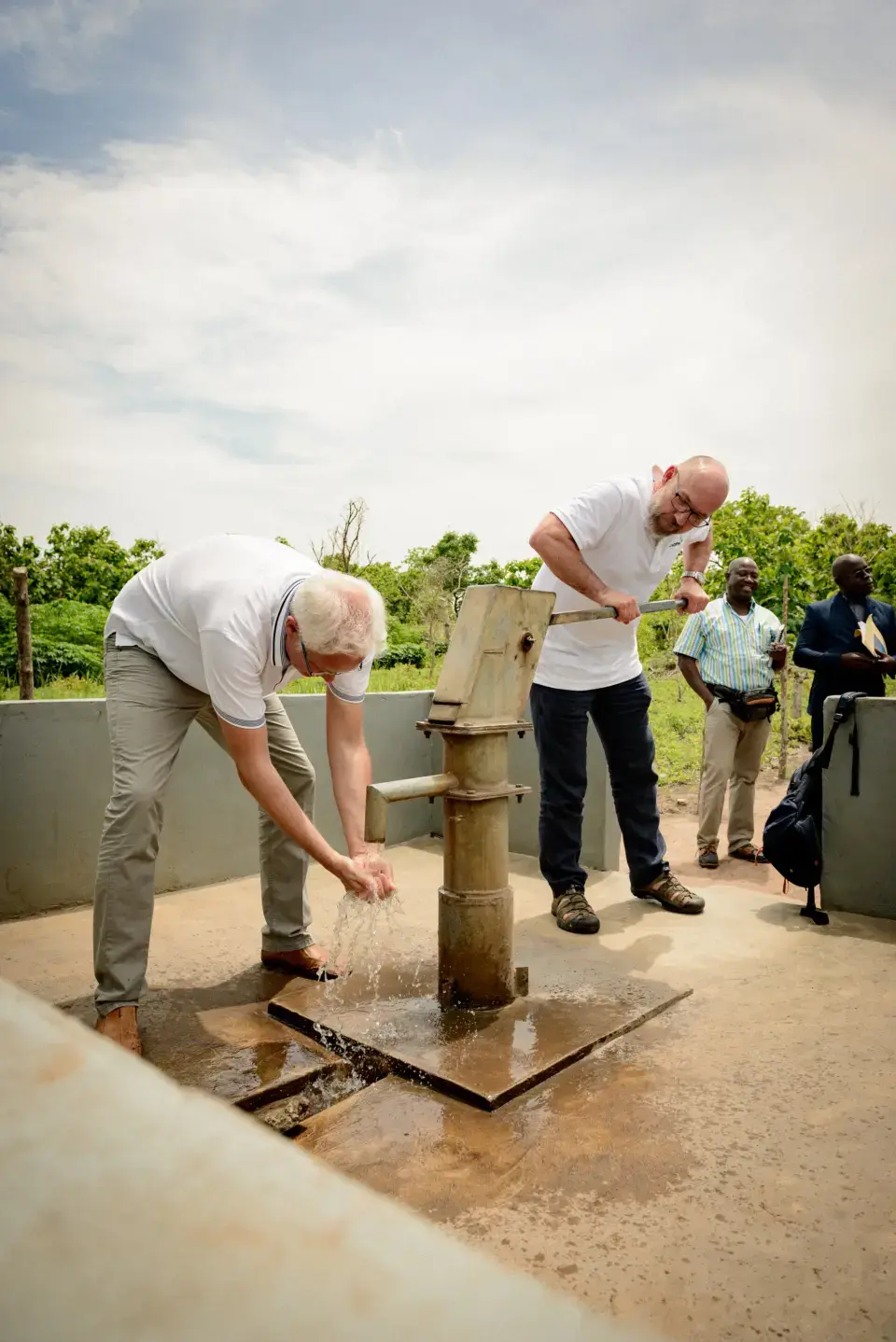
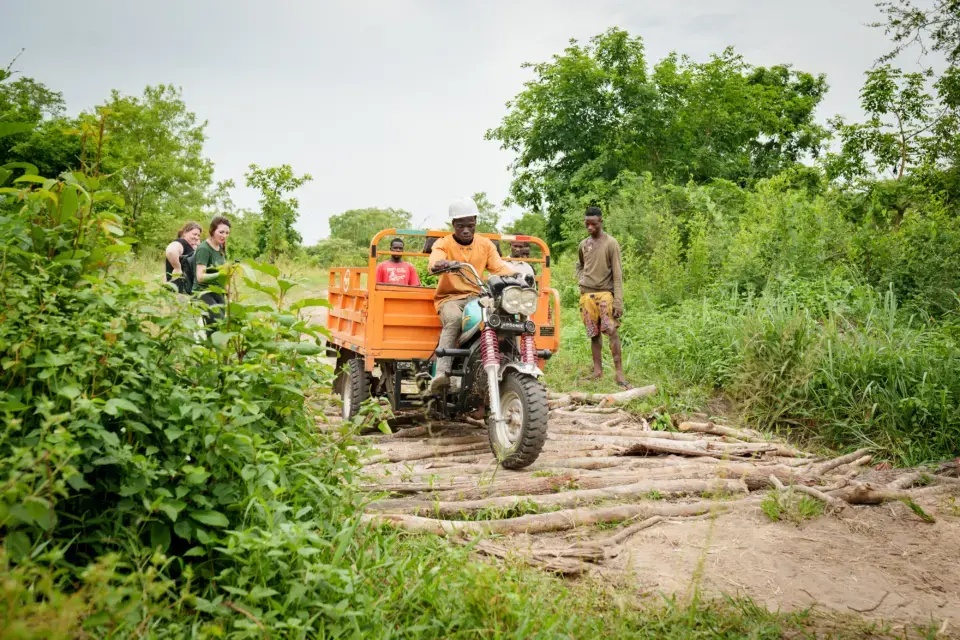
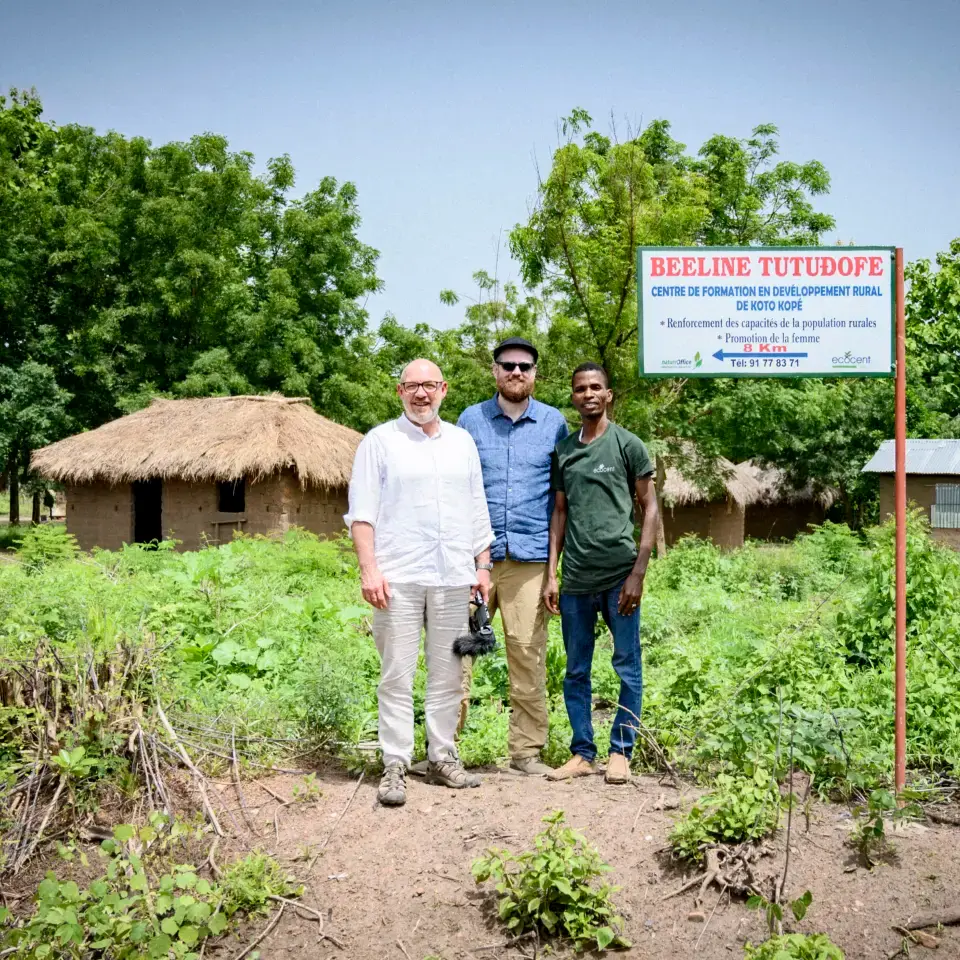
Contribution does not remain abstract. PROJECT TOGO shows what a long-term contribution outside the company’s own value chain can help support. Of course, it is about climate protection. About natural forest reforestation. About CO₂ storage. About biodiversity. But it is not only about that.

This is where contribution becomes tangible
As a contribution to a project that connects ecological impact, social development and long-term collaboration. PROJECT TOGO, for example, shows why we do not understand contribution only as a climate contribution. But as a contribution to something that can grow locally – step by step, year by year, together with the people who live there.


Who is the Network for? For companies that want to contribute more – but in a clear and feasible way.
The Corporate Contribution Network is aimed at companies that want to take responsibility without turning it into a complicated sustainability programme.
A good fit if …
↗ your company wants to contribute something – but without making a neutrality claim.
↗ you want to better understand where your company stands internally.
↗ you do not see sustainability as a standalone topic, but as part of good corporate governance.
↗ you want to make a climate contribution while also reviewing selected areas of your company.
↗ you want to communicate more clearly what you do – and what you deliberately do not claim.Probably not the right fit if …
↗ you are only looking for a logo or a seal.
↗ you need a quick “climate-neutral” claim.
↗ you only want proof of offsetting.
↗ you are not willing to also look inside your own company.
↗ you understand sustainability only as external image.Particularly suitable for
↗ owner-managed companies
↗ family businesses
↗ small and medium-sized companies
↗ service providers
↗ print companies
↗ trading companies
↗ manufacturing companies
↗ companies without their own ESG department
A contribution that fits the company.
Not every company starts from the same point. That is why the Corporate Contribution Network works with contribution levels. They serve as guidance – depending on company size, desired scope and communication needs. The contribution is classified appropriately in a personal conversation.
| Contribution level | For whom | Contribution | Checks | Included | A good fit if... |
|---|---|---|---|---|---|
| Start | Companies that want to make an initial structured contribution | from €1,500 p.a. | 3 | voluntary climate contribution, access to three checks, contribution confirmation, project information, short communication module | You want to get started in a clear and credible way – without a major setup. |
| Deepen | Companies that want to connect contribution and corporate responsibility more consciously | from €3,500 p.a. | 6 | voluntary climate contribution, extended check access, short Contribution Compass, communication modules, orientation call | You do not only want to contribute, but also want to sort out topics within the company more clearly. |
| Make visible | Companies that want to actively communicate their contribution and use it more internally | from €7,500 p.a. | 10 | voluntary climate contribution, ten checks per year, individual communication modules, claim check, short written classification, optional presentation as a Network company | Your contribution should also become visible externally in a clear and credible way. |
| Stay connected | Companies that want to support PROJECT TOGO, regional forest ecology projects in Germany and the Netherlands, or the Contribution Network on a long-term and substantial basis | from €15,000 p.a. | individual | individual climate contribution, extended check access, personal classification, project story, communication support, possible case presentation | You want to contribute over the long term and make your commitment visible together with us. |
Communicate clearly, without overstating.
Many companies want to show that they take responsibility.
The Corporate Contribution Network helps classify their contribution clearly: as a voluntary climate contribution, as a look inside their own company and as a next step – without neutrality claims and without exaggerated sustainability claims.
Good wording
“We are part of the Corporate Contribution Network by natureOffice.” //
“We make a voluntary climate contribution outside our own value chain.” //
“We review selected areas of our company with simple checks and derive concrete next steps from them.” //
“Our contribution is not offset against our own emissions and is not a neutrality claim.”
Better not
“We are climate-neutral.” //
“Our emissions are offset.” //
“Our products are climate-neutral through the Network.” //
“We are sustainability certified.”
The simple benchmark: Do not claim more than what is actually being done. But clearly show what is actually happening.
Frequently asked questions about the Contribution Network
A brief explanation of what the Network is – and what it deliberately does not aim to be.
“Network” does not mean an association, a club or a closed membership.
It means a shared framework for companies that think in a similar direction: contributing more, taking a closer look and communicating about it clearly.
The common denominator is not a status. It is the willingness to make contribution and responsibility more concrete.No. The contribution is not offset against the company’s own emissions.
It is a voluntary climate contribution outside the company’s own value chain. This means: your company supports climate protection without deriving any offsetting or neutrality claim from it.You receive a visible sign of your participation in the Contribution Network – with a QR code linking to your profile page.
However, we deliberately do not understand this sign as a sustainability seal, certification or award. It does not confirm: “This company is sustainable” or “This company is climate-neutral.”
It shows: this company has voluntarily joined the Contribution Network, makes a climate contribution and reviews selected areas of its business with simple checks.
The QR code leads to the public profile page. There, it becomes transparent what the company contributes, which areas have been reviewed and which next step results from this.
In short:
Not a seal in the traditional sense.
But a visible reference to voluntary contribution, transparency and responsibility.Not necessarily.
A CO₂ footprint can be useful, but it is not a prerequisite for joining the Network. What matters is this: the climate contribution does not replace reduction and does not replace your own engagement with emissions.The checks are simple digital self-assessments covering key areas of the company.
In 2026, sustainability has to be more than a climate topic. It also concerns the question of how stable, fair, clear and future-proof a company is overall – in finance, employees, processes, digitalisation, communication and customers.
The checks make this broader perspective easier.
They are not an audit and not an external assessment. They help classify topics, identify open points and derive a next step.No.
The basic logic of the Network is three checks per year. Which checks make sense depends on where your company currently stands and which topics need more clarity at the moment.Yes. But clearly and accurately.
You can communicate that your company is part of the Contribution Network, makes a voluntary climate contribution and reviews selected areas of the business.
Statements such as “climate-neutral”, “offset” or “sustainability certified” would not be appropriate.For many companies, a traditional sustainability programme sounds like a strategy process, reports, key figures, responsibilities and a lot of additional work.
The Contribution Network takes a different approach.
It does not make responsibility bigger than it needs to be – but more concrete than it often remains.
Companies make a voluntary contribution, look into selected areas of their business and derive a next step from this.
No large-scale sustainability management.
No project that first needs six months of preparation.
No system that only works with a dedicated ESG department.
Instead, it offers a practical starting point:
Make a contribution. Review responsibility. Move forward.For companies that do not want to wait for perfect sustainability structures before getting started.
For businesses that want to contribute more – but without greenwashing, without neutrality claims and without a sustainability programme that no one can manage in everyday operations.
The Contribution Network is particularly suitable for small and medium-sized companies, family businesses, owner-managed companies, service providers, print companies, trading companies and companies without their own ESG department.
In short:
For companies that want to take responsibility without overcomplicating it.After the checks, it does not stop at an evaluation.
It becomes visible what should be clarified, improved or decided. This may be an open question, an unclear responsibility, an outdated rule, a shaky statement or a topic that has so far simply been running in the background.
This leads to a next step.
Not a catalogue of 48 measures.
Not a new major project.
But a concrete decision the company can continue working with.
This turns review into more than paperwork. It creates movement.
Corporate Contribution Network:
Connecting climate contribution and corporate responsibility
The Corporate Contribution Network by natureOffice is aimed at companies that want to connect voluntary climate protection with practical corporate responsibility. At its centre is a voluntary climate contribution outside the company’s own value chain – without offsetting it against the company’s own CO₂ footprint, without a neutrality claim and without traditional compensation logic. Companies thereby make an additional contribution to selected climate protection projects and can communicate their commitment clearly, transparently and without exaggerated sustainability claims.
At the same time, the Contribution Network deliberately goes beyond a pure climate contribution. Participating companies review selected areas of their business with simple digital checks – for example finance, employees, processes, digitalisation, communication, customers and responsibility. In this way, sustainability in small and medium-sized businesses is understood more broadly: not only as a CO₂ topic, but as a question of good corporate governance, clear responsibilities, stable processes, fair relationships and credible communication.
A special project anchor is PROJECT TOGO, which connects long-term climate protection with natural forest reforestation, biodiversity, education, water, women’s empowerment, local value creation and social development. This shows how the Corporate Contribution Network enables companies to make a voluntary contribution without claiming more than what is actually happening. The approach helps avoid greenwashing risks, make responsibility visible and derive one concrete next step within the company.
In short: the Corporate Contribution Network is not an association, not a club and not a sustainability seal. It is an entrepreneurial framework for companies that want to contribute, review responsibility and communicate clearly.