

A CO₂ balance isn’t magic. Not once we’re done.
We start with your data – and calculate your CO₂ emissions from there.
What a CO₂ balance is really about
A CO₂ balance shows how much emissions occur – and exactly where they come from. We take your available data, structure it cleanly and calculate the CO₂ emissions of your company, your products or individual processes.
Why this matters
A reliable CO₂ baseline reveals which areas carry weight, where reduction is realistic and which measures actually make an impact. You need this foundation for reporting, for conversations with customers and partners – and to make internal decisions based on numbers, not assumptions.
How a CO₂ balance comes together with us
We keep the process straightforward: review the data, assign it correctly, calculate the emissions – and you end up with a clear CO₂ baseline. No complicated models, no unnecessary loops.We keep the process straightforward: review the data, assign it correctly, calculate the emissions – and you end up with a clear CO₂ baseline. No complicated models, no unnecessary loops.
- 1
We review your data.
What you already have is enough. We look at numbers, consumption data and documents – and identify what’s still missing. Step by step, a picture emerges that’s reliable enough for the calculation.
- 2
We assign everything correctly.
The data goes where it belongs: into the right scopes, categories and system boundaries. This makes it clear which sources contribute how much – and what really matters in the final balance.
- 3
We calculate your emissions.
Company, product or process – we calculate transparently, traceably and according to recognised standards. Every value can be checked, and you can clearly see how the results are built.
- 4
We create a solid basis.
The result is a CO₂ balance that shows where emissions occur and which areas may become important later on. A foundation you can actually work with – for reporting, conversations or your next reduction steps.
What you’ll have in the end
You receive a CO₂ balance that clearly shows where emissions occur and how the numbers come together. Understandable, well documented and without unnecessary complexity.
Clear CO₂ figures
You see transparently how high your emissions are – by area, by scope, by source.
This creates an overall picture that’s solid enough for GHG reporting and for any later steps in your climate strategy.
Open and verifiable documentation
All data, factors and assumptions are shown in a way that’s easy to follow.
This makes your CO₂ balance audit-ready, GHG-compliant and easy to explain to customers or partners without back-and-forth.
Reliable basis for reporting
The balance can be used directly for ESG reports, the GHG Protocol, internal requirements or customer requests.
You have all values prepared in the format needed for disclosure, reporting or external standards.
A foundation that holds
You clearly see which areas may become relevant later – for reduction, procurement or planning.
This gives you a factual CO₂ basis on which realistic measures can be discussed, decided and prioritised.
Why we might be a good fit
We work reliably, transparently and with technical care. For us, CO₂ accounting means working in a way that’s easy to follow and delivering results you can build on. For 15 years, we’ve been helping companies record and understand their emissions with clarity.
→ Experience that matters
For more than 15 years, we’ve been supporting CO₂ balances — dependable and with an eye for what truly counts.
→ Working to clear, recognised standards
We follow the GHG Protocol, ISO guidelines and well-documented factors. This lets you see exactly how the results are produced.
→ Thorough, without stretching things out
We calculate precisely and explain everything in a way that makes sense. And we leave out anything that only complicates the process.
→ Clarity that helps you move forward
We organise your data, set priorities and show where to focus — so your CO₂ balance becomes something you can use in day-to-day decisions.
Some of our references:
EICHHOLTZ GmbH | eick werbeartikel GmbH & Co. KG | eins energie in sachsen GmbH | Elco AG | Ellerhold AG | EMB Energie Brandenburg GmbH | Energieservice Westfalen Weser GmbH | Exaktapack Deutschland GmbH | fairafric AG | Fattoria Ispoli | fiatec Filter & Aerosol Technologie GmbH | filmpool entertainment GmbH | FILTRAL GmbH & Co. Vertriebs KG | Flexyfit Plus GmbH | FORUM Institut für Management GmbH | FOUR PARX GmbH | Frank Druck + Medien GmbH & Co. KG | Frankenbach Automobil Logistik GmbH | Fuchs & Hoffmann GmbH | Funktel GmbH | Fürst Fugger Privatbank Aktiengesellschaft | garmo AG (GAZI) | GASAG AG | Gebrüder Weiss AG |
GEUER International GmbH | G. Honsel Aluminiumbearbeitung GmbH | Global Climate Changer GmbH | Good Hood GmbH | GRIESHABER FEINMECHANIK GMBH & CO. KG | hansadruck und Verlags-GmbH | H.D. Cotterell GmbH & Co. KG | HDI Service AG | Helmchen Event + Location e.V. | Henkel AG & Co. KGaA | Heraeus Medical Components | Hevert-Arzneimittel GmbH & Co. KG | HH Print Management Deutschland GmbH | Hirschalm GmbH | HM Scherer GmbH Druck & Kommunikation | HOFA GmbH | Holle baby food AG...
Sometimes a short conversation is all it takes.
Just get in touch — we listen, make sense of things and answer your questions about your CO₂ balances.

Questions? Answers!
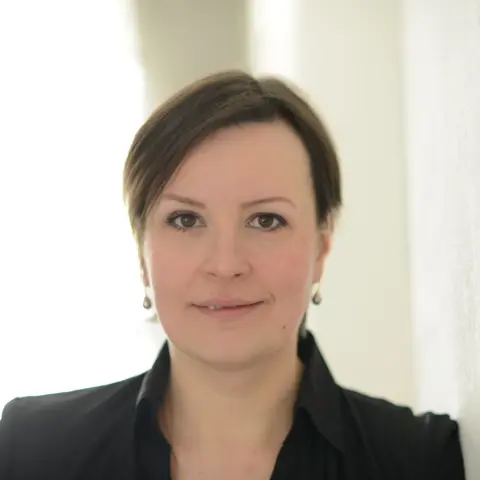
Annika Keidl
Head of Environmental Analysis & Consulting
We are here to help you as quickly as possible
Available by phone Mon–Thu 9 a.m.–5 p.m. | Fri 9 a.m.–3 p.m.
Frequently asked questions about CO₂ accounting
Answers to the questions that most often come up when getting started with CO₂ accounting.
A CO₂ balance shows how many greenhouse gases are generated and where they occur. This can relate to a company, a single product or a specific process.
At its core, a CO₂ balance is an overview: Which activities cause emissions? In what quantity? And how are they distributed across different areas (the so-called scopes)?
A balance makes visible what you don’t see in day-to-day operations – and creates the foundation for targeted reduction measures and reliable reporting.Many companies create a CO₂ balance because customers, partners or reporting requirements increasingly ask for it. Others want to know where their main emission sources lie or whether certain measures actually make a difference.
Depending on size or industry, legal requirements may also apply (e.g. CSRD or ESG obligations).
The most important reason, however, is clarity. A CO₂ balance helps you make decisions based on transparent data rather than assumptions.That depends on the scope of the balance, but typically includes:
energy consumption
electricity mix
heating/cooling
fleet and mobility
purchased goods and services
internal processes
possibly supply chain components
Many companies start with only a few initial values. We look at what’s already available and add, step by step, what’s still needed. Everything does not have to be perfectly prepared before we begin.The duration depends heavily on how many sites, products or processes are included and how complete the existing data is.
Small and medium-sized companies often have an initial balance within a few weeks.
What matters is not speed, but creating a foundation that is solid enough for reporting, conversations or later reduction steps.As accurate as the underlying data. Companies with detailed consumption data receive correspondingly precise results.
If data is missing, estimates and emission factors can be used – but always in a way that makes clear how the figure was derived.
Transparency is key: every assumption, factor and data point must be documented. This keeps the balance verifiable and compatible with standards like the GHG Protocol.Costs depend on whether you are assessing an entire company, a product or a specific process – and how extensive the data situation is.
For small companies with clear structures, the effort is manageable. For larger organisations with multiple sites or complex supply chains, the effort increases.
More important than the price is whether the balance will actually be useful later – for reporting, reduction, customer requests or internal decisions.Yes – that’s actually the norm.
Many companies start with a handful of numbers or loose documents. We begin with what’s there, structure it and identify which data is missing and how we can obtain it.
A CO₂ balance doesn’t need a perfect start. It becomes clearer with every step.The balance gives you an overview.
You see which areas carry weight, where reduction makes sense and which steps may come next.
How you proceed is up to you. Some companies explore reduction potential, others use the numbers for reporting or for customer questions.
A balance is not the end – it’s the beginning, and a good one, because it creates clarity.