
- Reduction & Strategy
- Offsetting & Projects
Carbon Removal at Scale
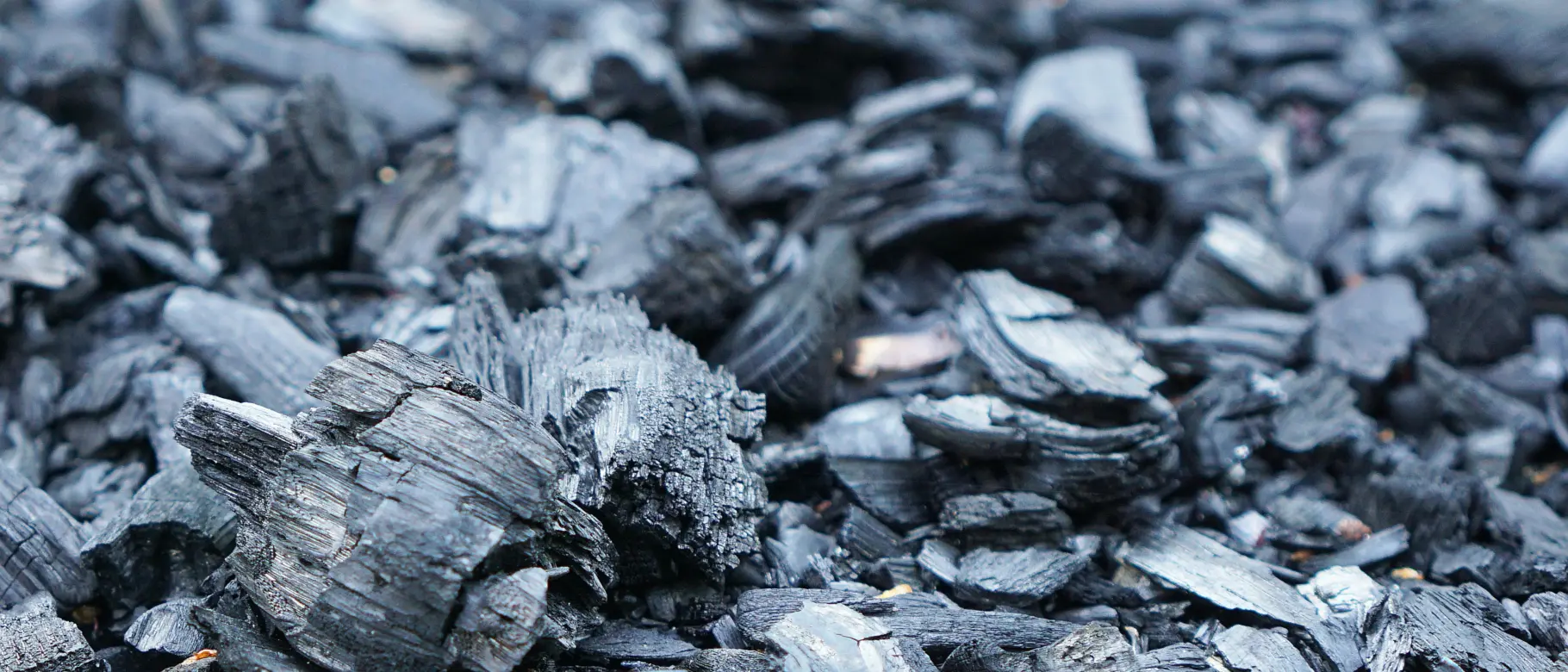
Microsoft has signed an agreement to purchase around 1 million tonnes of CO₂e. Over the next ten years, emissions are to be removed using biochar. The projects are based in the United States and rely on agricultural and municipal biomass residues. That is a large number. But what sits behind it is less obvious. This deal says less about how much CO₂ is removed — and more about how the market itself is beginning to change.
From promise to structure
For a long time, carbon removal was a field full of ideas — but with little structure.
Different technologies, different quality levels, hardly any comparability.
Much of it sounded plausible — but was difficult to assess.
What is changing now is not just the technology.
It is how these approaches are being implemented:
› multi-year offtake agreements
› clearly defined volumes
› projects designed from the outset with verification in mind
Carbon removal is becoming more tangible.
Not simpler — but more structured.
What “removal” actually means
The term is widely used — and rarely explained. At its core, the distinction is simple: Avoiding or reducing emissions means releasing less CO₂ into the atmosphere.
Carbon removal goes one step further:
CO₂ that is already in the atmosphere is actively taken out again. The key is not just removal —
but durable storage. Only when carbon is stored in a stable form does removal actually occur.
Biochar: a comparatively clear approach
Biochar may seem unspectacular at first.
But the principle is straightforward:
Instead of returning to the atmosphere as CO₂, the carbon remains bound in a stable form.
Biomass, such as agricultural residues, is heated in a low-oxygen environment.
This produces a carbon-rich material.
The carbon that the plants previously absorbed from the atmosphere
is converted into a stable form.
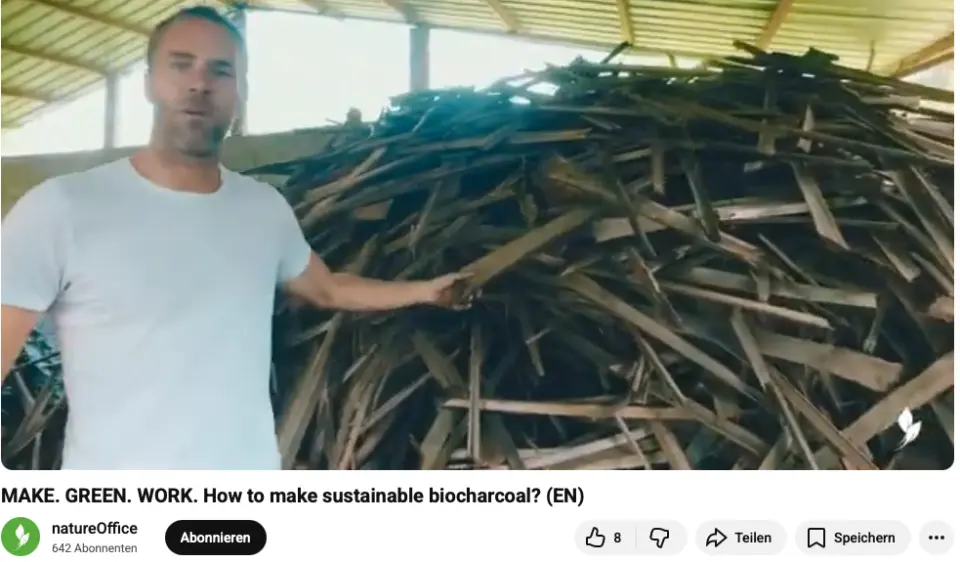
← Our YouTube video from 2019
What happens to the biochar?
After production, biochar is not stored away. It is typically applied to soil.
There, it serves multiple functions:
› long-term carbon storage
› improved soil structure
› retention of water and nutrients
The climate impact does not come from production alone —
but from how the material is used.
Only once biochar is stably integrated into soil
does it represent actual carbon removal.

Permanence is not a given
Biochar is considered relatively stable.
In many cases, carbon can remain stored for decades or longer.
But even here, permanence depends on context:
› how the biochar is produced
› where and how it is applied
› how processes are documented
Without this context, even seemingly clear solutions are difficult to compare.
Not all tonnes are equal
Three aspects that shape carbon removal
- 1
Removal takes different forms
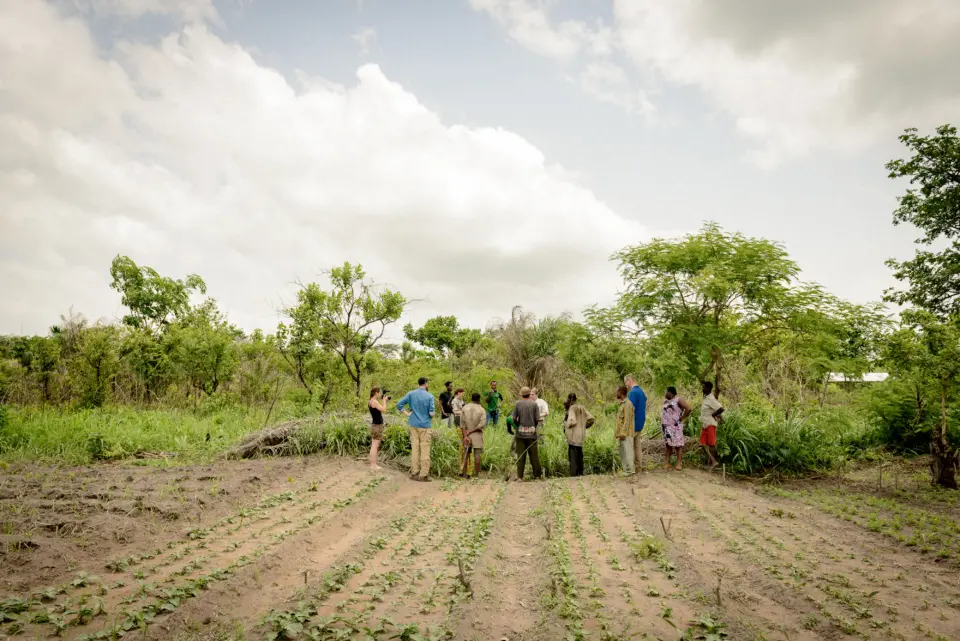
Biochar is one option — but not the only one. Nature-based solutions, particularly forest projects, also play an important role. Forests remove CO₂ as they grow, storing carbon in biomass and soils. This is effective — but not without challenges. Risks such as fire, pests or land-use change show that storage is not automatically permanent.
- 2
Not a competition, but different logics
Technical and nature-based approaches follow different principles: › Biochar: more controlled, clearly defined processes › Forest projects: dynamic, long-term, embedded in natural systems Both contribute. But they are not directly comparable. The key question is therefore not: Which is better? But: How robust is the impact — and how is it verified?
- 3
Why large deals like this matter
Deals like this highlight a shift in expectations. It is no longer just about projects. It is about: › availability › scalability › verifiability Carbon removal is moving from isolated initiatives to a structured component of climate strategies.
What does this mean for companies?
Not every company needs large-scale offtake agreements. That is not the point. (Although — with us, it is possible. 😎)
What matters is the direction:
› Climate actions are becoming more comparable
Differences in quality and impact are becoming more visible.
› Evidence matters more
Claims alone are no longer sufficient.
› Structure replaces one-off actions
A consistent approach becomes more important.
This does not only apply to large corporations. It increasingly affects SMEs as well.
A market still in development
Despite these developments, the market is still at an early stage.
There are limited capacities, few standardised approaches and high requirements for quality and documentation.
That is precisely why these developments matter. They show where the market is heading.
One final thought that matters to us
These developments are impressive.
Large numbers. Large projects. Large names.
And yes — that is a good thing.
They show that something is moving.
That carbon removal is no longer just a future concept, but gradually becoming reality.
At the same time, it is worth taking a closer look.
These projects operate at a different scale.
They require significant capital, time and often very specific conditions.
For many companies, this can feel distant.
But the direction they point to already affects the mid-market.
One thing is becoming clear:
Climate action is becoming more concrete.
And expectations are rising.
Not everything can be solved perfectly today.
Many technologies are still evolving.
Which makes it all the more important to work with what is already possible.
Understand emissions.
Make connections visible.
Put actions into context.
And then move forward step by step.
These large projects show where things are heading.
But most journeys start much smaller.
And that is exactly where the foundation is built —
for integrating new developments in a meaningful way later on.
Not all at once.
But continuously.
Understanding carbon removal and carbon offsetting in practice
Carbon removal (CDR) is becoming increasingly relevant — including for SMEs.
It is not just about new technologies like biochar or forest projects, but about how these approaches fit into a company’s overall climate strategy.
Unlike reduction, carbon removal focuses on actively binding CO₂ that has already been emitted.
Biochar stores carbon in stable form in soils, while forest projects absorb CO₂ through natural growth processes — each with different implications for permanence and verification.
For companies, this means:
Not all tonnes of CO₂ are equal.
Differences in project quality, methodology and transparency matter.
In practice, this rarely starts with large-scale measures, but with a clear approach:
measure emissions → reduce → compensate remaining emissions in a structured way.
natureOffice supports companies in building CO₂ inventories, developing climate strategies and selecting suitable climate projects — in a way that is transparent, verifiable and practical in day-to-day business.
This turns sustainability reporting into a practical tool – not just for compliance, but for everyday business use.
natureOffice supports SMEs in building sustainability reports based on the VSME standard – structured, pragmatic and focused on what is actually needed in practice.