

Thuringian Forest: Forest conversion under real conditions
Climate action within existing forests – where drought and damage are already visible.
March 3, 2026 – Project visit
During our visit, the focus was on the renaturation of the historic borehole ponds and the development of planting projects from previous years.
Municipality of Grabfeld, near the district of Jüchsen.
On site, we were able to see how the measures have been implemented – and how the areas and forest stands have developed since.
The region is shaped by agricultural land and connected forest areas, where water management is becoming increasingly important.
This is where it becomes clear how crucial functioning structures for water retention and biodiversity in forests really are.
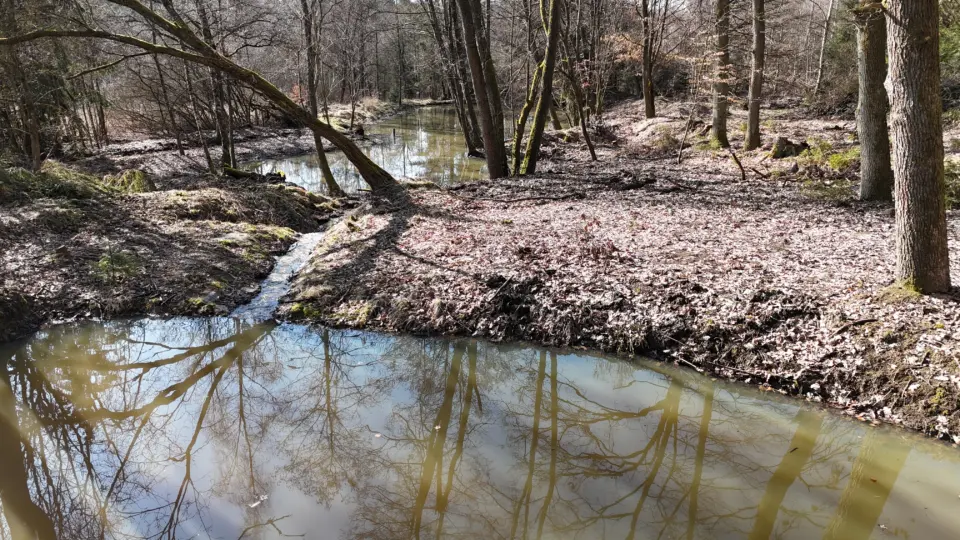
The borehole ponds
The so-called borehole ponds originate from planning efforts dating back to the 17th century, later continued in connection with the planned Main–Werra Canal.
In the 20th century, they were created through exploratory drilling for potential tunnel or lift solutions.
After the plans were abandoned, the ponds lost their function and gradually silted up.
Today, these areas are gaining importance again.
They contribute to water retention in the forest and create habitats for water-dependent species.
In winter 2025/26, the first pond segment was restored.
This included removing unsuitable vegetation, dredging the pond area, and stabilizing and sealing the dam.
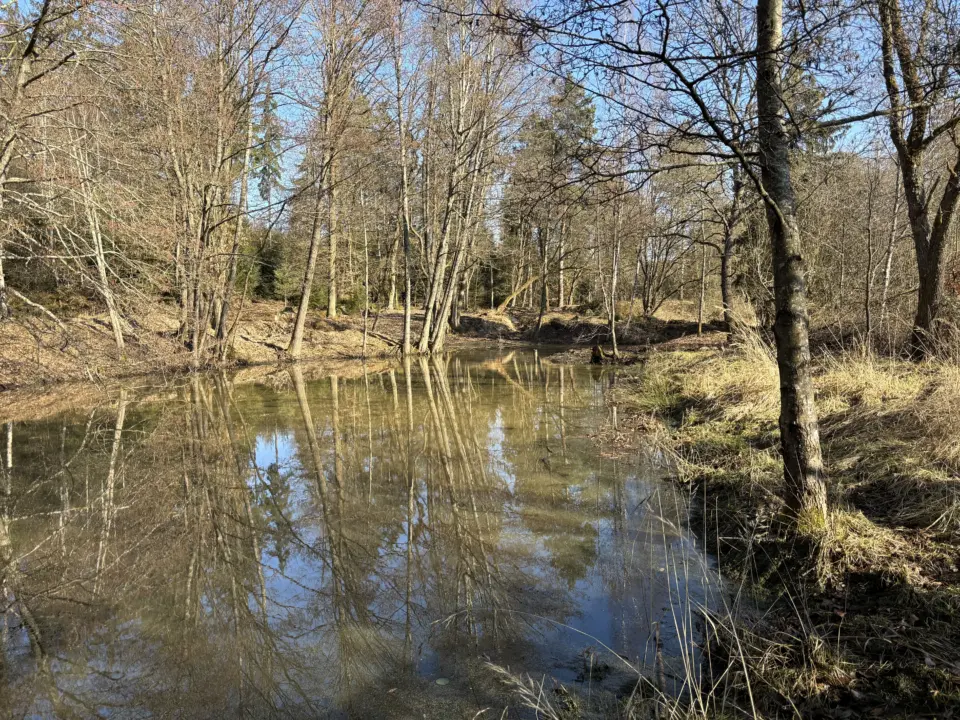
What has been done on site
→ Removal of vegetation, especially coniferous growth
→ Dredging of the former pond area
→ Stabilization and compaction of the dam
→ Elimination of leakages
The measures were implemented to restore the original function of the pond system and stabilize the forest’s water balance.
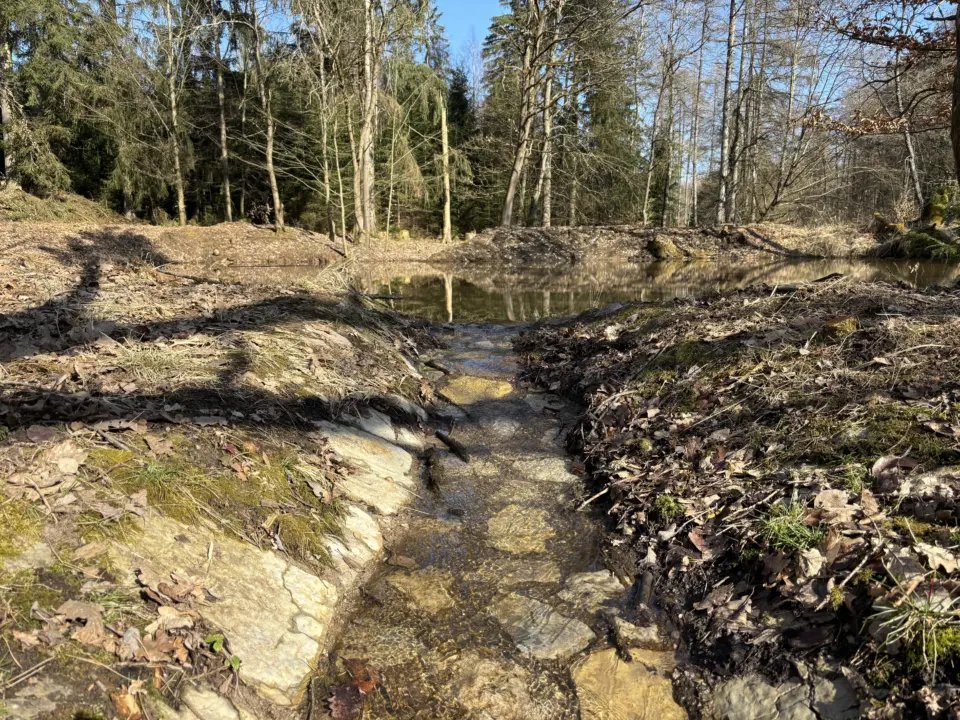
Why this matters
The restored ponds help retain water in the forest, stabilizing the area over the long term.
At the same time, new habitats are created for water-dependent flora and fauna.
Over time, the site will also become a place for quiet nature experiences for visitors.
Outlook
The next step is the restoration of the lower borehole pond.
This will involve dredging, rewetting and regulating the water level.
The municipality hopes to implement this step with further support from DeutschlandPlus.
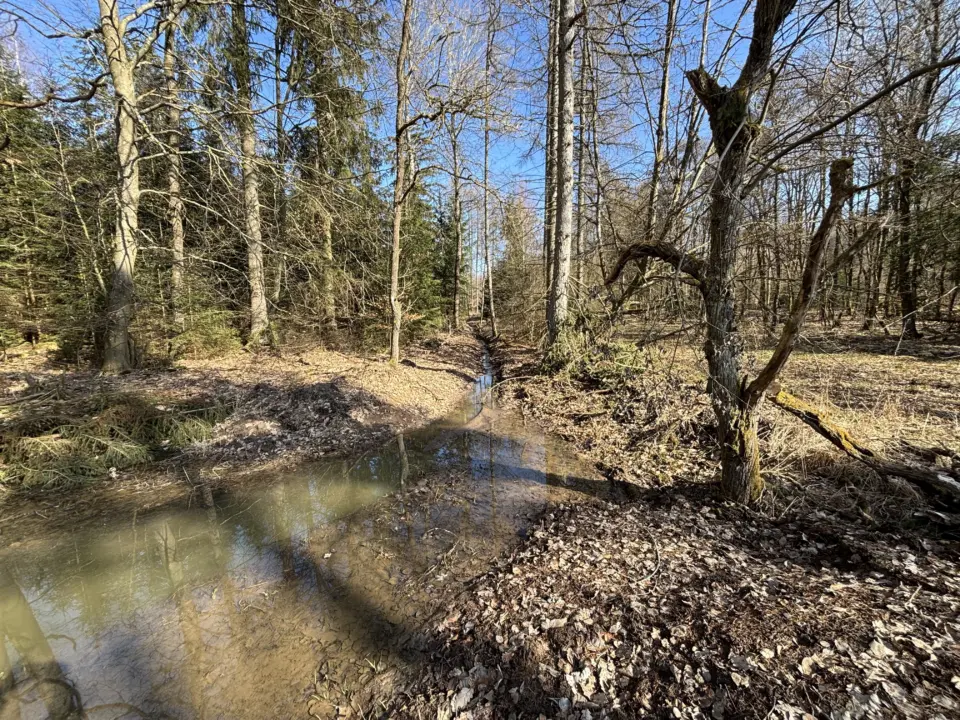
Planting projects from previous years
The planted areas are protected by fencing systems.
This protects not only the planted trees but also the natural regeneration developing within the area.
The results show a high level of species diversity – by design.
Because it is not yet clear which species will be best adapted to climate change in the long term, diversity is the most resilient approach.
Voice from the field
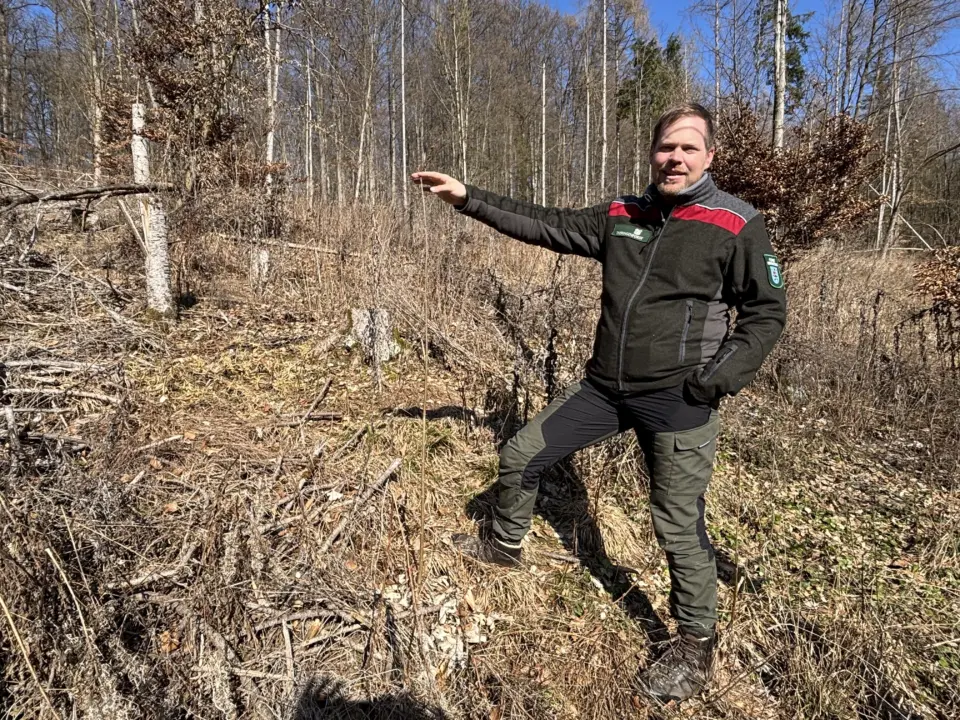
“We don’t know exactly which tree species will be best adapted to climate change in 50 years – which is why diversity in the forest is our best safeguard.”
— Jan-Philipp Ohrndorf, Forest Manager FBG Jüchsen
Informationen zu Waldumbauprojekten anschauen
Combining climate projects:
CO₂ offsetting and additional measures
CO₂ offsetting is the foundation.
Based on a CO₂ footprint according to the GHG Protocol, emissions are calculated and offset through certified projects – for example under the Gold Standard. The emission reductions are measurable, verified and documented in the registry.
The combined project builds on this approach. In addition to offsetting, additional funds go into climate projects in Germany and into PROJECT TOGO.
In Germany, we support forest ecology projects – from reforestation to the development of climate-resilient mixed forests. In Togo, we implement our own measures: clean water, efficient cookstoves, reforestation and training.
This creates a clearly structured system: global emission reduction in the power sector and practical implementation on the ground.