
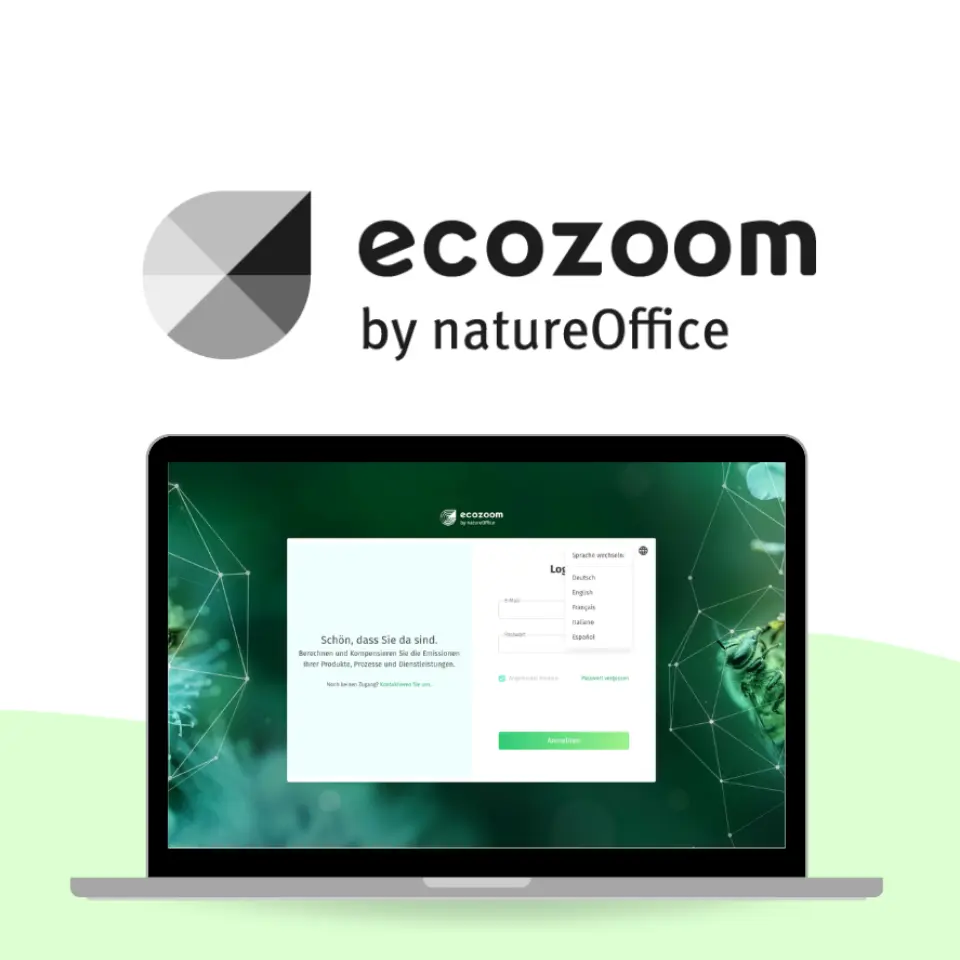
Product Carbon Footprint Software for Your Products
Calculate product carbon footprints – structured, transparent and ready to share. Track emissions across the entire product lifecycle – with results that are clear, consistent and usable for customers, tenders and reporting.
CO₂ data for products is no longer optional
More and more companies require reliable product carbon footprints. For individual products – not just for the company as a whole.
Requests come from customers, supply chains and tender processes. What is needed are data that can be shared and used further.
This is where things often become difficult. Calculations are created individually, without a consistent structure.
System boundaries vary from product to product. Data needs to be reworked again and again. What is missing is comparability.
And with it, the confidence to provide reliable answers.
This quickly becomes visible in day-to-day business:
→ questions about methodology and assumptions
→ uncertainty when sharing data
→ high effort for every new product
→ increasing pressure from the supply chain
Product carbon footprints are expected – but often handled inefficiently.
From isolated values to a structured system
Instead of setting up each calculation from scratch, you work within a clear structure.
From materials and processes to the final result - Your products are
mapped consistently.
All data is connected and fully documented.
This creates not isolated PCFs, but a consistent dataset across your entire product portfolio.
The result:
→ product carbon footprints that are comparable
→ data that can be shared
→ results that remain traceable
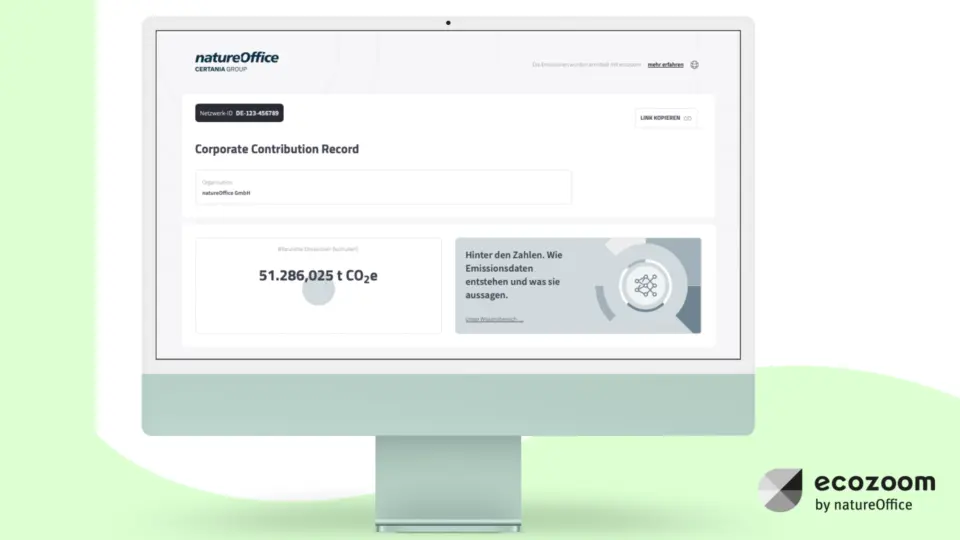
What you can do with ecozoom
You capture product-related emissions step by step – across the full lifecycle.
Individual data points become a
Individual data points become a
This means:
→ structured capture of materials and components
→ integration of supplier and process data
→ automatic emission calculations
→ analysis on product level
→ structured sharing of PCF data
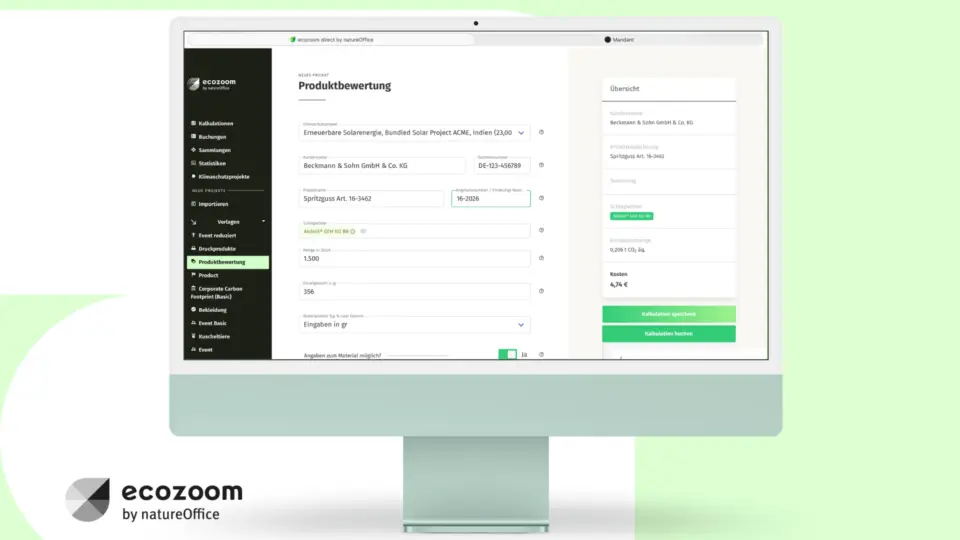
Capture product data without unnecessary complexity
The challenge is rarely the calculation itself. It is bringing together the right data. Suppliers provide information at different levels of detail. Data exists in different formats – or is missing entirely. And often, every calculation starts from scratch again.
The software brings structure into this process.
All in one place.
Data can be entered manually, imported via Excel or built step by step.
This means:
→ structured data capture instead of isolated effort
→ central storage of all product-related data
→ clear assignment of sources and assumptions
→ scalable with increasing data depth
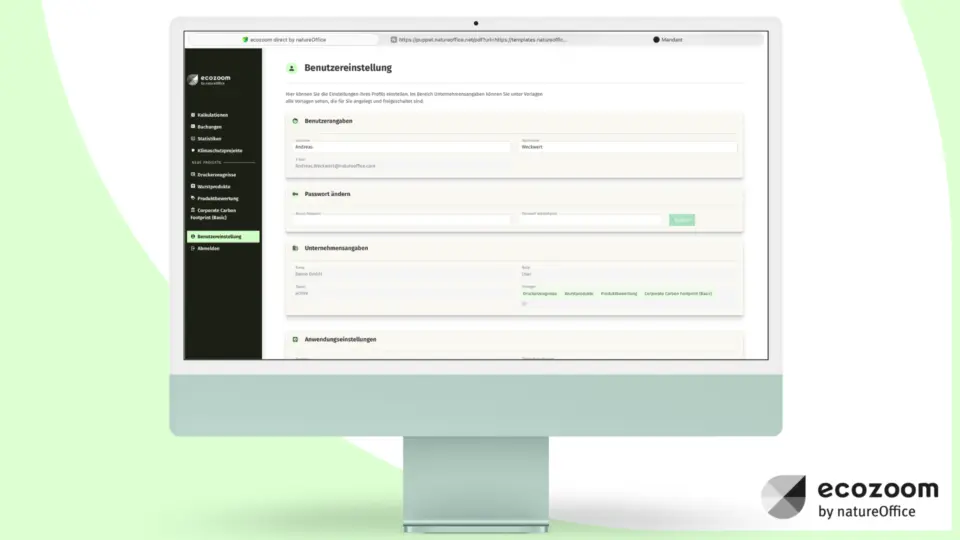
Methodology & data – clearly structured
Built on established standards and reliable data sources.
| Methodology & system boundaries | Data & emission factors |
|---|---|
| Alignment with GHG Protocol, ISO 14067 and other PCF standards | Use of established databases such as ecoinvent, emissionDB and others |
| Mapping of cradle-to-gate and extended system boundaries | Integration of supplier-specific and primary data |
| Clear definition and documentation per product | Accurate assignment of emission factors |
| Consistent calculation logic across products | Transparent documentation of sources and assumptions |
| Comparable and methodologically sound results | Results that are traceable for customers and supply chains |
PCFs you can actually use
PCFs you can actually use

Automatically calculated
Emissions are calculated based on structured data.
Consistent, traceable and without manual calculation logic.
Structured product data
Materials, processes and supply chain data are captured consistently.
Creating a unified dataset across products.
Ready to share
Product carbon footprints can be directly shared.
For customers, tenders and reporting.
Aligned with requirements
Results follow established standards and integrate into existing processes.
What the software also supports
Additional functions that simplify working with product carbon footprints.
Key features at a glance:
The core features are already integrated – without adding unnecessary complexity.
→ structured product data management
→ handling multiple products in parallel
→ product comparison
→ integration of supply chain data
→ scenario analysis
→ integration of CO₂ contribution measures

What you get in the end
You receive product carbon footprints that are structured, usable and ready to share.
Fully documented and traceable.
Per product.
→ one PCF per product
→ clear and compact key factsheets
→ data for customers, tenders and reporting
→ comparability across products
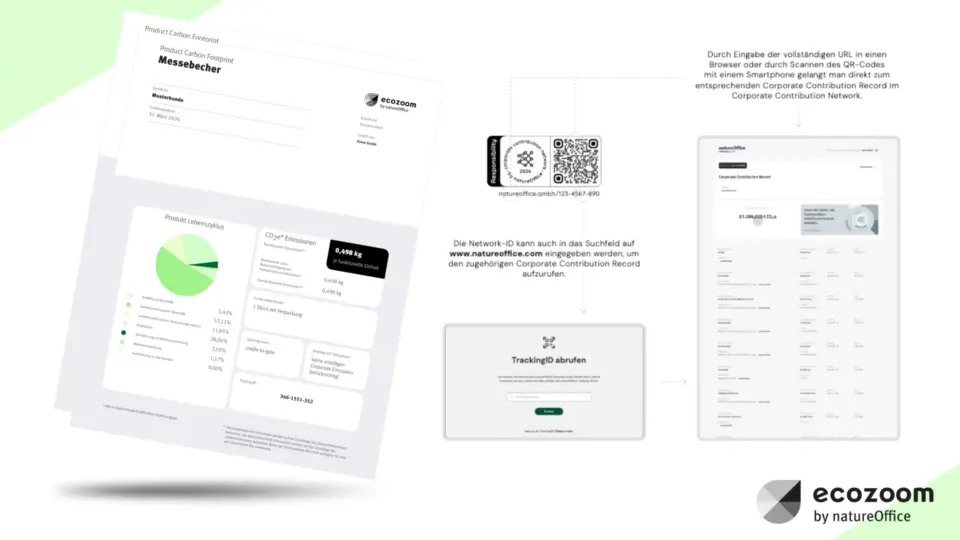
→ product labelling with QR codes documenting calculation and contributions
→ links to datasets and projects within the Contribution Network
→ documentation of support for climate projects (e.g. certificates)
→ unique network ID per company and transaction
Who this is relevant for
Product carbon footprints are required wherever product-level CO₂ data is expected.
The software is designed for companies that want to build and provide these data in a structured way.
Typical use cases:
→ manufacturing companies with multiple products
→ companies facing supply chain requirements
→ suppliers providing data for tenders
→ businesses building structured product data systems
Getting started is straightforward
Even with complex products, you don’t need to be a PCF expert to begin. The software guides you step by step – and we support you along the way. How to get started.
- 1
Introduction
We present the software based on your products and requirements.
- 2
Setup
Together, we define how your products and data are structured.
- 3
Access
You receive access to a prepared system.
- 4
Start
You begin working with the software and build your product carbon footprints step by step.
CO₂ software for CCF and PCF: clarity for companies and products
Companies today face the challenge of capturing CO₂ data in a structured way and making it usable. Whether for a Corporate Carbon Footprint (CCF) or a Product Carbon Footprint (PCF), reliable data is the foundation for reporting, product information and sound decision-making.
CO₂ software supports this by systematically calculating emissions, consolidating data sources and presenting results in a transparent and traceable way. While a CCF covers emissions across an entire company (Scope 1, 2 and 3), a PCF focuses on individual products, processes or variants throughout their lifecycle. Both approaches follow established standards such as the GHG Protocol and can be combined depending on the use case.
Especially for SMEs, modern carbon accounting software is increasingly replacing Excel-based solutions. It creates transparency, reduces coordination effort and ensures that CO₂ data remains consistent, verifiable and ready for further use – for example in CSRD reporting, digital product passports or supply chain requirements.
With the right CO₂ software, companies build a solid data foundation that is not only calculated, but also understood and ready to be used – internally, with customers and in discussions with auditors or financial partners.