Reforestation & social issues - Togo
PROJECT TOGO
Planting trees, building schools. In Togo, we do both at the same time. Because climate protection works best with people.
In community and social impact projects, CO₂ reductions result from practical improvements in daily life: less fuel use, cleaner technologies or more efficient basic services.
In many rural regions, households use kerosene lamps for lighting in the evening. A typical lamp burns around 80 litres of kerosene per year.
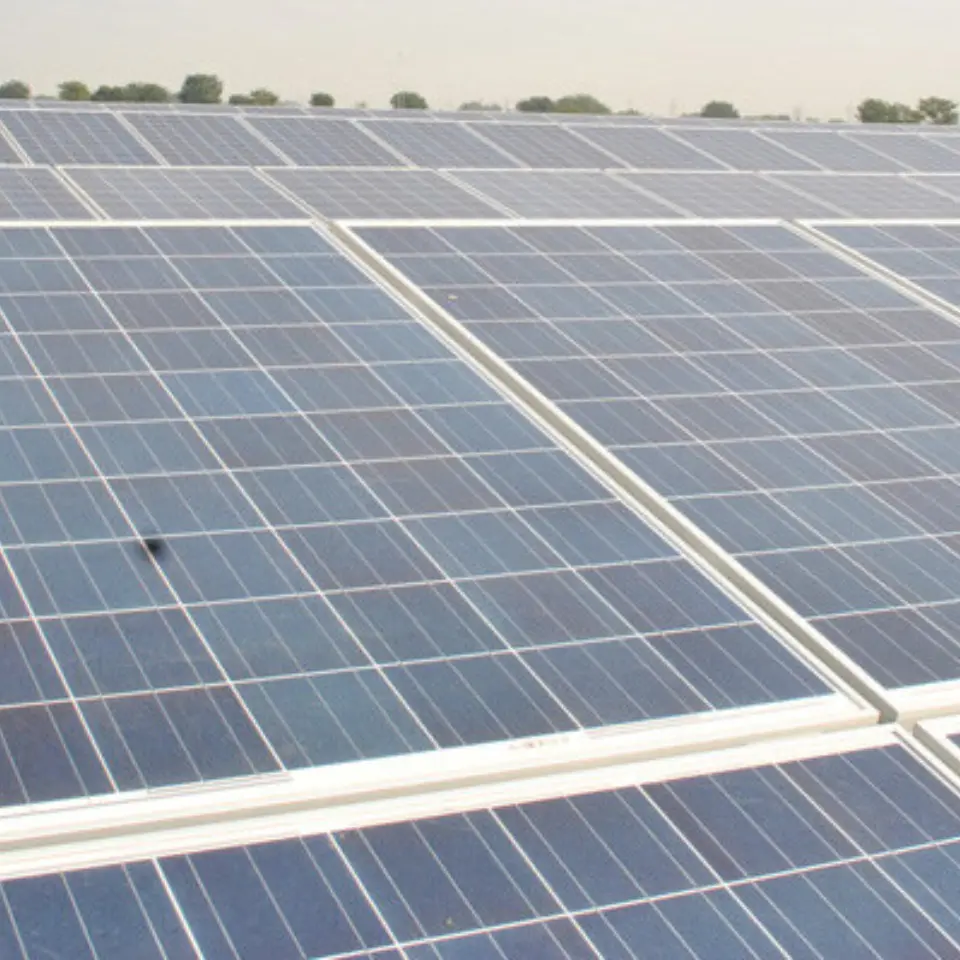
Through the project, households receive solar-powered lamps or small solar home systems. As a result, kerosene consumption is eliminated entirely.
For the calculation, a defined emission factor is used to indicate how much CO₂ is produced when kerosene is burned:
1 litre of kerosene = 2.4 kg CO₂
The CO₂ reduction is calculated as follows:
80 litres of kerosene that are no longer burned
×
2.4 kg CO₂ per litre
=
192 kg CO₂ reductions per household per year
=
0.192 t CO₂ per year
This amount is monitored, verified and issued as 0.192 CO₂ certificates – always one certificate per tonne of avoided CO₂.
For emission reductions from community and social impact projects to be issued as CO₂ certificates, they must meet strict requirements. The reductions must be additional — meaning that without the project, the fuel consumption, energy use or emission-intensive practices would have remained unchanged.
The impact must also be measurable, traceable and verifiable. International standards such as Gold Standard or Verra (VCS) define exactly how baselines are calculated, how fuel use and behavioural data must be monitored, and which evidence a project has to provide.
Independent auditors regularly verify on site whether the technologies are being used correctly, whether the reported savings are plausible and whether the calculations comply with the required methodologies.
Only when all data are complete and coherent can a CO₂ certificate be issued — always representing one tonne of avoided CO₂.
This creates a transparent process that ensures every certificate reflects a real and verified climate impact.
Not every social project can automatically generate CO₂ certificates. Many initiatives create important community benefits, but they do not produce measurable emission reductions that meet the requirements of international standards.
Projects are not eligible for certification if they:
do not reduce fuel or energy consumption, such as purely educational, health or income-support programmes.
do not allow a clear baseline, meaning it is impossible to determine previous fuel use or emissions.
cannot be measured or verified, for example when reliable usage or impact data are missing.
provide social support only, such as school materials, trainings, community development or microfinance, without avoiding emissions.
aim solely at behavioural change without a technological component, since this cannot be quantified or guaranteed over time.
Only initiatives that deliver technically measurable and verifiable emission reductions, supported by regular monitoring, can generate CO₂ certificates.
Community & Social Impact projects come in different forms. These are the eight most relevant categories:
Community energy solutions such as small solar or hybrid systems for schools, health centers or village hubs replace diesel generators or kerosene lamps. This leads to direct and measurable emission reductions.

Centralized water treatment or distribution facilities – such as borehole pumps or solar-powered water stations – reduce fuel consumption because less water must be boiled or transported over long distances.

Efficient large-scale kitchens for schools, clinics or camps save substantial amounts of firewood by using optimized, high-capacity cooking technologies. These systems operate differently from individual household stoves and follow dedicated methodological requirements.

Organized collection points, local sorting facilities or initiatives to reduce plastic and biomass waste lower emissions by preventing open burning or the formation of landfill gases.

Shared transport solutions such as bicycle schemes or solar-powered vehicles for medical services replace fossil-fuel trips. A verifiable comparison to previous diesel or gasoline use is required.

Biogas facilities for villages, schools or public institutions replace firewood, charcoal or kerosene. The resulting emission savings can be clearly measured and verified.

Community-based measures that prevent the open burning of household waste or agricultural residues avoid significant CO₂ and black carbon emissions and can therefore be certified.

Local energy centers that provide solar power, charging stations or efficient devices for shared use reduce the need for individual diesel generators or fossil-based heating systems.
To ensure that the CO₂ reductions of a community project are reliable, they are monitored regularly. Project operators collect data on usage, fuel savings or the actual avoidance of fossil energy—depending on the project type. Each technology follows clearly defined requirements and standardized methodologies.
Independent auditors review this data on-site and compare it with the rules of recognized standards such as Verra or Gold Standard. They assess whether the systems are being used as intended, whether the documented savings are plausible, and whether the project genuinely benefits the community.
Only when all evidence is complete and consistent is the verified CO₂ reduction documented and approved for the issuance of certificates.
This creates a transparent process that ensures every certificate reflects a real, verified and socially grounded climate impact.
Greater everyday safety through fewer open fires, fewer hazardous trips to collect water or fuel, and reduced accident risks…
Projects are used collectively — strengthening cooperation, participation and local organization.
Less firewood gathering, fewer long trips, less improvisation: many families gain significant time.
Less smoke, fewer pollutants, fewer open fires: exposure to soot and harmful emissions decreases noticeably.
Construction, operation and maintenance create jobs and support small businesses and craft-based activities.
Community solutions provide electricity, heat, water or mobility — often for the first time in a reliable and affordable way.
Lower firewood consumption eases pressure on forests, reduces deforestation and limits strain on local biomass supplies.
Recycling structures and the prevention of open burning improve air quality and the cleanliness of community spaces.