Reforestation & social issues - Togo
PROJECT TOGO
Planting trees, building schools. In Togo, we do both at the same time. Because climate protection works best with people.

Clean electricity from renewable energy projects replaces fossil-based power. The emissions avoided through this shift can be measured and form the basis for issuing carbon credits.
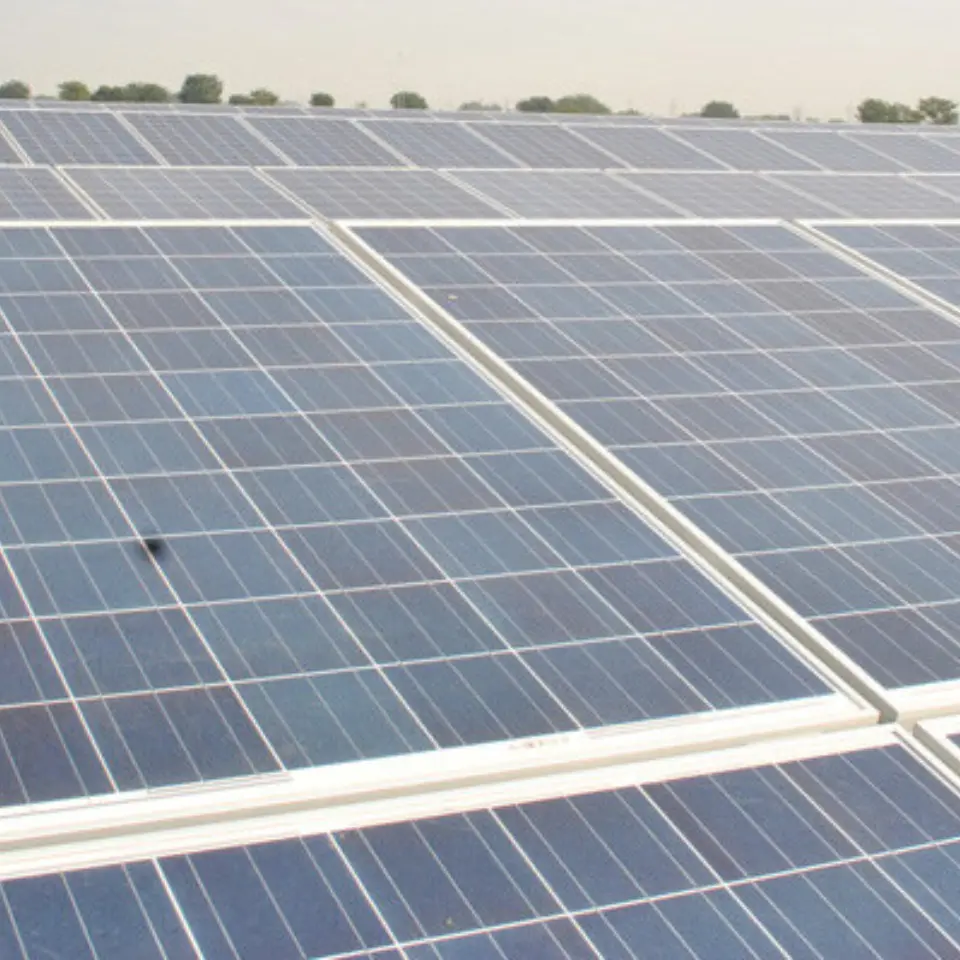
A solar park generates 1,000 megawatt hours (MWh) of electricity per year.
Without the project, this electricity would typically come from a fossil power plant — for example coal or gas. Such plants emit on average 0.6 to 0.9 tonnes of CO₂ per MWh, depending on the country and fuel mix.
For calculation purposes, a standardized average value is used — for example 0.7 t CO₂ per MWh.
The CO₂ reduction is then calculated as follows:
1,000 MWh clean electricity
×
0.7 t CO₂ per MWh
=
700 t CO₂ saved per year
This amount is verified, confirmed and issued as 700 carbon credits — one credit for each tonne of CO₂ that is demonstrably avoided.
Note: This example explains the basic logic behind CO₂ savings. Whether a project is allowed to generate carbon credits depends on strict rules: recognised standards, detailed methodologies, independent audits and ongoing monitoring. Not every renewable energy project can or should be certified.
For emission reductions to be issued as carbon credits, they must meet specific requirements. They must be additional(the savings would not have happened without the project), measurable, verifiable and auditable. International standards such as Gold Standard or Verra define these criteria.
These standards specify how emission reductions must be calculated and which data a project must provide. Independent auditors regularly check whether the project complies with these rules. Only when all evidence is complete and confirmed can a carbon credit be issued — always representing exactly one tonne of CO₂ avoided.
This ensures that each carbon credit reflects a real, verified climate impact.
Renewable energy projects appear in several forms. The eight most important renewable technologies include:

Uses the force of rivers to generate electricity. These plants operate very reliably and provide CO₂-free energy over many years.

Generates electricity from wind on land. The power feeds directly into the grid and replaces fossil generation such as coal or gas.

Wind farms at sea benefit from strong and consistent winds. They deliver high volumes of clean electricity and significantly relieve the grid.

Converts sunlight into electricity. PV systems are versatile and particularly effective in regions with strong solar conditions.

Small-scale solar units supplying individual households. They replace kerosene lamps or diesel generators and noticeably improve local energy access.

Compact electricity systems powered by solar, wind or hybrid solutions. They can supply entire communities and reduce dependence on diesel power.

Uses organic waste or by-products to generate energy. Only sustainable residual materials are allowed — no energy crops.
Extracts heat or electricity from natural geothermal sources. It is location-dependent but provides continuous and CO₂-free energy.
To ensure that the CO₂ savings of a project are reliable, they are monitored on a regular basis. Project operators record data on electricity generation, operating conditions and the actual displacement of fossil energy. The requirements for this monitoring process are clearly defined.
Independent auditors verify this data on site and compare it with the rules set by recognised standards such as Verra or Gold Standard. Only when all evidence is complete and consistent is the confirmed CO₂ reduction documented and approved for issuing carbon credits.
This creates a transparent process that ensures each carbon credit represents a real, measurable and verified climate impact.
Renewable energy installations can ease pressure on existing power grids, helping regions achieve a more stable and less interruption-prone electricity supply.
Planning, construction and ongoing operation create local jobs and services, ensuring that part of the economic value remains within the region.
When fossil power plants generate less electricity, emissions such as particulate matter and nitrogen oxides also decrease, improving local air quality alongside CO₂ reductions.
Modern renewable systems bring new technologies, training and technical know-how to the region, raising skills and infrastructure standards over time.
In rural or remote areas, solutions such as mini-grids or solar home systems can provide reliable and affordable electricity for the first time.
Lower use of diesel, coal or firewood protects local resources and reduces transport needs as well as reliance on imported fuels.