Reforestation & social issues - Togo
PROJECT TOGO
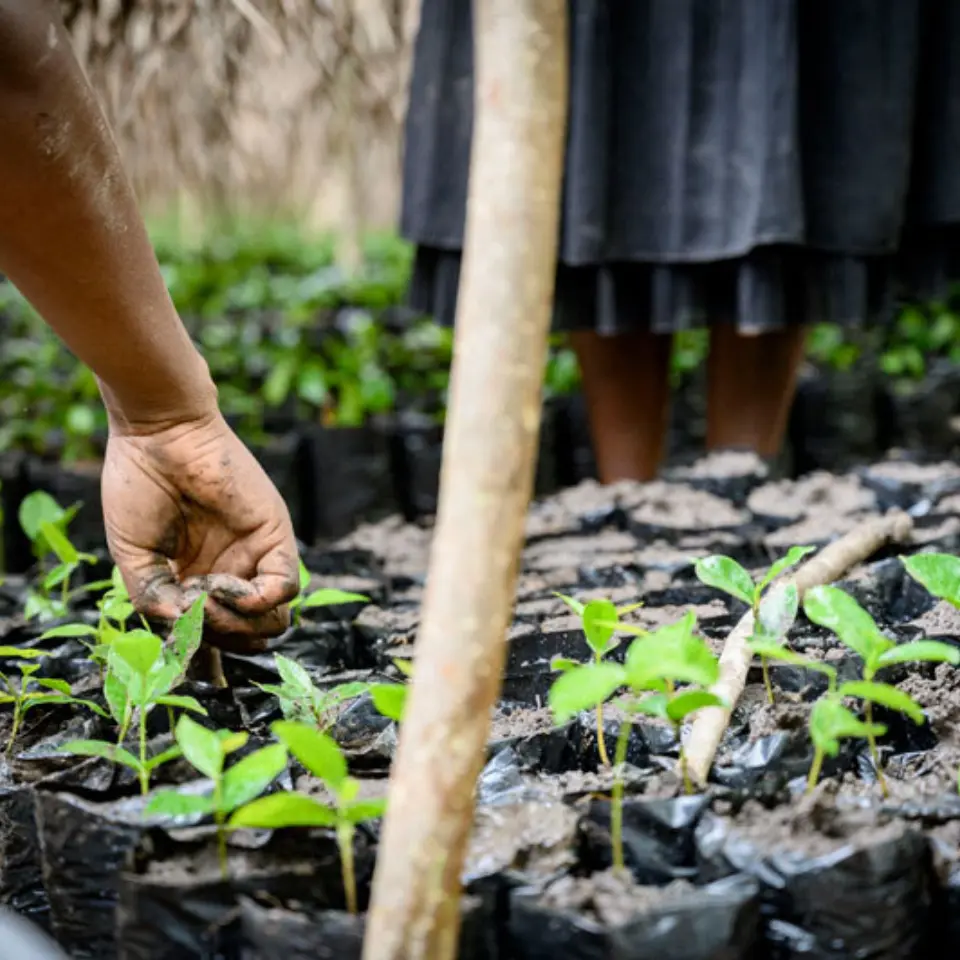
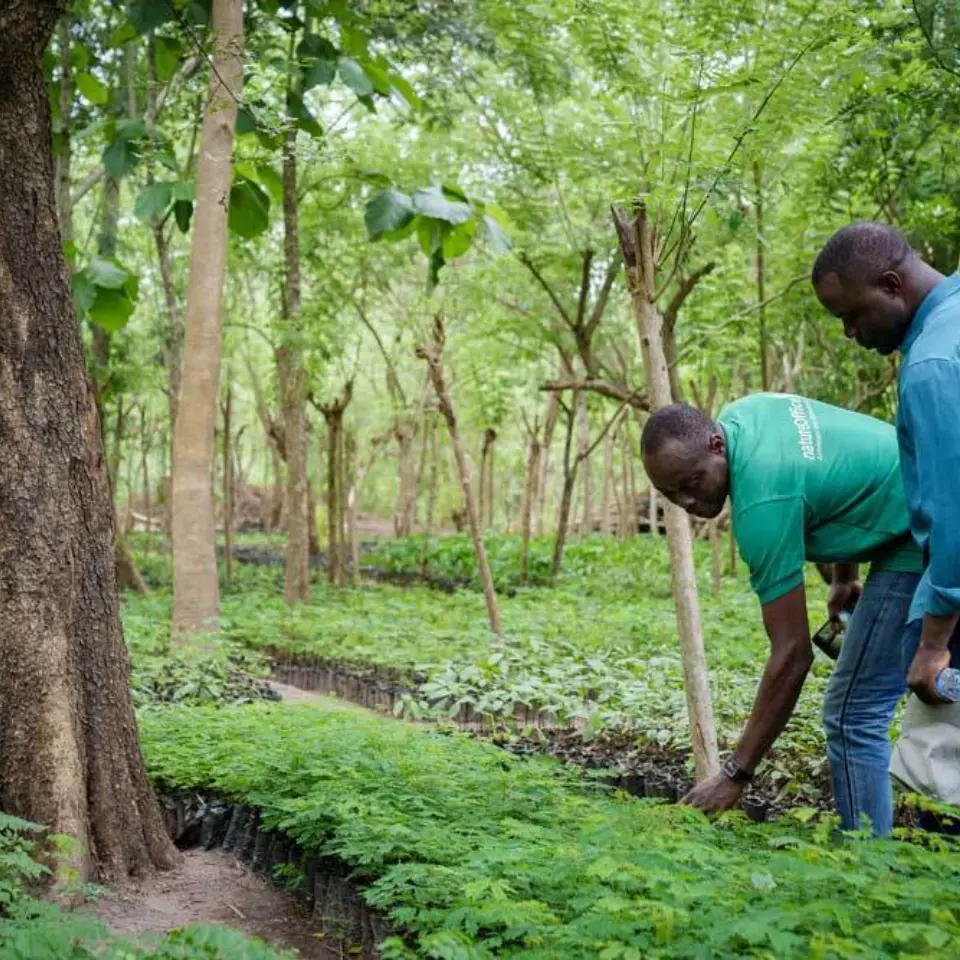
Planting trees, building schools. In Togo, we do both at the same time. Because climate protection works best with people.
Forests and soils store carbon. When they are protected, reforested or managed more sustainably, this carbon remains stored and does not enter the atmosphere as CO₂. These avoided emissions can be measured and form the basis for CO₂ certificates.
A forest protection project prevents a specific forest area from degrading or being cleared. Let’s assume this area currently stores 5,000 tonnes of carbon (C).
Without the project, part of this forest would be lost — through logging, land use or fire risks. If we assume that 20% of the stored carbon would have been released over the coming years, we can estimate the potential emissions.
A standard conversion factor is used to calculate how much CO₂ this carbon represents:
1 tonne of carbon corresponds to 3.67 tonnes of CO₂.
The CO₂ reduction is calculated as follows:
1,000 t carbon that would have been lost without the project
×
3.67 t CO₂ per tonne of carbon
=
3,670 t CO₂ saved
This amount is verified, confirmed and issued as 3,670 CO₂ certificates — always one certificate for each tonne of CO₂ that is demonstrably avoided.
For avoided emissions or additional carbon storage to be issued as CO₂ certificates, land-use and forestry projects must meet strict requirements. The climate impact must be additional (without the project the carbon loss would have occurred, or the carbon would not have been stored), measurable, verifiable and auditable. International standards such as Verra (VCS) or Gold Standard define these criteria.
These standards set out in detail how carbon storage in forests or soils must be calculated and which data a project must provide on a regular basis — for example information on forest development, biomass, soil carbon or risks such as fire. Independent auditors verify on site whether the requirements are met and whether the calculations are realistic and consistent.
Only when all evidence has been reviewed and confirmed can a CO₂ certificate be issued — always representing exactly one tonne of CO₂ avoided or additionally stored.
This creates a transparent process that ensures each certificate reflects a real and verified climate impact.
LUF stands for Land Use and Forestry — activities related to land management and forests. This includes projects that protect forests, establish new forests or increase carbon storage in soils and landscapes. The goal is to keep carbon stored over the long term or to prevent the release of already stored carbon.
LUF therefore covers several approaches, such as forest protection, reforestation, sustainable forest management, agroforestry systems and soil carbon projects.
Land use and forestry (LUF) projects appear in several forms. The most important approaches include:

Prevents deforestation and degradation in threatened forest areas. Protection measures keep stored carbon in place that would otherwise be released as CO₂.

Establishes forest on land that has not been forested for a long time. New trees remove CO₂ from the atmosphere and store carbon over many years.

Restores forest on degraded or previously cleared land. As the forest regrows, carbon storage increases step by step.

Optimises the management of existing forests, for example through longer rotation periods, reduced harvesting or targeted maintenance. This increases the amount of carbon stored in the forest.

Combine agriculture with tree structures. Trees on farmland increase soil carbon storage and improve land productivity.

Measures that increase the amount of carbon stored in soils — for example through adapted land management, reduced tillage or targeted vegetation. Soils can store large amounts of carbon in a stable form.

Protect and restore mangroves and other coastal ecosystems. These ecosystems store exceptionally high amounts of carbon in their soils and provide important coastal protection.

Comprehensive restoration of degraded landscapes using trees, shrubs and natural vegetation. The goal is long-term carbon storage and ecological stability.
To ensure that the CO₂ impact of a LUF project is reliable, it is monitored on a regular basis. Project operators collect data on the development of the forest or landscape — for example on biomass, vegetation condition, soil carbon levels or risks such as fire and degradation. The requirements for this monitoring are clearly defined and follow standardised measurement methods.
Independent auditors verify this data on site and compare it with the requirements of recognised standards such as Verra (VCS) or Gold Standard. They assess whether the carbon storage or avoided emissions are realistic, consistent and durable. Only when all evidence is complete and plausible is the confirmed CO₂ impact documented and approved for issuing certificates.
This creates a transparent process that ensures each certificate reflects a real and verified climate impact.
Improved microclimates, reduced particulate matter and pollutants, long-term recovery of degraded landscapes…
Forest protection, reforestation and landscape restoration create habitats for a wide range of plant and animal species and support stable, resilient ecosystems.
Increased humus formation, reduced soil disturbance and sustainable land management strengthen soil structure, enhance nutrient levels and improve water retention.
Healthy vegetation filters water, stabilises the natural water cycle and reduces the risk of droughts or flooding.
Forests and natural vegetation can stabilise slopes, buffer heavy rainfall and reduce the impacts of climate-related extreme events.
Tree planting, maintenance, monitoring and sustainable use create jobs and new income opportunities in rural areas.
Agroforestry systems and improved soils increase yields, diversify production systems and make communities less vulnerable to crop failures.
Many projects involve local communities and help preserve traditional land-use methods that are often sustainable and culturally significant.