

How to stay up to date
Current topics that make your climate work easier to understand.
We publish assessments & reports on these topics. If you’d like to explore a subject in more depth or need orientation, we’re here to help.
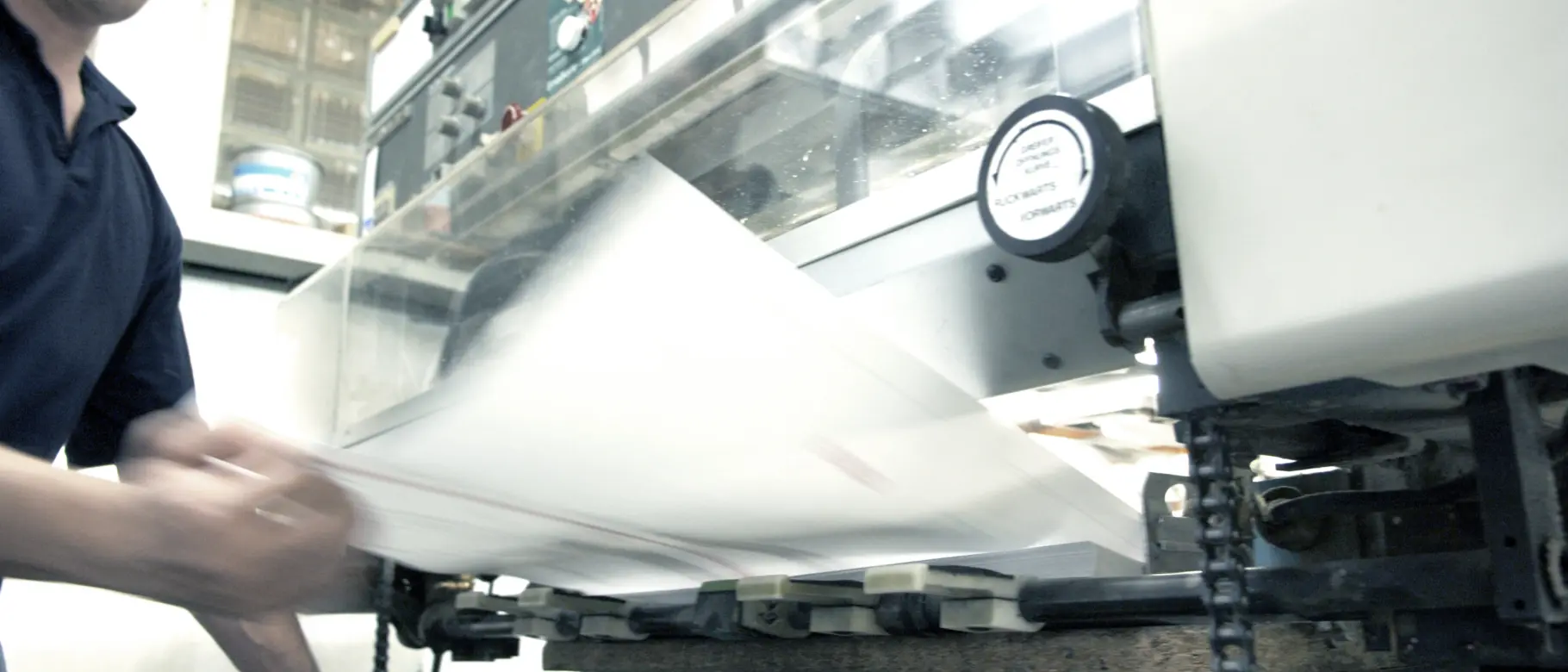
Why the oldest environmental label has become a reference point in many tenders. It has evolved over the years, stayed consistent and is easy to understand. That may be one reason why it’s gaining relevance again – many are simply looking for reliable orientation.
Anyone working in print has noticed the shift: clients are asking more detailed questions, especially about paper. “FSC Mix” is no longer enough for many, because it still contains fresh fibres. As a result, the Blue Angel is moving into focus. It requires 100% recycled paper and production processes that make a product genuinely recyclable. It’s more demanding, but increasingly expected in tenders. For print companies, this can also be an opportunity. The Blue Angel shows that materials and production are aligned – and makes visible who offers more than the usual FSC standard.
Many printers are currently considering how to respond to rising expectations around recycled paper and production methods. Clients are requesting clearer answers, and the Blue Angel appears more frequently in tender documents. For some businesses this is new; for others, simply a continuation of the developments of recent years.
The Blue Angel sets clear criteria: 100% recycled paper and processes that allow the final product to re-enter the recycling loop. It’s demanding, but straightforward. And it gives print companies the chance to show how well their materials and processes are set up – without big claims.
The Blue Angel isn’t a label you obtain on the side. It reviews the full production process – from paper and inks to energy use. Three areas matter most for print companies.
All paper used must be made entirely from recycled fibres. FSC Mix and similar grades do not meet this requirement. The paper must be certified or proven to consist of 100% recycled fibres.
To be recycled into new paper, a printed product must be deinkable. This often requires lab verification based on the INGEDE Method 11. Mineral-oil-based inks are excluded, and adhesives must not interfere with the recycling process. Inks and coatings must also comply with limits on heavy metals and other substances.
The Blue Angel also evaluates the production environment. Companies must demonstrate that they monitor and reduce energy consumption, keep waste sheets low and use cleaning agents with low VOC levels. The entire process needs to be coherent – not just the paper choice.
The requirements are demanding —
and that’s exactly what makes the label credible.
Print companies that meet the Blue Angel criteria show:
➜ Our processes are transparent, and our product can genuinely re-enter the recycling loop.
For many clients, that’s a clear and reliable signal.
A second question often comes up with the certification:
How does all of this show up in the CO₂ footprint of a printed product?
In printing, structured data collection is helpful — for internal decisions as well as for customers who increasingly want concrete values or comparisons between options.
We support print companies with software developed specifically for Product Carbon Footprints of printed products. It shows how materials, inks or production methods influence the CO₂ value — and makes this information easy to understand.
A practical tool for companies that want to develop their processes further and clearly communicate how a printed product is made and what impact it has.