In the project region, long-term economic cooperation between several families was previously rather rare. That is why PROJECT TOGO first began in village assemblies with a question: what would need to be created so that women could plan, produce, and make decisions together?
Today, women's cooperatives work independently. They organise production, income, reserves and new ideas themselves.
Companies can support this development for a specific purpose.
WHY COLLABORATION FELT UNUSUAL AT FIRST
In the project region, each family traditionally organises its economic work largely for itself. In emergencies, people in the villages help each other, but permanent joint production by several families is rather rare.
For this reason, PROJECT TOGO started speaking in village meetings about cooperations and potential community-based economic models many years ago. Initially, the focus was on the women. In their families, they bear a large share of the responsibility for the household, provision, and organising daily life. If a collaborative economic structure in the village was to function in the long term, women not only had to support it, but shape and lead it themselves.
THE FIRST COOPERATIVE IN KOTOKOPE
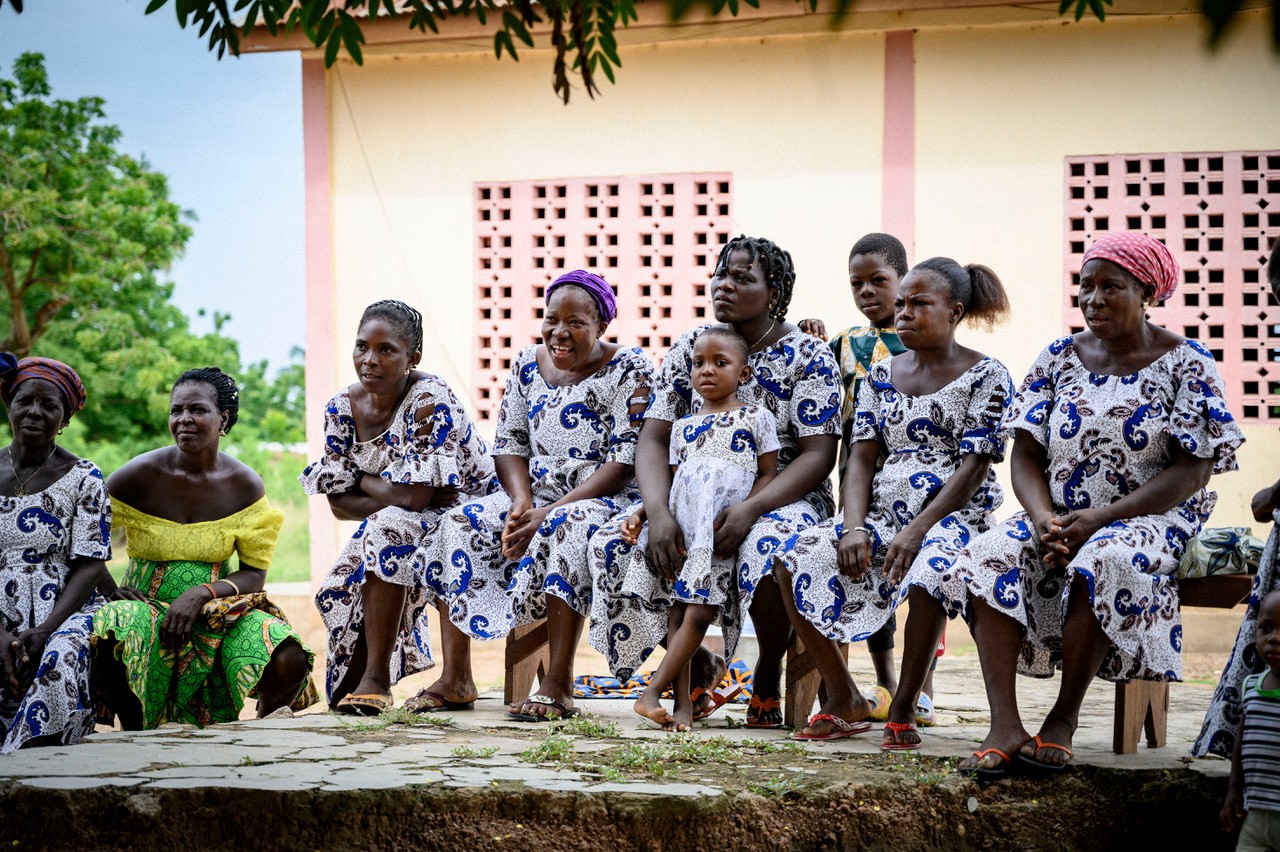
At the beginning, 25 women, representing 25 families, joined forces. Instead of forming a loose working group, they established a formally organised cooperative with a president, secretary, and treasurer. Registering with the relevant state authorities provided the community with a binding legal and organisational foundation.
PROJECT TOGO helped with the setup and remains available as a contact partner to this day. However, the cooperative operates independently. The members organise their tasks, hold regular meetings, and make their own decisions regarding production, investments, and new products.
This self-governance is a central prerequisite for long-term survival: the community should not depend on permanent management by the project or an individual sponsor.


Joint Production and Mutual Safeguarding
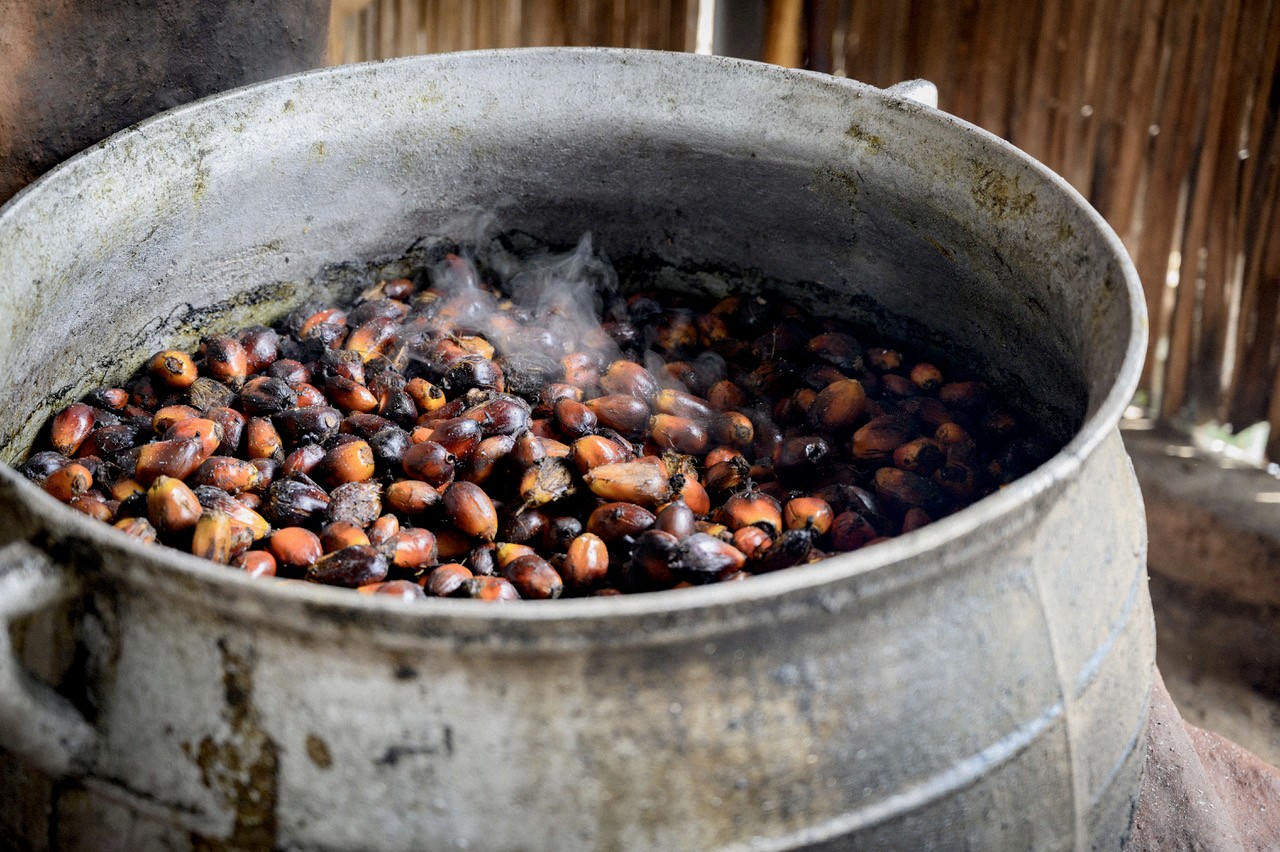
An early joint area of work was the production of palm oil. The division of labour enables larger production volumes and combines the knowledge and strength of many members.
If a woman is unable to work due to illness, other members can partially take over her duties. This means the affected family does not immediately lose their entire source of income. The reserve is necessary because buildings, machinery, water technology, and packaging incur ongoing costs.
Women
At the beginning, representatives of 25 families joined forces in Kotokope.
Revenue
Under the agreed model, 80 per cent of the revenue will be distributed equally among the members.
Reserve
20 per cent remains with the cooperative for investments, repairs and the further development of the joint work.


NEW PRODUCTS FROM WOMEN'S IDEAS
Through this cooperation, new ideas are constantly being generated. In addition to palm oil, the cooperative now also produces soap, for example. Moringa is also grown on the project sites. The women collect the leaves, dry and grind them, and sell the resulting powder in regional markets.
Further product ideas are not prescribed by PROJECT TOGO, but are instead developed by the members of the cooperative.
Another cooperative in Fokpo focuses more on community vegetable farming. There, a water basin supports the agricultural work. The two cooperatives show that the basic principle of joint organisation can be adapted to different local possibilities and interests.
Further product ideas are not prescribed by PROJECT TOGO, but are instead developed by the members of the cooperative.
PRODUCTION CENTRE AND PROFESSIONAL MARKETING
Particular attention is paid to the presentation of the products. Palm oil, moringa powder, soap and other products are filled into clean containers and clearly labelled. The labelling shows what is contained and who manufactured the product. In regional markets, these products stand out clearly from goods offered loose or without an indication of origin. The professional packaging creates trust and has noticeably supported marketing.
Literacy and French classes supplement the economic work. They facilitate bookkeeping, purchasing, sales, product labelling, and dealing with authorities or trading partners. Income, self-organisation, and education are thus directly intertwined.

EDUCATION AND SELF-ORGANISATION
Literacy and French courses facilitate bookkeeping, purchasing, sales, product labelling, and dealings with authorities or trading partners.
The women develop their own products, organise their savings and hold regular meetings. In this way, collective production becomes a self-managed economic structure.
Another cooperative in Fokpo focuses on communal vegetable farming – an example of how the basic principle can be adapted to local opportunities and interests.
WHAT ENABLES CUSTOMER ENGAGEMENT
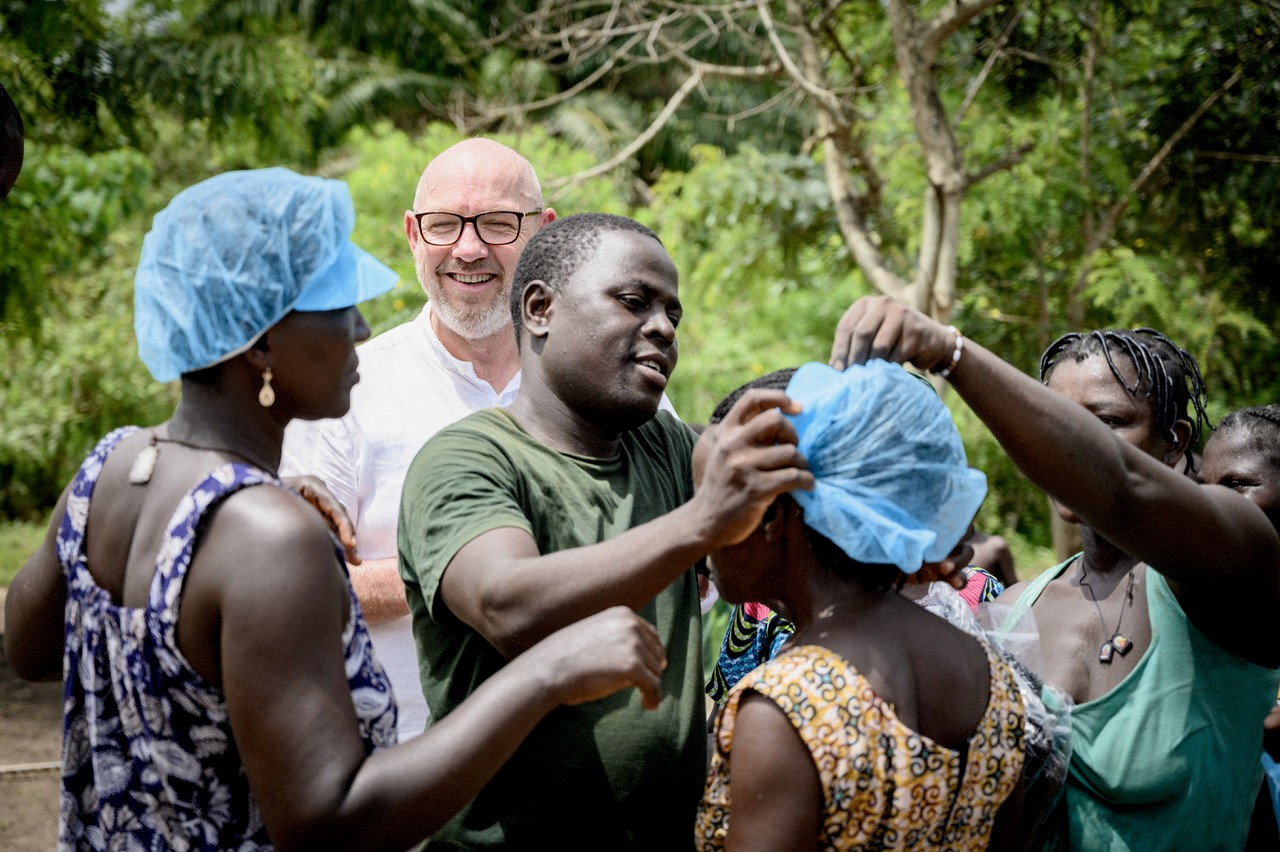
A customer engagement does not merely finance a machine or packaging. It strengthens an existing, self-managed organisation that independently steers production, income, and investments.
01
Processing and storage
Equipment for processing, filling, packaging and storage.
02
Hygiene and Quality
Improvement of hygiene, occupational health and safety, and product quality.
03
Water and Energy
Water and energy supply of the production rooms.
04
Training and Marketing
Training in production, bookkeeping, costing and marketing.
05
New products
Testing of new products developed by the women.
06
Market access
Packaging, labels and better access to regional markets.
Reserves for maintenance and replacement procurement can also be part of the jointly agreed support.
EFFECT AND DETECTION
The following can be documented, among other things:
Number of active members
Meetings and collective decisions
Manufactured products and quantities
Sales and distribution of income
Amount and use of reserves
Training, maintenance and newly developed sales channels
CLEARLY CATEGORISED
It supports a specific project area of PROJECT TOGO in Togo.
It takes place outside of the company's own value chain and is documented separately from CO₂e balances. The contribution is not offset against a Product or Corporate Carbon Footprint and does not alter any calculated emissions.
Companies support the self-managed work of the women's cooperatives. What has been implemented and how the work is developing is documented in a traceable manner.
INTERESTED IN PROJECT TOGO PLUS WOMEN'S COOPERATIVES?
Let's talk