PROJECT TOGO PLUS · FOREST PROTECTION & BIODIVERSITY
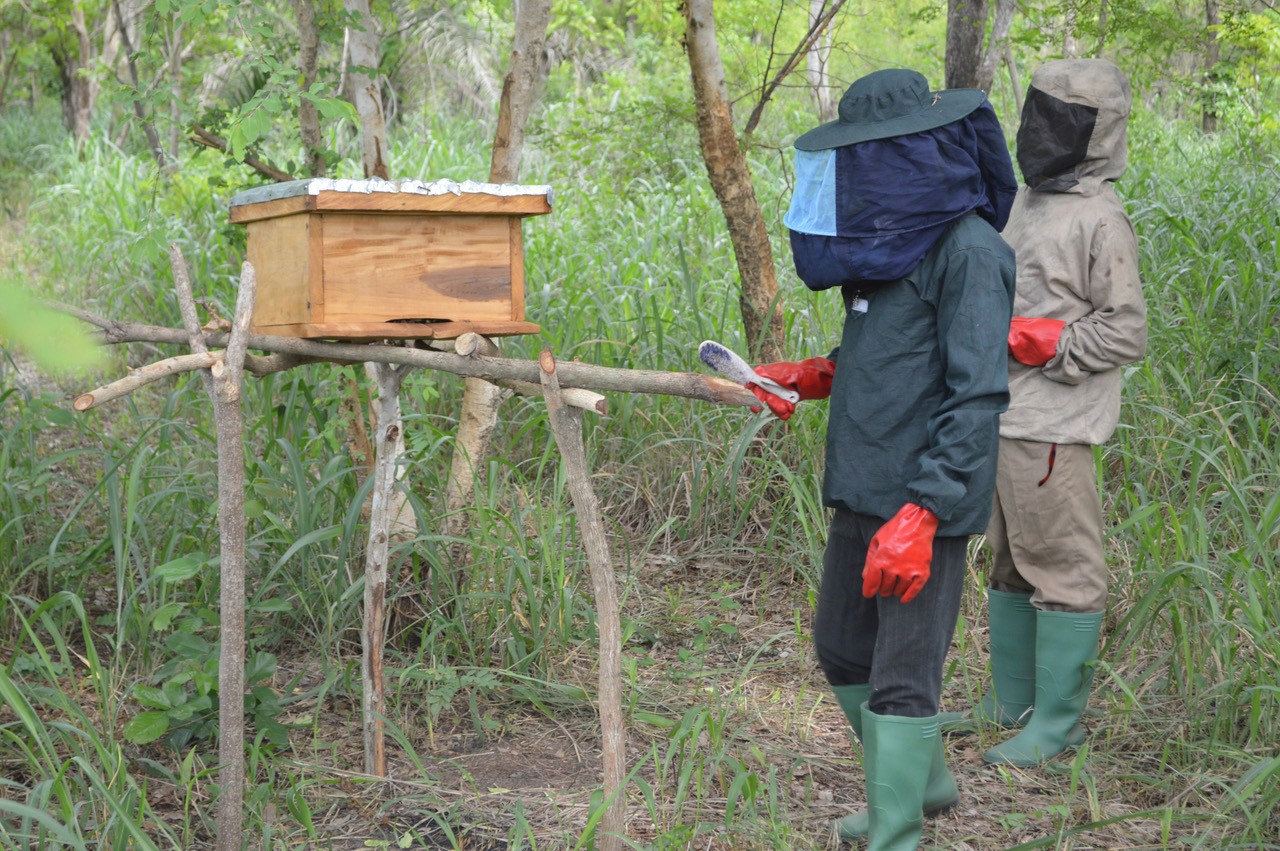
NATURAL FOREST · PROJECT TOGO, TOGO
01 · WHAT IT'S ABOUT
Honey is widely used in Togo. PROJECT TOGO has therefore investigated how beekeeping works under local conditions and how this could create an additional source of income for the villages.
A local carpenter made the first beehives. The project began in the natural forest with about 50 hives. The initial experiences were encouraging, allowing the beekeeping operation to be gradually expanded.
The focus is not solely on the number of hives. It is about a craft that can be understood locally, practised independently, and developed economically.
around 50
BEEHIVES TO START
regional
HANDCRAFTED HIVES
step-by-step
APIARY EXPANDED
on site
LEARN, WORK, DEVELOP
* according to previous project specifications
02 · TRAINING BEFORE EXPANSION
Passing on knowledge
For the training, PROJECT TOGO recruited an experienced beekeeper as a teacher. Interested individuals from the villages underwent an extensive programme that lasted approximately one year. It combined theoretical instruction with practical work with the bee colonies and concluded with a theoretical and a practical exam.
Upon successful completion, the new beekeepers received basic equipment so they could start with their own beehives.
The idea behind it is a growing, self-sustaining system: from the initial honey revenues, the beekeepers can finance additional hives, materials, and protective clothing, and further develop their business under their own steam.

LOCAL HIVE MANUFACTURING
03 · BEES AND FOREST
The beehives were distributed in suitable locations within the natural forest and on areas around the villages. In addition, PROJECT TOGO ensures that plants that provide food for the bees for as long as possible are preserved or newly introduced in their surroundings.
Beekeeping thus combines economic use with a tangible incentive to protect flowering plants and the surrounding forest.
African wild bees can defend their colonies very decisively. Their presence therefore also makes unauthorised access to certain areas of the forest more difficult. This side effect supports forest conservation, but does not replace fire watchmen or the agreed protection and control structures.
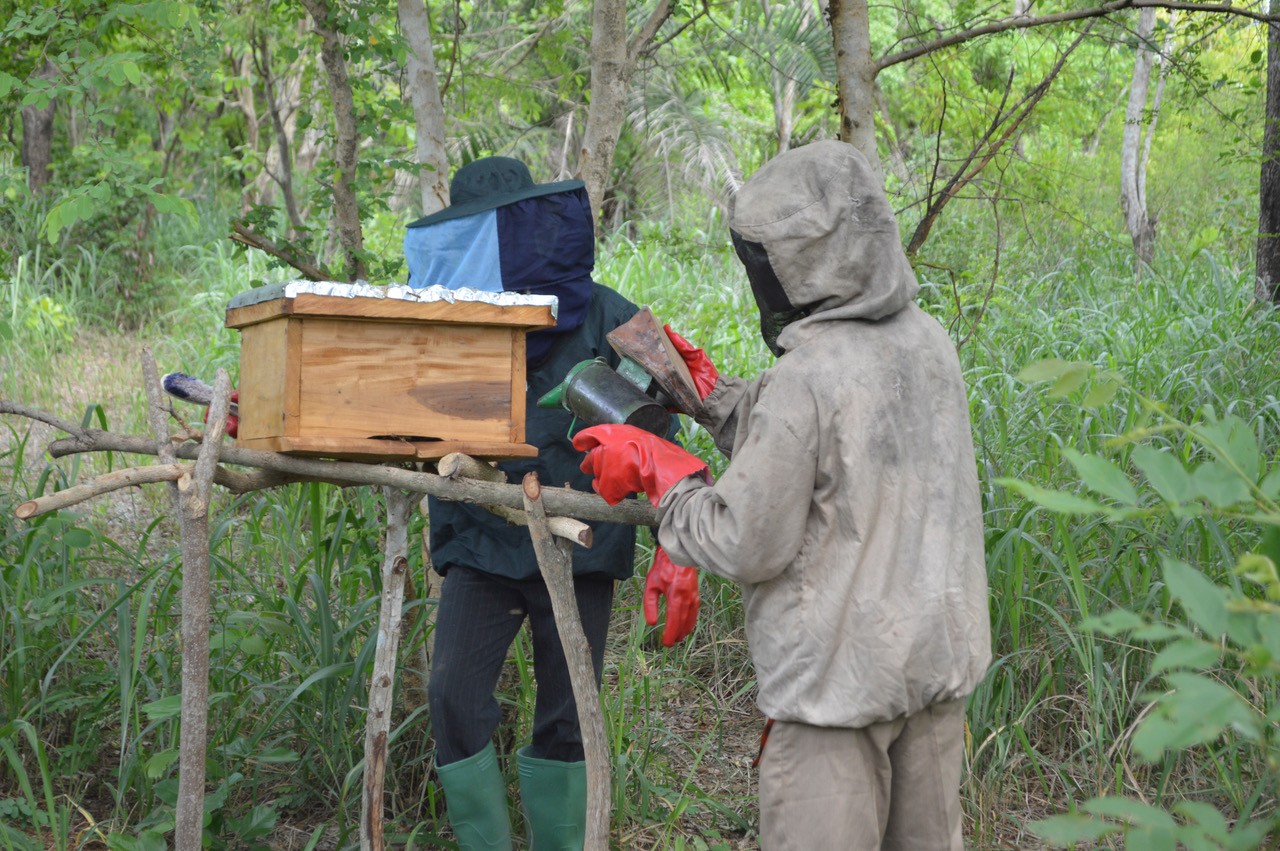
04 · SHARED TECHNOLOGY. INDEPENDENT WORK.
05 · THE NGO ecoCent TOGO ALSO KEEPS BEES
Furthermore, the NGO ecoCent Togo owns its own beehives. One part is used for training and demonstration, while another part generates income for the association.
These funds can be used to stabilise and expand the beekeeping business or for further tasks within PROJECT TOGO.
The beekeepers market their honey independently. The NGO ecoCent Togo sells its quantities on regional markets as well as to wholesalers, restaurants, and hotels, depending on availability. Currently, a more detailed analysis is being conducted to identify which sales channels are suitable for larger and regularly available quantities.

BEEKEEPING · PROJECT TOGO
06 · NEXT DEVELOPMENT STEPS
07 · POSSIBLE SUPPORT
01
02
03
04
05
06
08 · REPORTING
Reporting is based on the respective stage of development. It distinguishes clearly between what has been implemented, ongoing findings, and the next planned steps.

09 · CLEARLY CATEGORISED
A commitment to local beekeeping is voluntary and dedicated to a specific purpose. It supports a concrete project area of PROJECT TOGO in Togo.
It takes place outside of one's own value chain and is documented separately from CO₂e balances. The contribution is not offset against a Product or Corporate Carbon Footprint and does not alter any calculated emissions.
PROJECT TOGO PLUS · BEEKEEPING