
CO₂ DATA FOR PANEL BUILDING & AUTOMATION
What brings a system to life should be capable of explanation.
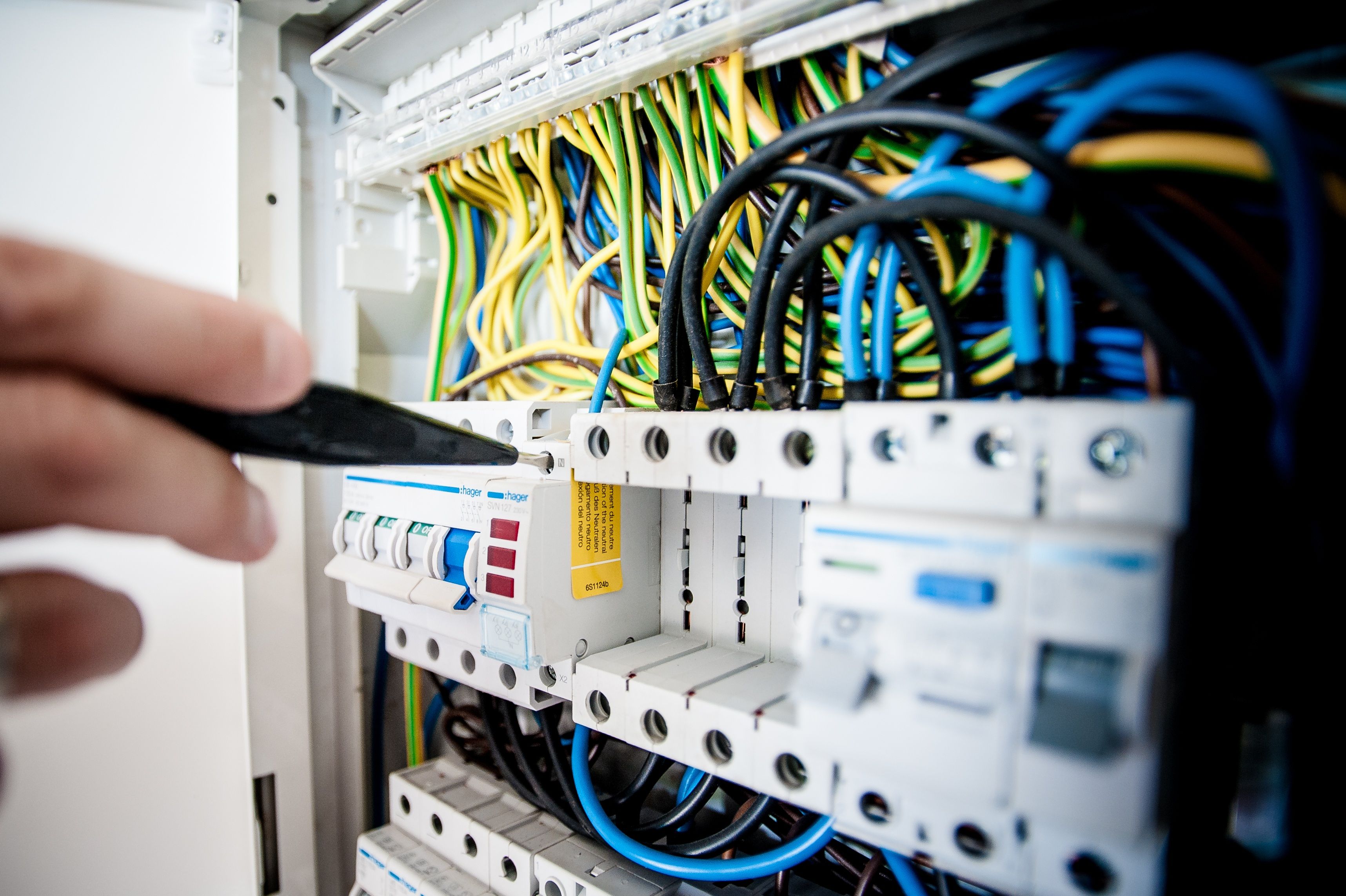
You do not simply connect components. You ensure that machines think, react and work reliably. A control cabinet, a control module or an automation solution is the result of many decisions. Your CO₂e data should make these decisions traceable.
EXAMPLE · PCF
CO₂e data available
Automation Module A–71
defined unit
System boundary visible
Version 01
BUILDING BLOCKS
Enclosures · Cables · Control Technology
MANUFACTURING
Assembly · Testing · Packaging
DATA LOGIC
Sources & assumptions documented
A number. With the context that makes it usable.
IN SHORT
Three questions. Three clear answers.
To make it immediately clear what is at stake for your print shop – and how you can turn order data into traceable CO₂ data.
01 · What is at stake for your industry?
Every job is different. Paper, format, print run and finishing all play a part in determining the CO₂e information that a printed product carries.
02 · Why is CO₂e data becoming relevant in your industry?
Customers want values for the exact order or variant they are procuring – not for an abstract average.
03 · What specifically does natureOffice enable?
ecozoom combines order, material and production data into documented CO₂e information that can be carried forward for recurring orders.
A number.
With the context that makes them usable.
WHY

Then the machine stops. Then the process stalls. Then everyone realises: the combination of many parts is more than the sum of its components. This is exactly what makes CO₂e data in your industry demanding – and valuable.
What is the footprint of a specific control cabinet or module?
Which data should be included in a tender or customer enquiry?
How reliable is information from the supply chain?
And what does all of this say about our company?
You do not simply need a CO₂ figure for this. You need a basis on which you can continue to work.
THE RIGHT QUESTION FIRST
In control cabinet and automation engineering, two justifiable questions meet. Anyone who confuses them may deliver data – but not the answer.
01 · COMPANY
CCF
The Corporate Carbon Footprint describes your company's emissions within a clear period of time and with a clear boundary.
for customer and supply chain enquiries
for tenders, ratings and reports
for corporate decisions
02 · PRODUCT & SOLUTION
PCF
The Product Carbon Footprint describes the footprint of a defined control cabinet, module or a specific solution.
for offers and projects
for variants and assemblies
for traceable product information
HOW
We help to turn what your teams are already planning, purchasing, manufacturing and documenting into robust data logic.
01
What is in the solution
Enclosures, rails, cables, terminals, protective devices, controls, drives and purchased parts.
02
What happens in your area
Assembly, testing, packaging, transport and the reality of your manufacturing.
03
What returns
Modules, variants, typical control cabinets and project-specific solutions.
So that information retains its meaning, we define the balancing object, reference value, system boundary, period, method, data sources and assumptions. What is clear is clearly shown. What changes can be updated.
DON'T START FROM SCRATCH WITH EVERY PROJECT
Structure sensibly once. Think ahead for many solutions.
Your business thrives on recurring components, proven assemblies and variants. A good database capitalises on precisely this reality – instead of starting from scratch for every order.
1
Components & Purchased Parts
2
Modules & Typical Control Cabinets
3
Variants & Project Solutions


OUR OFFER
With ecozoom and personal support, a foundation is created that connects specialist departments, customers, and projects.
01
Clarify the appropriate question
We make a clear distinction: Do you need a CCF for your company, a PCF for a specific solution – or both?
02
Build a robust data logic
With ecozoom, we bring data from purchasing, production and the supply chain into a structure that fits your business.
03
Making information usable
For sales, purchasing, development, customers and planning partners – fact-based, comprehensible and updatable.
WHAT WE DO NOT DO
We don't turn your CO₂e data into a seal of approval. We show what lies behind it.
Objective information specifies the balance sheet object, reference year, system boundary, method, data sources, and assumptions. Voluntary climate contributions can be documented separately – however, they do not change either the CCF or PCF.
FREQUENTLY ASKED QUESTIONS
A good start is concrete.
What comes first: CCF or PCF?
This is decided by the question of your customers and your company. When it comes to your company, the focus is on the CCF. When it comes to a control cabinet, a module or a solution, the PCF. Both can grow on a common database.
Do we need to record every control cabinet individually?
No. Recurring components and assemblies can be structured sensibly. From these, you can further develop typical solutions, variants and projects.
What if supplier data is missing?
Then we start with what is available. Sources and assumptions are made visible and can be replaced step-by-step with more precise data.
What do our customers receive?
Traceable CO₂e information: related to a defined object or unit – with the context that makes the figure classifiable.
WEITERFÜHRENDE THEMEN
Passende Wege rund um Ihre CO₂e-Daten.
Vertiefen Sie die Grundlagen oder entdecken Sie eine passende Branchenlösung.
THE NEXT STEP
Show us a solution. We look at the data behind it.
Whether it is a company balance sheet, control cabinet, module or automation project: together we will find the data logic that fits your reality.