PROJECT TOGO · Recycling & Environmental Education
Recycling does not start with the machine.
It starts in the mind.
PROJECT TOGO Recycling doesn't first ask for a finished technical solution. Instead, it asks which plastic waste is generated locally – and what people there can make from it themselves.
Our Why
If waste has no place to go, it eventually ends up everywhere.
Plastic is part of everyday life in Togo: drinking water is sold in small sachets, and shopping is packed into thin bags at markets. However, where collection, sorting and further processing are lacking, the material is left behind.
That is why change does not begin with an imported machine. It begins with close observation, accessible knowledge and solutions that people can apply and develop further themselves.
From Waste to Knowledge
Three months of looking closely.
Before a material can become an idea, it must become visible what is actually produced – and what people on site can make of it.


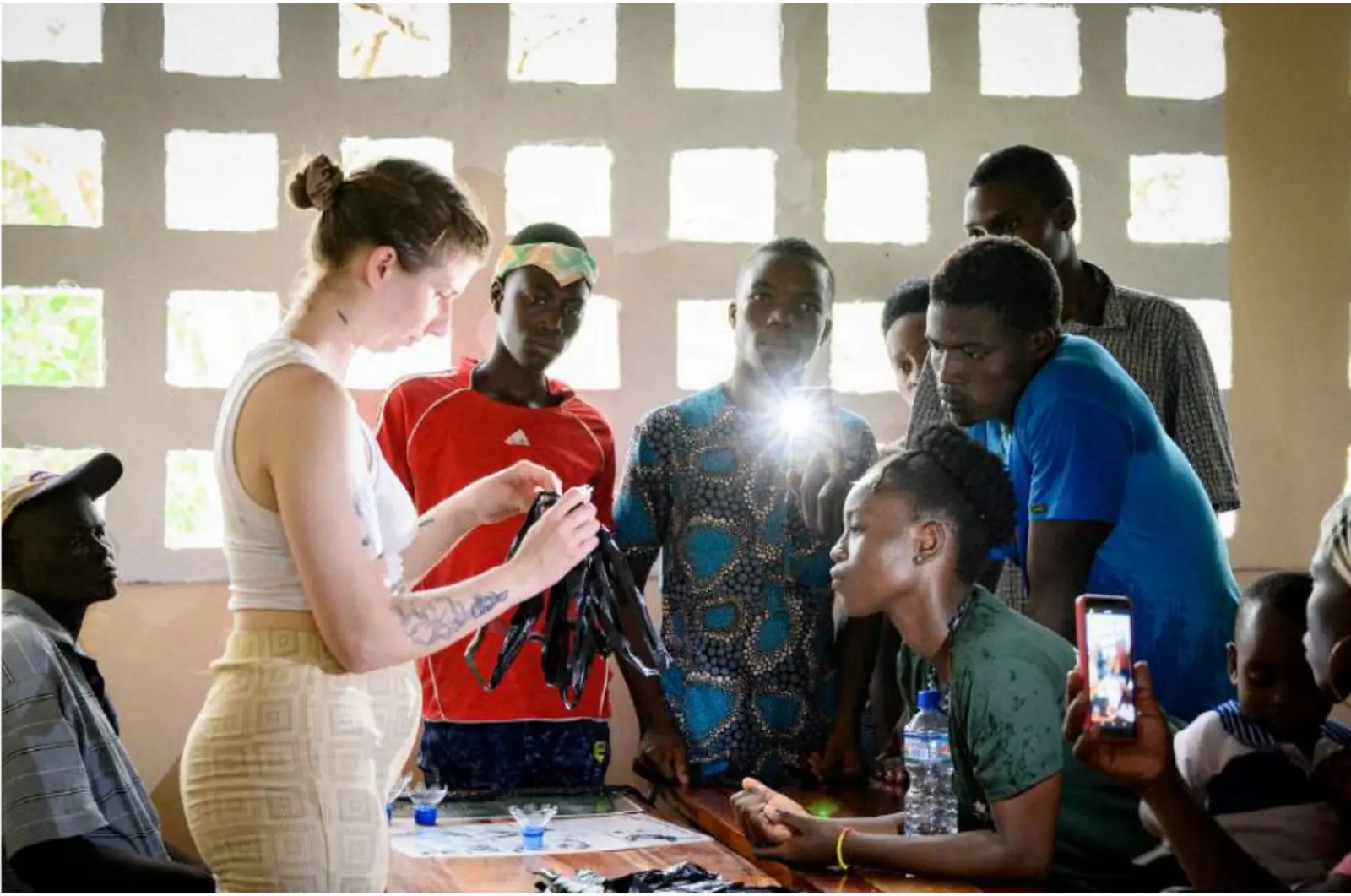
Together with the Trier University of Applied Sciences, PROJECT TOGO investigated the plastic waste of around 150 households in the Novissikomé district of Kpalimé. Every two weeks, waste was collected, weighed, photographed and documented.
Households
around 150
Investigation
3 months
Survey
every 2 weeks
Historical data from the field study; they do not describe the current, ongoing project impact.
Material that goes further
Out of a black bag comes an ability.
In the analysis, thin black market bags stood out particularly frequently. Material samples were analysed, processing techniques were tested, and the actual local demand was examined.
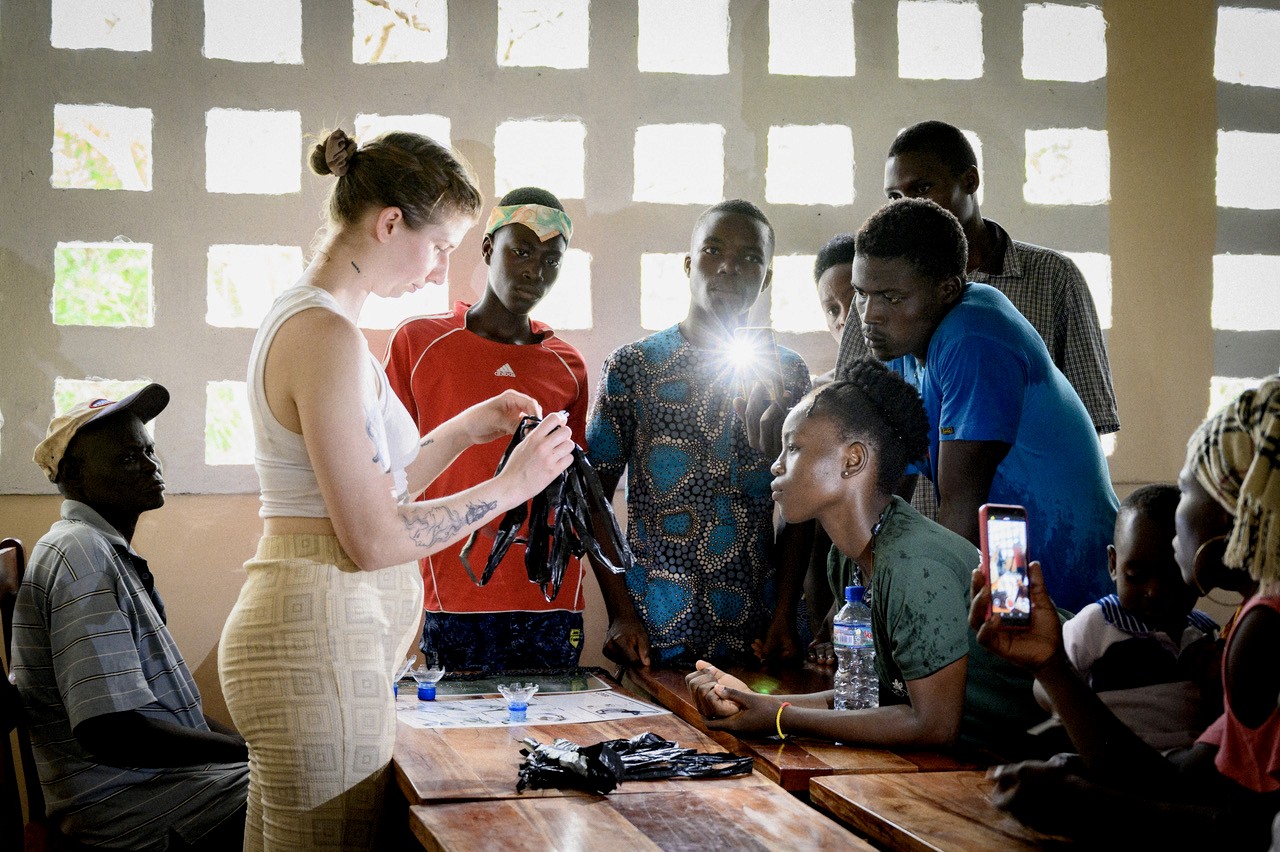
The bags are cut to size, joined into long strips, and then crocheted, braided, woven, or knotted. This allows baskets, mats, bags, ropes, and small everyday objects to be created.
A technology is not good because it is modern, but because people can use it themselves.


Share knowledge
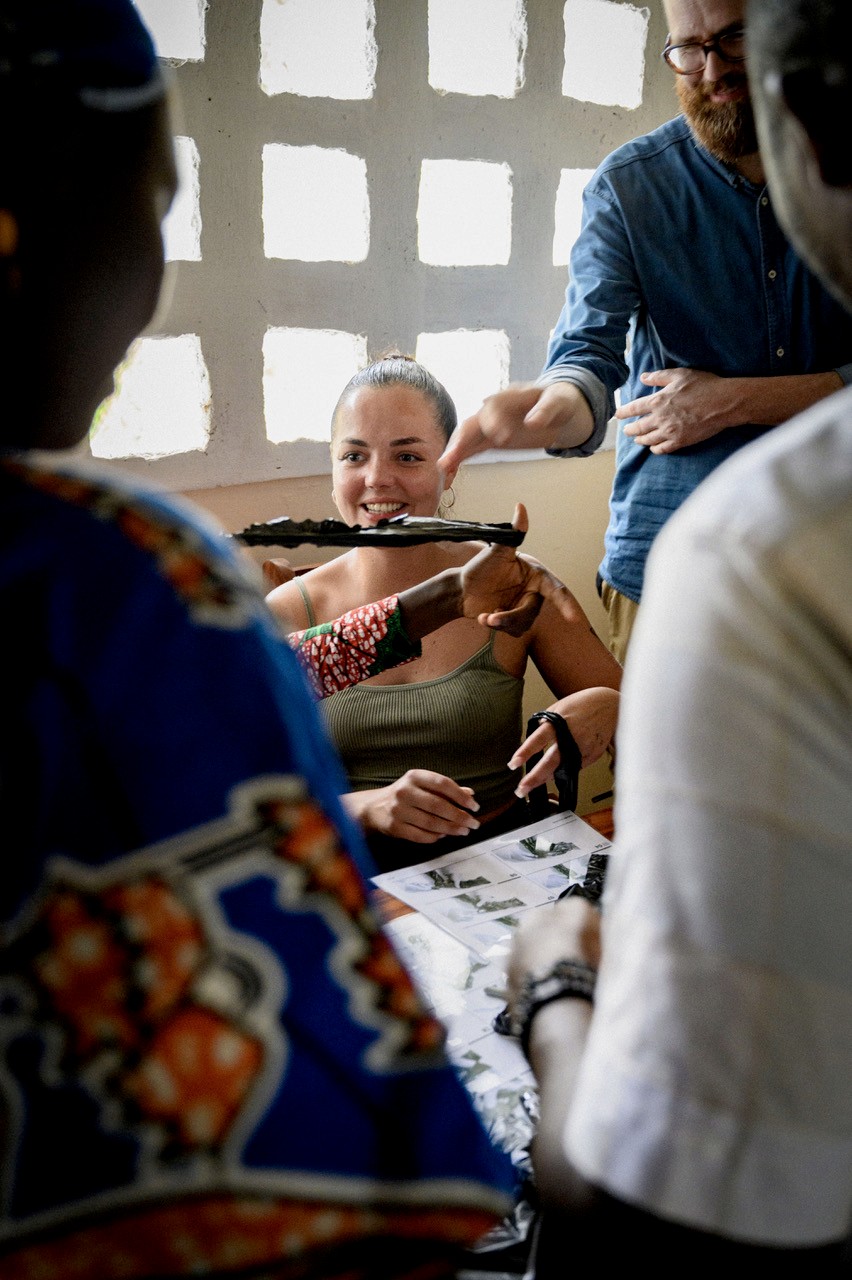
Since 2022, the developed processes have been taken to Togo in workshops. Women from Kotokopé, young people from Novissikomé, students from the INFA forestry school, waste collectors from Agou, and children from an orphanage learned how to process collected bags themselves.
This is about more than just new products: the workshops demonstrate the consequences of plastic waste on soil, water bodies, animals and humans – and why avoidance and reuse are just as important as recycling.

An initiative from Togo
Out of these experiences, Miagboko was born – Ewe for 'Our environment is clean'. The initiative combines environmental education with visible action: involving schools, households, associations and cooperatives.
The monthly Eco-Jogging combines physical exercise with collecting litter together. 'Zero Sachets au Collège Protestant' brought the topic to a secondary school in Kpalimé – a place where knowledge is passed on.
Honest about the situation
Collecting alone is not a solution.
Waste separation is not very convincing if it is subsequently unclear what happens to the separated materials. That is why avoidance, reusable containers, community collection campaigns and the processing of suitable materials go hand in hand.
In the long term, the aim is to create a professional recycling chain in which plastic can be collected, shredded and processed further as a raw material. This structure is a goal – not an already completed facility.
Insight into the project documentation
Don't just tell. Show how the work was created.
The project information connects the field investigation, product development, and workshops. Here, two original pages are directly visible.
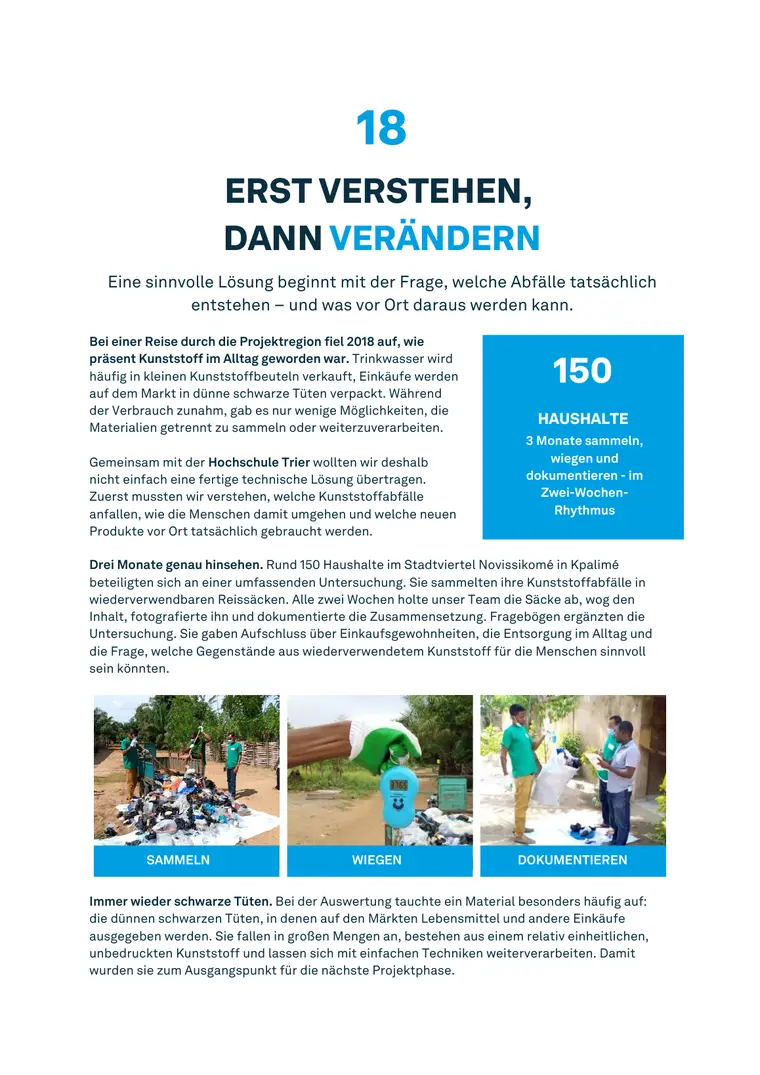
01
First understand: Structure and findings of the field study

02
Then change: material becomes knowledge to pass on
Source of the pages shown: PROJECT TOGO project information, chapter 'Plastic Recycling and Environmental Education'.
Voluntary and direct
They do not support any claim. They enable work.
PROJECT TOGO Recycling is a direct project support. It is independent of a CO₂ calculation and is not certificate-based.
Your contribution can make it possible
further workshops and training materials
Environmental education in schools and communities
Collection drives and local initiatives
Testing of suitable processing techniques
Further development of a local recycling chain
What it is
Direct support for concrete project work
What it is not
No plastic credit, no CO₂e unit, no compensation
What companies get out of it
A tangible commitment with its own history.
The support is not attributed to a product as an environmental performance. It is documented as an independent decision.
01
The record states which company supports which project area, in what form, and for which period.
02
The tracking makes the project area, the form of support, available evidence and developments digitally accessible.
03
Companies are provided with an objective basis for demonstrating their voluntary commitment in a clear and well-defined manner.
That's how it can be said
"Our company supports the recycling and environmental education work of PROJECT TOGO. No amount of plastic or CO₂e is attributed to this commitment."
What does not follow from this
not a "plastic-neutral" company or product
no balanced plastic quantity
no certified recycling credit
no offsetting with a CCF or PCF
FAQs
Short and clear.
Is PROJECT TOGO recycling certificate-based?
No. This is direct project support. No plastic credits, carbon credits or comparable units are issued.
Is a quantity of plastic attributed to our company?
No. The support is documented, but will not be attributed to your company or a product as an offset, avoided, or recycled plastic quantity.
What is supported by the contribution?
Depending on the agreement, the contribution can support workshops, environmental education, collection campaigns, local initiatives, materials or the further development of suitable processing steps.
Can the engagement be shown publicly?
Yes. The Corporate Engagement Record and project tracking can objectively document the support. The actual communication should remain clearly separated from statements about product features or compensation.
Is a professional recycling plant already available?
The long-term development of a professional recycling chain is one goal. The work documented so far focuses on research, simple further processing, workshops, environmental education and local initiatives.
Support PROJECT TOGO Recycling
If you would like to support this approach, let's discuss which project area fits your commitment and how the support can be documented in a transparent way.