PROJECT PROFILE · CERTIFICATE-BASED CLIMATE PROTECTION
Efficient Cookstoves in Nigeria
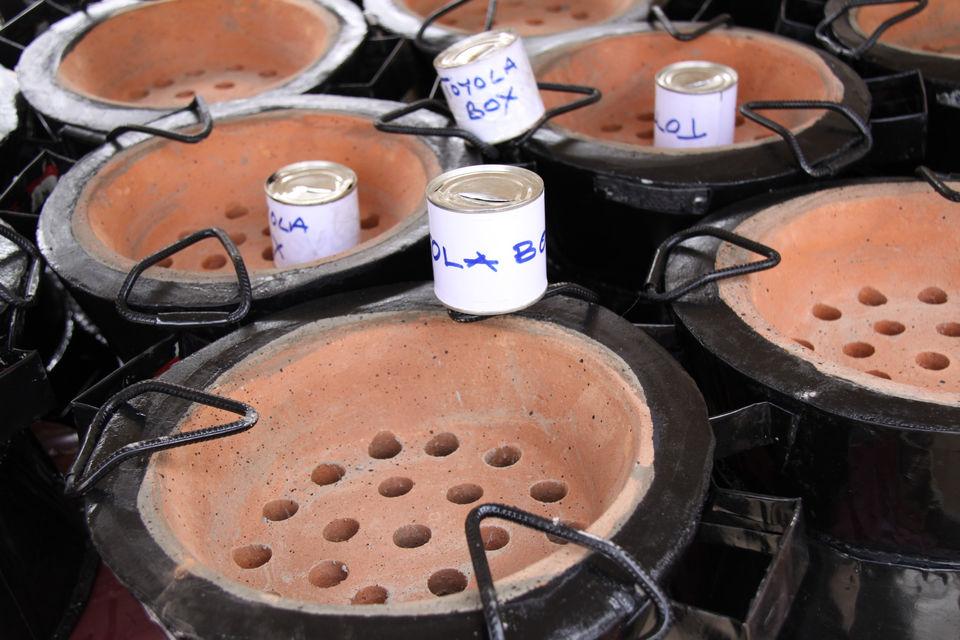
It changes a cooking practice – the CO₂e amount only arises through assumptions, monitoring, verification, and the issuance of concrete units. GS ID 7312 documents the manufacture and distribution of more efficient charcoal cookstoves in Nigeria.
COUNTRY
Nigeria
GOLD STANDARD ID
GS 7312
PROJECT TYPE
Energy efficiency
STATUS IN REGISTER
Certified Project
WHY THE PERIOD MATTERS
Only the independent verification of a defined period enables the issuance of VERs. The issued units each belong to a vintage, period, and serial number.
Gold Standard Certified Project does not mean that every crediting period has already been verified or that every unit is available.
CONTENT
01
Project Profile
02
Project approach
03
Calculation
04
Further project references
05
Documented assignment
06
Classification
07
Sources
01 · PROJECT AT A GLANCE
The data pass for the project
Project description, estimated annual volume, issued units and retirements perform different functions. Therefore, they do not stand side by side here as interchangeable key figures.
PROJECT NAME
Promoting Improved Cooking Practices in Nigeria
LOCATION
Nigeria · nation-wide project activity according to register description
PROJECT ID
Gold Standard GS 7312 · Registry path 1468
PROJECT SPONSOR
Toyola Energy Services Limited
PROJECT APPROACH
Manufacturing and distributing more efficient charcoal cooking stoves to replace less efficient cooking stoves
PROJECT TYPE
Energy Efficiency – Domestic · Large Scale
STANDARD
Gold Standard for the Global Goals · Certified Project
METHODOLOGY
GS TPDDTEC v3.1
CREDITING PERIOD 1
24/10/2017–23/10/2022
CREDITING PERIOD 2
24/10/2022–23/10/2027
ESTIMATED ANNUAL UNITS
604,520 VIEWS · ex-ante information in register, no guaranteed result
2022 EDITION
1,312,595 VER · issued on 26/03/2024
CASH REGISTER TOTAL DISPENSED
4,358,255 VER · Register Snapshot 29/09/2026
REGISTER SUM SUSPENDED
2,949,537 views · Registry snapshot 29/09/2026
TEST BENCH OF THIS PAGE
29/09/2026
Regarding status: The registry entry is the authoritative source for current project and unit status. "Gold Standard Certified Project" does not mean that every crediting period has already been verified or that every unit is available. Regarding totals: Issuances and retirements are registry details for units. For a specific use, the vintage, serial number and retirement certificate must be checked individually.
02 · WHAT THE PROJECT PROVIDES FOR
Provide cooking stoves, methodically categorise their use, and document the period.
The cookstove is the visible product. For the certificate logic, the documented distribution, the baseline defined in the methodology, and the data chain of the respective monitoring period are what count.
01
Manufacturing and distributing more efficient cookstoves
The project describes the manufacture and distribution of efficient charcoal cooking stoves in Nigeria. The mere number of units does not yet constitute a verified emission reduction.
02
Define the comparative case
The methodology establishes a baseline for cooking practices that would have occurred in the absence of the project. Its assumptions must align with the respective project and reporting period.
03
Prove distribution and usage
Which evidence, random samples and parameters are used is determined by the documentation for the specific monitoring period – not by the product alone.
03 · HOW A UNIT IS CREATED
GS TPDDTEC v3.1 forms the methodological framework. The specific calculation is based on the inputs and parameters verified for the respective monitoring period.
01
Determine reference consumption
The baseline situation describes the projected fuel and energy consumption without the project. It is a methodological reference value, not a measurement of an individual household.
02
Record project activity
The distribution, device characteristics and other information provided for in the monitoring plan are documented for a defined period.
03
Apply parameters methodically
The methodology links the documented project activity with defined parameters. The assumptions that apply to fuel, usage and, where applicable, uncertainties can be traced in the respective audit trail.
04
Verify, issue, retire
Following independent verification, VERs are issued with a vintage and serial numbers. Only retirement documents the specific allocation to a company or intended use.
04 · OTHER PROJECT REFERENCES
SDG references mentioned in the register remain separate verification questions.
The register entry lists "No Poverty", "Affordable and Clean Energy", and "Climate Action" as certified SDG impacts. This classification is not a blanket or permanent promise of impact for every device, every usage situation, or every period.
FUEL USE
Less fuel than project logic
The approach is aimed at more efficient cooking with charcoal. The actual change in consumption applied is not read from the stove, but is determined according to the methodology of the respective period.
HOUSEHOLD AND COMMERCIAL
Distribution to different user groups
The project description mentions households as well as small and medium-sized commercial units. The scope and specific use must be categorised according to time and source.
SDG Reference
An assignment, not a seal of quality
An SDG alignment describes which goals are designated for the project in the registry. It does not automatically confirm quality, additionality or a lasting social impact.
Delimitation
No conclusion of a "green" product
Project or unit information must be considered separately from a supporting company's own emissions. They do not alter its CO₂e profile.
SDG REFERENCES IN THE REGISTER
This assignment is not a flat-rate or permanent commitment of effectiveness for every device, every usage situation, or every period.
05 · FOR SUPPORTING COMPANIES
Issued VERs do not yet constitute an allocation.
Only a cancellation certificate links specific units to a company and a documented intended use. The registry balance is not a substitute for this certificate.
Project name and GS ID 7312
specific quantity in t CO₂e
Vintage and monitoring period
Issue and Decommissioning Date
complete serial number range
Beneficiary and reference
specific unit status in the registry
Notes on appropriate communication
Specific unit status in the registry, vintage, serial number and proof of decommissioning must be verified individually.
06 · CLASSIFICATION AND COMMUNICATION
What can be documented – and what does not automatically follow.
A voluntary climate contribution is presented separately from reductions within one's own value chain.
CAN BE DOCUMENTED
IS NOT AUTOMATICALLY ALLOCATED
Manufacturing and distribution of more efficient charcoal cooking stoves using a project approach
a specific service life or fuel saving in each individual household
604,520 estimated annual VERs as registered
that this quantity is reached or available every year
an issuance of 1,312,595 VER with Vintage 2022
a direct measurement at the coke oven or an allocation to a specific company
a Gold Standard project status and methodological calculation
that each issued unit is appropriate for each communication statement
the SDG references listed in the register
a lasting, comprehensive or independently proven social impact
the retirement of specific VERs for a beneficiary
the reduction of one's own emissions, climate neutrality or a green product label
Communication advisory: A climate contribution should not sound more significant than documented by monitoring, unit, and allocation. The support for the project is reported separately from your own CO₂e footprint and is not offset.
07 · SOURCES AND RELEVANCE
The basis is openly accessible.
Project status, expenditures, and decommissionings may change. The current registry entry and the project, monitoring, and audit documents published there remain decisive.
PRIMARY SOURCE
Gold Standard Impact Registry · GS 7312
Project status, description, crediting periods, issuances and retirements
METHODOLOGY
Gold Standard · Approved Methodologies
Methodological framework and programme-specific information
STANDARD
Gold Standard
Programme rules and classification of VER units
TEST BENCH
29 September 2026
We are happy to answer any questions regarding specific project allocation, vintage or available documentation in a factual manner.